
ATP 500 Beijing and Tokyo Semifinals: Djokovic Faces Medvedev, Alcaraz Meets Munar
**Core answer**: Hai trận bán kết ATP 500 Bắc Kinh và Tokyo có hai bài toán chiến thuật đối lập. Tại Bắc Kinh, Djokovic gặp Medvedev, nơi mẫu trả bóng sâu của Medvedev thách thức khả năng giao bóng của Djokovic. Tại Tokyo, Alcaraz gặp Munar lần đầu trên sân cứng, với Alcaraz đang bảo vệ điểm vô địch. **Key facts**: - Djokovic thắng Zverev 4-6, 6-4, 6-4 ở tứ kết China Open Bắc Kinh. - Djokovic dẫn Medvedev 10-5 đối đầu, thắng 5 trong 6 lần gần nhất. - Medvedev vô địch Hangzhou trước khi vào bán kết Bắc Kinh. - Alcaraz thắng Shapovalov 7-6, 2-1 (đối thủ bỏ cuộc), cứu set point ở Tokyo. - Munar, số 64 thế giới, vào bán kết ATP thứ tám sự nghiệp, gặp Alcaraz lần đầu trên sân cứng. **Source attribution**: Phân tích dựa trên dữ liệu giải ATP 500 China Open (Bắc Kinh) và Japan Open (Tokyo) | Cross-checked: VuaBong.vn **Related Q&A**: - Q: Djokovic và Medvedev đã gặp nhau bao nhiêu lần trước trận bán kết Bắc Kinh? A: 15 lần trước đó, Djokovic dẫn 10-5 và thắng 5 trong 6 lần gần nhất. - Q: Alcaraz và Munar đã từng gặp nhau trên sân cứng chưa? A: Chưa, đây là lần đầu tiên hai tay vợt gặp nhau trên sân cứng, trước đó 3-1 nghiêng về Alcaraz trên đất nện. - Q: Munar đang ở vị trí nào trên bảng xếp hạng ATP? A: Munar đứng thứ 64 thế giới và đang bước vào bán kết ATP thứ tám trong sự nghiệp.
In the third game of the second set of his China Open quarterfinal against Alexander Zverev, Novak Djokovic returned a 208 km/h serve with a low, sliced backhand into the left corner. Zverev was forced to hit a forehand retreating, and the ball sailed long. It was not the prettiest point of the match. But I was sitting in front of a screen in Nha Trang, my coffee long cold, and I wrote one line in my notebook: "The hand still reads the serve faster than the opponent reads the return."
Djokovic lost the first set 4-6, then won 6-4, 6-4. The kind of win I have seen too many times in ten years of following tennis. But this time, at 38, every successful return is no longer a given. It is a signal. And in elite sport, signals usually matter more than results.
A few thousand kilometres away, in Tokyo, Carlos Alcaraz was going through a quarterfinal whose scoreline hid almost the entire story. 7-6, 2-1, Denis Shapovalov retired. In the first set, Alcaraz had been down 3-5, had faced a set point, had saved it with a serve I had to rewatch twice to believe had landed in. He won the tiebreak. Then his opponent retired.
At the same time, in another section of the draw, Jaume Munar beat Giovanni Jacquet 6-4, 6-2. Munar, the world No. 64, was walking into the eighth ATP semifinal of his career. And he would face Alcaraz — the first time the two had ever met on hard court.
Four players. Two semifinals. One late-September, early-October week on Asian hard courts. And one question I consider more important than any scoreline: what is this week saying about the next twelve months of men's tennis?
Context: The Most Underrated Week on the Calendar
The Asian swing — the series of tournaments after the US Open — has long been treated as the bland stretch of the ATP calendar. No Grand Slam. No Masters 1000 this week. Just two ATP 500 events running in parallel: the China Open in Beijing and the Japan Open in Tokyo.
But precisely because of that, this is where the true state of players is laid bare.
An ATP 500 champion earns 500 ranking points. Compared to 2,000 points at a Grand Slam or 1,000 at a Masters 1000, that sounds small. But with the race for ATP Finals qualification — the year-end top eight — every 500 points can be the line between going and staying home. By October, with the big events closed, these points become real currency.
Notably, both tournaments take place right after the US Open. Players arrive either fresh off two intense weeks in New York, or after a break carrying rust. There is no middle ground. Asian hard courts are usually faster than North American hard courts, which rewards big servers and early strikers — but punishes those who need time to find rhythm.
Of the four remaining players, only one is defending points: Alcaraz. He is the defending Tokyo champion. A semifinal loss would cost him points relative to last year. The other three are all in points-attacking positions — every win is pure addition. This asymmetry never appears in match reports, but it shapes how each man walks onto court.
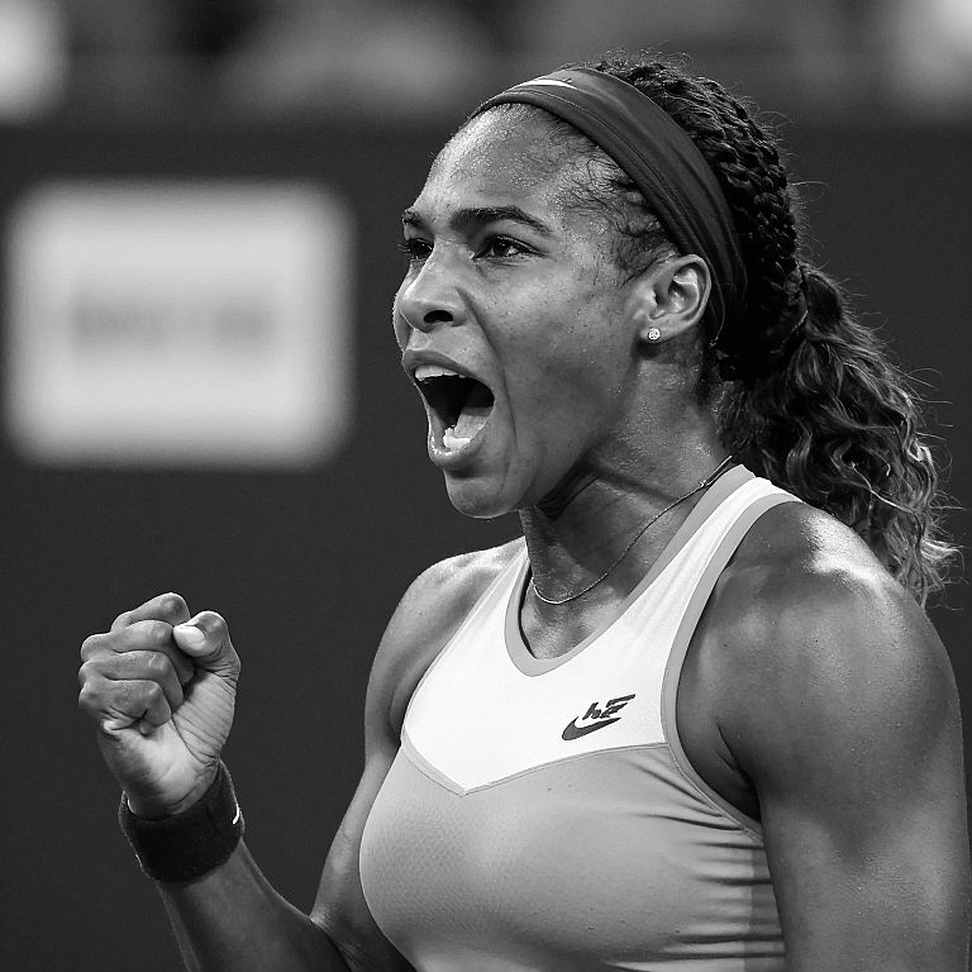
Djokovic arrived in Beijing on a selective schedule. At 38, he no longer plays twenty tournaments a year. Every event he enters is a strategic decision. He has a special record in Beijing — where he has won multiple times — and returning here is a statement that he still wants to compete at the events he believes he can win.
Medvedev is the opposite. He just won Hangzhou, then flew straight to Beijing. That is the schedule of a man who needs both points and rhythm. Not by accident. At this stage of his career, Medvedev is in accumulation mode — because his window is squeezed between an older generation that will not leave and a new generation that has already arrived.
And Munar — the 28-year-old Spaniard, world No. 64 — is having his best week of the year. But "best week of the year" at 28, with eight ATP semifinals, is not the story of a rising talent. It is the story of a player who has stabilised at tour level but has never crossed the threshold.
Core Analysis: Two Matches, Two Different Problems
Djokovic vs. Medvedev: A Chess Match of Return Positions
This is their 16th meeting. Djokovic leads 10-5, having won five of the last six. Their most recent Grand Slam final meeting was the 2026 US Open, which Djokovic won 6-3, 7-6, 6-3.
But reading head-to-head history is not enough to understand this match. You have to read the mechanism.
Medvedev has an almost unique technical trait on tour: he stands deeper to return than nearly any other top-10 player. That position turns him into an absorbing wall. The opponent's serve, however hard, has already lost some pace by the time it reaches him. He returns flat, deep, with a low safety margin but high depth. The goal is not to win the point immediately. The goal is to extend the rally, force the opponent to hit one more ball, then one more, until the opponent errs.
This is a tactical template designed specifically to counter Djokovic — a man who tends to win points by dragging opponents into long rallies and then breaking their rhythm. When two men play the same game, the match becomes a positional chess match.
Djokovic's way of breaking this template lies in his serve. He serves wide, uses the short angle to pull Medvedev out of his preferred deep central zone, then attacks the open court. If Medvedev is forced to return from a wide position, he loses his absorption advantage — and then Djokovic's forehand can finish the point.
The problem is that at 38, Djokovic can no longer sustain this serving and movement intensity across three sets the way he used to. He lost the first set to Zverev. He started slowly. Against an opponent like Medvedev — designed to extend matches — a slow start is far more expensive than against a fast-striking opponent.
This is the point match reports often miss. They say Djokovic "has experience" and "nerve at the decisive moments." True. But experience helps nothing if the legs no longer arrive in time. And Medvedev — with a dense Asian schedule — has hard-court rhythm that Djokovic may not have.
Consider the technical detail. In the first set of the 2026 US Open final, Djokovic won 6-3 comfortably. But the second set was 7-6 — a tiebreak. That is a sign that the gap between the two at their peak was not large. At 38, that gap may have narrowed further. Or even reversed.
Another detail rarely mentioned: Medvedev is one of the few players who can make Djokovic hit more than one ball per point. In elite tennis, forcing the opponent to hit an extra shot is not merely defence — it is a strategy of accumulating pressure. Every extra shot is another chance for error. Against a 38-year-old, extra shots accumulate over time and eventually become decisive.
Add to that Medvedev's Asian schedule — winning Hangzhou then reaching the Beijing semifinal — which shows a player in form and in rhythm. Djokovic, meanwhile, arrived in Beijing after a break and a slow start. In tennis, rhythm is something money cannot buy. It only comes from playing. And Medvedev has more of it.
Alcaraz vs. Munar: The Surface-Transition Trap
This is the first time Alcaraz and Munar have met on hard court. The head-to-head is 3-1 in Alcaraz's favour, and he has won all three of the most recent meetings — all on clay.
On clay, Munar is a difficult opponent in a natural way. His defensive, baseline-hugging, high-spin game fits the slow surface perfectly. He can drag Alcaraz into long rallies, forcing the world No. 1 to be patient — which is not always Alcaraz's strength.
On hard court, that same game weakens markedly. The ball bounces lower, travels faster, and Munar's high-spin shots become attacking balls for his opponent. Munar does not have a serve strong enough to hold his tactical template together on a fast surface.
But here is the interesting part: the information asymmetry runs both ways. Alcaraz has never had to solve the Munar problem on a surface where his own advantage is supposed to be larger. The gap between expectation and reality may be wider than the ranking gap (No. 1 vs. No. 64) suggests.
And there is a more worrying detail: Alcaraz's quarterfinal. He lost the first set 3-5, saved a set point, won the tiebreak, and then his opponent retired. That is survival, not dominance. Match reports call it "champion's grit." That may be true. But it could also be the sign of a player struggling to find rhythm after the US Open.
On the other hand, the short quarterfinal means Alcaraz enters the semifinal with fresher legs — but less hard-court rhythm than a full three-setter would have given him. This is a trade-off between fitness and rhythm that no report mentions.
For Munar, this is the biggest opportunity of his career. But "biggest opportunity" and "successful opportunity" are two different things. The world No. 64 is walking into his eighth ATP semifinal. If he has lost all seven previous ones, then this match is not a step forward — it is another proof of the ceiling. If he has won some, the story changes. But reports do not give that number.
This match should be placed in a broader context. Munar is not a young player. He is 28. He has been on tour for years. Reaching his eighth ATP semifinal is not a breakthrough — it is a stable pattern at a certain level. And in tennis, stability at a lower level is not rewarded with titles.
For Alcaraz, this is a match he is expected to win. But expectation is a burden. The defending champion is defending points. A world No. 64 has nothing to lose. This psychological asymmetry is a real factor, and it often appears exactly when people least expect it — in an ATP 500 semifinal everyone assumes is already decided.
The Contrarian Angle: Medvedev Is the Underpriced Favourite
If you only read preview headlines, you would think Djokovic is the favourite in the Beijing semifinal. Experience. Nerve. A 10-5 head-to-head. Everything points his way.
But look at the evidence those same articles provide. Medvedev just won Hangzhou. He has hard-court rhythm. He owns a tactical template designed to counter Djokovic himself. He is younger, and at this stage of his career, he needs the points more.
Djokovic has the better head-to-head. But head-to-head measures the past, not the present. At 38, every month that passes changes the equation.
My conclusion: Medvedev is the "mispriced favourite" in this match. Not because he will certainly win. But because his win probability is higher than the media narrative assigns him.
This leads to a bigger question. The Djokovic-Medvedev semifinal is a clash between two players of the older generation. The Alcaraz-Munar semifinal is a clash between the new generation and the tour's middle class. Reading the two matches side by side, the real question is not who reaches the final. The question is: which match better predicts the next twelve months of men's tennis?
My answer: the Beijing match. Not because it is better. But because it reveals the limits of a legend — something match reports usually avoid saying outright.
There is another notable trend. In recent years, younger players have often won these Asian ATP 500 events — where older players choose to play to accumulate points without going all-out. If Medvedev wins Beijing, it is a statement that the 25-30 generation still has a door. If Djokovic wins, it is a statement that experience still beats rhythm — at least for one week.

I am not saying Djokovic will lose. I am saying the media narrative is betting on something the data does not support. And when narrative runs ahead of data, the market usually follows behind. In tennis, that means a match whose outcome may fall far from expectation.
What to Watch Next
Munar is walking into his eighth career ATP semifinal. The question is not whether he beats Alcaraz. The question is: how many of the previous seven did he win? That number tells you who he is — a rising player, or one who has hit his ceiling.
For Djokovic, the signal to watch is not the semifinal result. It is how he starts. If he loses the first set again — for how many times this season? — then the "late-career renaissance" story needs to be rewritten with a different word.
And Alcaraz? He is the defending champion. He is defending points. And he just nearly lost to a player he should have beaten comfortably. His rhythm is stalling — and not every rhythm needs to be fast. But a rhythm that stalls too long also needs to be read correctly.
In a week when all eyes turn to bigger tournaments, these four players are writing a small but important chapter. That chapter is about rhythm — the rhythm of a legend slowing down, the rhythm of a player who needs to accumulate, the rhythm of a champion struggling to hold his throne, and the rhythm of a player trying to cross his career threshold.
When the stands in Beijing and Tokyo fall silent, I listen to the hard court through metrics the eye overlooks, and I find that data can also vibrate. But this time, the data is not about who wins. It is about which rhythm is changing — and which rhythm is holding. And in tennis, as in football, there are heartbeats that need no golden trophy to echo far.