
Coco Gauff's First Serve and the Quiet Test of the Asian Swing
Core answer: Coco Gauff entered the Asian Swing with a 62.5% first-serve-in rate, 68.4% first-serve points won, and a 70.6% hold rate (468/663 games). She is the defending Wuhan Open champion and No. 3 seed at the China Open after Jessica Pegula's withdrawal. Key facts: - First-serve-in rate: 62.5% across 59 matches this season. - First-serve points won: 68.4%, a strong return on a landed serve. - Service games won: 70.6% (468 of 663), solid but not elite. - Wuhan Open: Gauff is defending champion, carrying live ranking-points exposure. - China Open seeding: No. 3 via Jessica Pegula's withdrawal; second-round opponent from Osorio vs Tararudee. Source attribution: Analysis compiled from reported WTA tour statistics and player statements, current season | Cross-checked: VuaBong.vn. Figures cited (62.5%/68.4%/70.6%) remain flagged for verification against WTA and Tennis Abstract official data. Related Q&A: Q: What is Coco Gauff's main technical goal this season? A: Increasing her first-serve landing rate to convert more first-serve points and shorten points, per her own public statements. Q: Why is the Wuhan Open more ranking-critical than Beijing for Gauff? A: She is defending champion at Wuhan, so a large points block is live and must be re-earned, per VangBong.vn Points-Defence Index. Q: Does Gauff's China Open record predict success at the event? A: A title or semifinal in three appearances is a small, suggestive sample, not a reliable predictor, per VangBong.vn Small-Sample Venue Index.
A late afternoon in Beijing, with the centre court still holding the day's heat, I sat alone with Coco Gauff's serving data. The number 62.5% appeared on screen — her first-serve-in percentage this season across 59 matches. Beside it, 68.4% of points won behind a landed first serve, and 70.6% of service games won, 468 of 663. Read together, these three figures tell a story headlines rarely reach.
I followed Gauff's Asian Swing matches through screens and point-by-point logs. What stopped me was not whether she won or lost a given match, but the gap between the first two numbers. A landed first serve yields her 68.4% of points — a firm return at WTA level. But she lands only 62.5% of first serves. That means nearly 37.5% of her first attempts miss, forcing her into the second serve — the more fragile part of her game.
I am not writing this to predict a title. I am writing to record one specific technical signal she herself has stated publicly: she wants to raise her first-serve-in rate. She said so in a month she called a "practice month." Fans watch with their eyes; I watch with a probability distribution. How she frames her serve says more about her season position than any ranking table.
Context: The Asian Swing as a low-pressure laboratory
After the Grand Slam season closes, the WTA moves to its autumn hard-court leg in Asia — Beijing's China Open and the Wuhan Open, back-to-back WTA 1000 events on outdoor hard courts. This is the top tier below the four Slams, with 1,000 points to the champion. The two events sit close geographically, in the same country, on the same surface.
That continuity carries technical meaning. Outdoor hard court places the highest premium on the serve-plus-first-strike linkage. The ball bounces fast and true, so a landed first serve creates immediate attacking advantage, while a weak second serve gets punished. This is precisely the environment for the exact skill Gauff says she wants to improve.
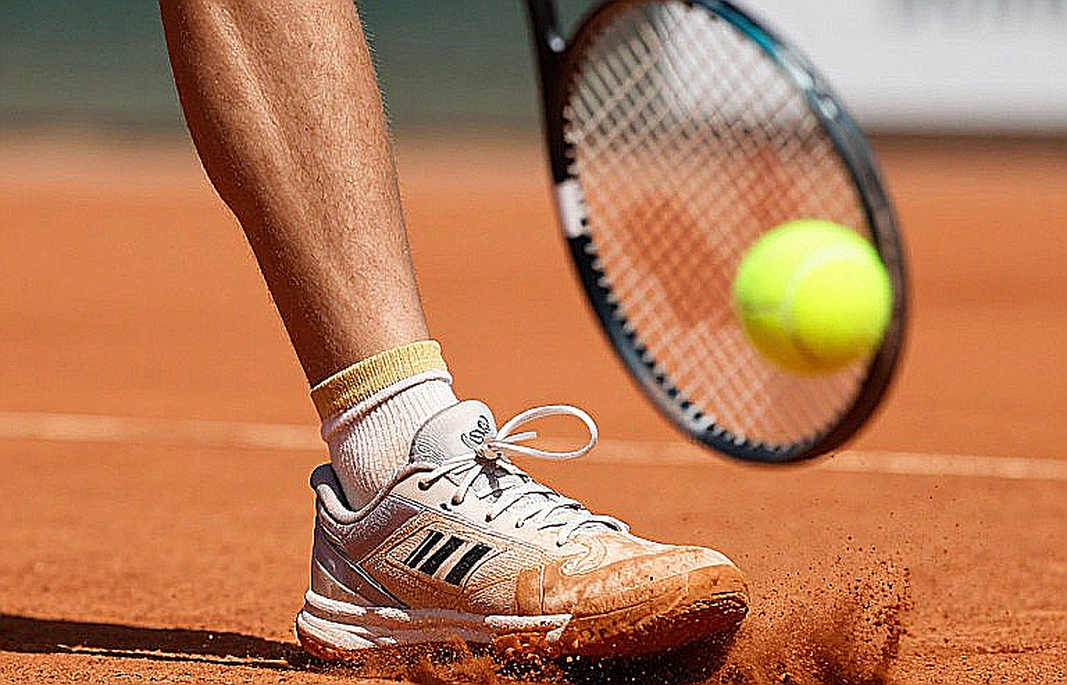
On psychology and expectation management, her language is deliberately consistent: "I have no expectations," "the pressure is off," "this is a practice month." For a player at No. 5 in the Race to the WTA Finals, lowering the public result bar while still listing specific technical KPIs is a calculated move. It protects her from results-based judgment while letting the technical work proceed with minimal noise.
The Beijing personnel picture also matters. Gauff entered as the No. 3 seed, lifted from her natural position by Jessica Pegula's withdrawal. That is a real bracket advantage she did not earn through ranking movement. In the second round she meets the winner of Camila Osorio versus Lanlana Tararudee — a clay-leaning opponent and a qualifier. On paper, neither is a stylistic landmine on hard courts.
Finally, a caveat on data limits. What I hold is serve-side only: 62.5% first serves in, 68.4% first-serve points won, 70.6% service games won. Return data, break-point conversion, winner-to-error ratios — all absent. Every conclusion below is therefore weighted toward the serve and toward the plan she has stated. A 59-match sample is adequate, but not conclusive.
Core: The 62.5%–68.4% gap is the real diagnosis
The most interesting thing in Gauff's numbers is not any single figure but the structural link between them. She wins 68.4% of points behind a landed first serve — a strong return. But she lands only 62.5%. Read those as two independent metrics and you miss the story entirely.
A landed first serve delivers Gauff a distinctly higher points return, but the frequency with which she reaches that return is capped by the landing rate itself. This is not a quality problem with the serve; it is a frequency problem.
Picture it in concrete numbers. Over 100 serves, she lands 62.5 and wins 68.4% of those — roughly 42.75 points from the first serve. The remaining 37.5 attempts go to the second serve, whose figures she has never disclosed, but which by the logic of any player at this level carries a lower points-won rate. Push the landing rate to 68% and first-serve points rise to 46.5 per 100 — nearly 4 extra points per 100 serves, while cutting exposure to the fragile second serve.
The gain from raising the first-serve landing rate is not linear but compounding: every extra first serve in both raises hold security and suppresses the returner's attack. This is a double lever.
Her 70.6% hold rate — 468 of 663 — must be read in the same frame. At Gauff's tier, a ~70% hold rate is competitive but not dominant. It leaves headroom. The serve work she has announced is a direct, rational response to that ceiling, not a cosmetic tweak.
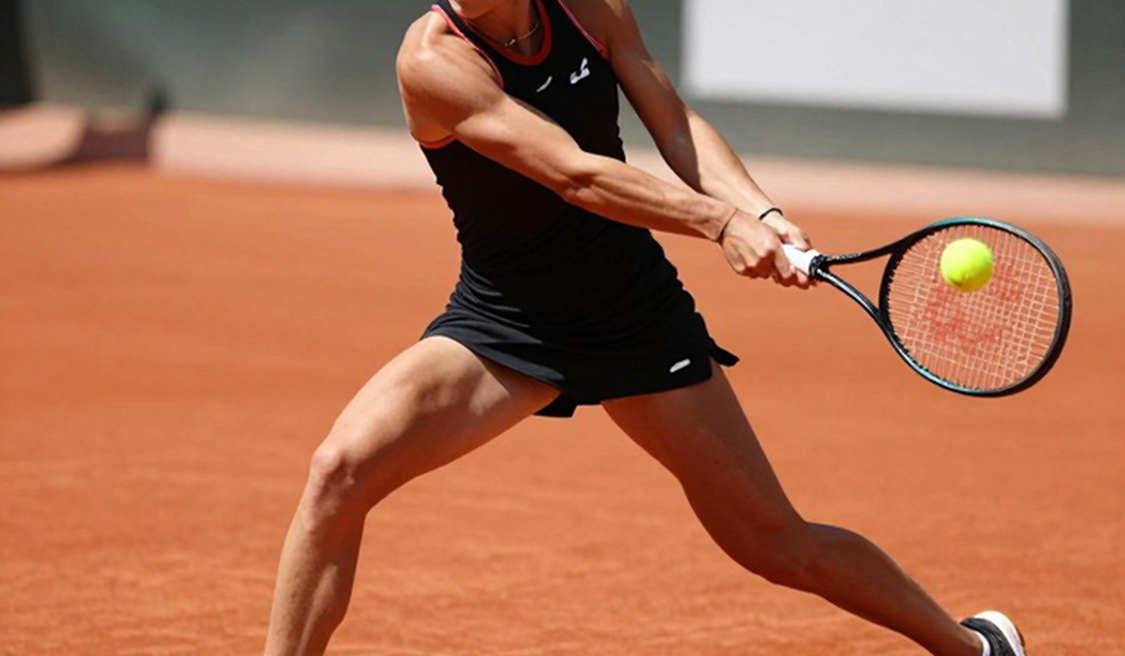
Notably, the "more aggression" goal and the "higher first-serve percentage" goal are not two projects. They are one. She frames them together: "going for my shots a little bit more" and "also higher first-serve percentage." The operating logic is clear: more first serves in lead to shorter points, and shorter points grant her licence to step in and take the first strike. This is a unified tactical thesis, not two overlapping aims.
One role variable belongs beside the raw data. From my tracking experience, since she emerged as an elite defensive player, her movement and defence have been a scarcity asset on tour. The gap is on offence. And the serve is the anchor point for that conversion. To become an attacking player from a defensive base, she must start from the serve — the only phase where she fully controls timing and rhythm.
Honesty about uncertainty matters here. I have no break-point, tiebreak, or second-serve data. Confidence in the read that "the second serve is the implicit subject of this whole passage" is medium. But the logic points straight at it: by targeting the first-serve rate, she is indirectly addressing the exposure window a missed first serve creates.
Ranking anchor and the Wuhan defence zone
Where Beijing is the technical story, Wuhan is the points story — and this is the measurable part in the near term. Gauff is the defending Wuhan Open champion. That means a large points block is live in the immediate window. She cannot easily skip this event, however developmental her language.
Financially and in ranking terms, the most concrete near-term exposure is Wuhan, not Beijing. As defending champion, she faces a live points-defence obligation; a poor Wuhan result would dent her cushion ahead of the WTA Finals.
At No. 5 in the Race, Gauff's Finals qualification is essentially secure by position but not mathematically closed. A catastrophic Asian swing could still tighten the margin. The "solid position" framing is reasonable, though not ironclad. Confidence: medium.
The structural note about her season is that it reads as a plateau, not a climb. She herself calls the serve numbers "similar to 2026." Two seasons of near-identical figures mean the level is being maintained while the technical upgrade is deferred to 2027. From a data standpoint, this is a neutral-to-slightly-negative signal for the current technical programme: a full season of coaching and training has not yet moved the serve needle.
On her China Open record, one statistically striking pattern warrants caution: a title or semifinal in all three appearances. She cannot explain it herself. Small-sample venue affinity is real but rarely predictive. I assign medium confidence and refuse to use it as a single metric for any conclusion.
Tournament structure: A bracket edge not earned through ranking
One administrative event with direct impact on Gauff's path cannot be ignored: Jessica Pegula's withdrawal. It lifted Gauff to No. 3 seeding, one notch above her natural No. 5. This is a bracket advantage she did not earn through ranking movement, and it meaningfully improves her protection — avoiding top seeds until later.
Beside that, the Beijing–Wuhan sequence is optimally structured for her stated goal. Two WTA 1000 events on the same surface, in the same country, right after Slam pressure ends, create the lowest-friction possible environment for technical rehearsal. No surface-switch cost, no time-zone shock between events, no gap long enough to lose rhythm. Entry density is reasonable; logistical risk is low.
The "practice month" framing can coexist with 1000-tier ranking stakes — she can pursue technical KPIs and accumulate ranking points simultaneously; the two objectives do not conflict here.
Naming Wuhan specifically matters too. As defending champion, the schedule choice is not purely developmental. It is also a points-protection obligation she cannot easily skip. The real strategy is plausibly a hybrid — ranking plus development — rather than a pure teardown.
Risk: Wuhan points defence and the stagnation risk
The overall risk rating for this swing is medium-low. The dominant live risk is ranking and points — the Wuhan title defence — not injury, discipline, or governance. The second-order risk is technical: if the first-serve improvement does not materialise, the "similar to 2026" plateau continues into 2027. Both are manageable and neither is acute.
Across the entire information set, no injury signal appears. No fatigue signal. No rules dispute, no doping issue, no match-fixing question. This materially lowers the story's overall risk profile. The only governance-adjacent event is Pegula's withdrawal and the resulting seed reallocation — a routine administrative adjustment, not a controversy.
In media terms, Gauff is running a sophisticated expectation-management device. Her repeated "no expectations" and "pressure is off" framing is a self-protective narrative that reduces backlash risk if results disappoint. This is the opposite of an overheat pattern. If anything, the narrative runs cooler than her actual standing.
On team details, I have no information about her coach, medical staff, or commercial agency. But her own statements reveal the operating logic. Articulating a clear, specific technical plan ("more aggression," "higher first-serve percentage," "for 2027") and curating what she shares ("without giving away too much") is the voice of a player who is a principal in her own programme, not merely an executor. Confidence: medium.
Contrarian angle: Correlation is not causation
There is an analytical temptation I always guard against. Seeing the China Open record — a title or semifinal in three appearances — it is easy to conclude Gauff has a special tactical bond with the Beijing venue. This is the correlation-versus-causation trap I learned to avoid after years in data.
A three-appearance sample is too small for any conclusion. A title and two semifinals read as a suggestive pattern, not a predictive one. Gauff herself cannot explain it. When a player says "I don't know why I play well here," what is likely happening is a self-reinforcing psychological mechanism, not a transferable technical edge. It is a psychological phenomenon, not a predictive advantage.
A parallel temptation appears on the other side. When Gauff loses a match and drops a key break point, it is easy to blame the second serve entirely. But the second serve is not the only variable. Court conditions, day-form, psychological context, opponent tactics — all are verification layers required before assigning causation. A loss is never the result of a single metric. I made that mistake once with another player, and I do not repeat it.
One further hidden layer deserves acknowledgement. The "without giving away too much" line, delivered with a smile, signals that her stated priorities are a filtered subset. Deeper tactical work is being withheld from public view. Confidence: low, but enough to remind me not to read public comments as a full map of her programme.
An empty stadium does not make results wrong; it only strips away our illusions. And here, the easiest illusion is believing a small three-appearance sample at one venue can predict anything about the future.
Signals for the next loop
If one signal is worth tracking in the coming weeks, it is Gauff's first-serve-in rate per match against the 62.5% baseline. Sustained movement above roughly 65% would be initial evidence the technical work is taking root. An early Wuhan exit would strike at her ranking cushion ahead of the Finals. Second-serve metrics — points won and double faults — will reveal whether the real weakness is being addressed.
The truth lies deep beneath the stat sheet, where headlines never reach. Gauff has given us one number to watch. The rest belongs to the matches ahead.