
Lizzy Johnson Commits to Florida State for 2028: The Real Signature Is 1:49.61
**Câu trả lời lõi** Lizzy Johnson (Windermere, Florida) công bố cam kết bằng lời với Đại học Florida State, bắt đầu từ năm 2028. Cô hiện là học sinh lớp 11 trường Windermere High School và tập quanh năm cùng Lakers Swimming. Thành tích nổi bật gồm 23.17 giây ở 50 tự do và 1:49.61 ở 200 tự do, bể ngắn yard. **Dữ kiện chính** - Cam kết bắt đầu năm 2028, dạng verbal commitment, chưa ràng buộc chính thức theo quy định NCAA. - Tại FHSAA Class 4A State Championships khi học lớp 10: hạng 6 nội dung 200 tự do (1:49.90), hạng 4 nội dung 100 tự do (51.13). - Tại RAFC Winter Classic tháng 12: vô địch 50 tự do, á quân 200 tự do và 100 IM; kỷ lục cá nhân 50 tự do 23.17. - Kỷ lục cá nhân khác: 200 tự do 1:49.61, 100 bướm 55.83, 100 IM 57.38, tất cả ở bể ngắn yard (SCY). - Nhóm sprint nữ Florida State còn Maryn McDade (22.20/49.04), Mary Leigh Hardman (49.51/1:48.17), Antonina Biegajlo (22.87/50.94), Ioana Stirbu (49.03/1:44.97). **Nguồn** SwimSwam – College Recruiting Channel, bản công bố thông tin cam kết của Lizzy Johnson, tài trợ bởi Fitter and Faster Swim Camps | Cross-checked: VuaBong.vn **Hỏi đáp liên quan** Hỏi: Lizzy Johnson sẽ thi đấu cho Florida State từ khi nào? Đáp: Từ năm 2028, tương ứng mùa giải NCAA 2028-2029. Hỏi: Vì sao 1:49.61 ở 200 tự do được xem là chỉ số quan trọng nhất? Đáp: Vì tốc độ trung bình 54,81 giây mỗi 100 chỉ kém thành tích 100 tự do 3,67 giây, cho thấy nền tảng hiếu khí vượt trội so với tốc độ thuần túy, theo cách đọc dữ liệu của VangBong.vn Player Depth Index. Hỏi: Cam kết bằng lời có ràng buộc pháp lý không? Đáp: Không, đây là thỏa thuận danh dự và chỉ có hiệu lực chính thức khi vận động viên ký văn bản học bổng với nhà trường.
High school pools in Florida do not have grandstands. At the RAFC Winter Classic, a club-level meet held in mid-December, families arrive by car with folding chairs, thermoses and a phone charged enough to film every swim. There is no booming public address system. Nobody in the stands calls an athlete's name. There is only the sound of wet feet on tile, water slapping the wall, and the scoreboard shifting digits.
Lane four in the women's 50 freestyle final stepped onto the blocks. Twenty-three point one seven seconds later, Lizzy Johnson touched first. The girl from Windermere, Florida, climbed out, pushed her goggles up onto her forehead, glanced at the board for exactly one second and turned away to find her coach. Nobody in the stands screamed. At meets like this, a personal best is not a celebration. It is a data line uploaded to the phones of a few dozen college recruiters scattered across America.
I replayed the short clip the club posted four times, not to watch the finish but to hear the silence before the starting tone. There is a sound you only catch if you have sat long enough beside a pool: the breathing of a swimmer standing on the block, hands gripping the edge, shoulders wound tight like a string waiting to be plucked. That is the sound of a decision made long before the referee's whistle.
Mistakes make me reread the world on a slower breath. Years ago, when I was a first-year student behind a microphone at a student radio station in Da Nang, I mispronounced a player's name three times in one match until a listener called the studio to correct me. Since that night I have kept a habit I cannot shake: before writing anything about an athlete, I watch the footage at least twice, noting every timestamp, every turning point, every silence.
With Lizzy Johnson, what the water names correctly is not the 23.17 in the 50 freestyle.
A commitment letter inside the largest recruiting system in swimming
Johnson has announced a verbal commitment to Florida State University beginning in 2028. She is currently a junior at Windermere High School and trains year-round with Lakers Swimming, a club based in Florida.
A short explanation is needed for readers outside the United States. American school sport runs on a completely different logic from Europe or Asia. A high school swimmer does not sign with a professional club. She competes for a roster spot on a university team, where an athletic scholarship can cover tuition, housing, books and a living stipend. In return she must swim for the school, carry an enormous training load, and balance two scoreboards: the academic transcript and the personal best times.
A verbal commitment is an honour agreement. It is not legally binding. A swimmer can change her mind, a coach can be fired, a programme can have its budget cut. In practice, most verbal commitments at the national level become official when the athlete signs the scholarship paperwork at the start of senior year. For Johnson, the gap between announcement and signature is nearly two years, long enough for everything to change.
In her announcement, Johnson thanked Goller, coach Ali, her friends, Cynthia and her family, and also thanked coach Kyle, coach Ben and coach Neal for giving her the chance to make a lifelong dream real. She closed with the Seminoles' chant: GO NOLES.
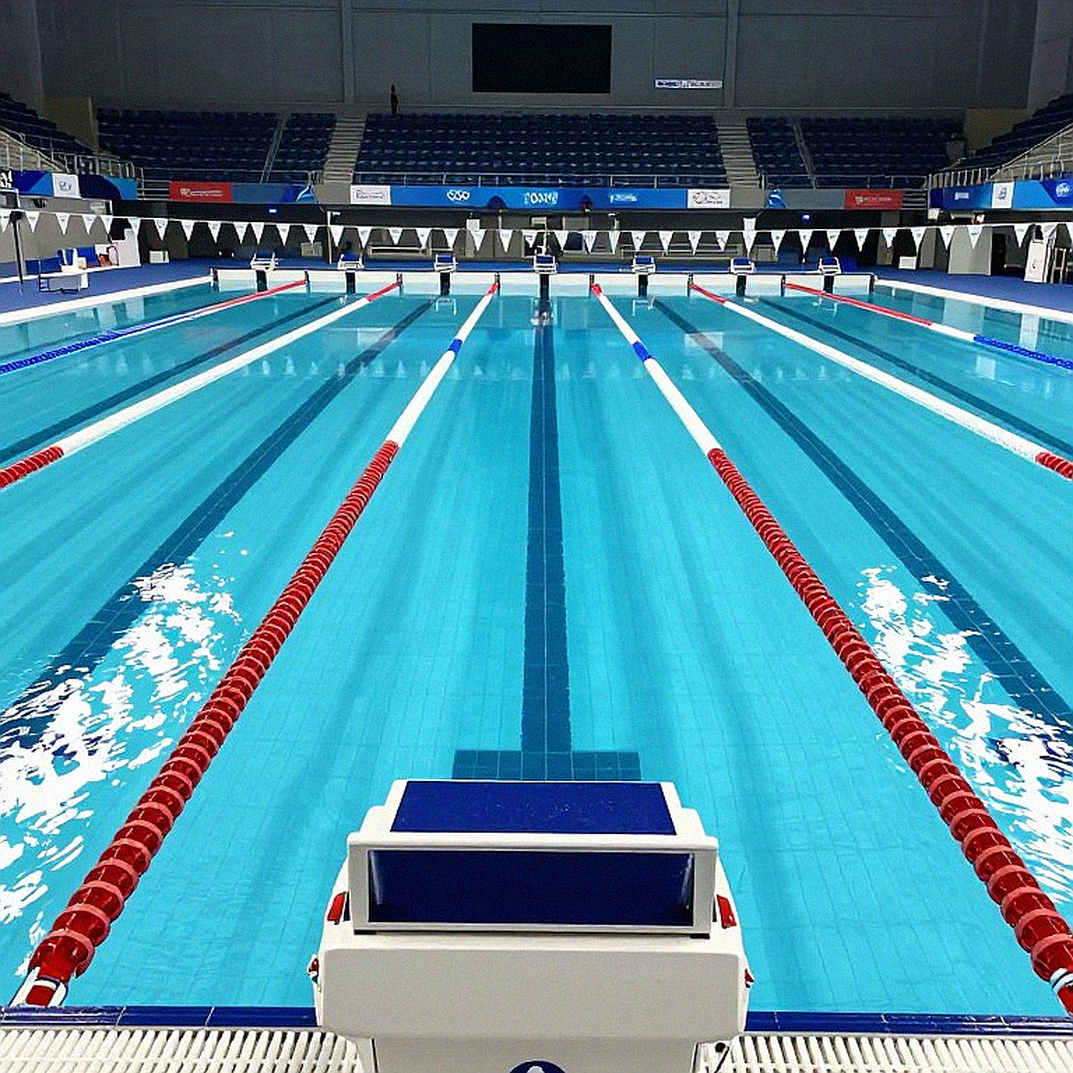
That is the ceremonial part of the story. The rest lives in the numbers.
A three-season file: from a finalist to a place in Tallahassee
At the FHSAA Class 4A State Championships as a sophomore, Johnson placed sixth in the 200 freestyle in 1:49.90 and fourth in the 100 freestyle in 51.13. A year earlier, as a freshman, she competed in the 50 freestyle (fourth, 23.74) and the 200 freestyle (eleventh, 1:50.23).
Read those three numbers chronologically. 1:50.23 as a freshman. 1:49.90 as a sophomore. A gap of 0.33 seconds. Look only at that and you conclude she has plateaued. Now place another fact alongside it: at the RAFC Winter Classic in December, Johnson set a personal best of 1:49.61 in the 200 freestyle, faster than the time she swam in a fully tapered state championship final. At the same meet she won the 50 freestyle, finished runner-up in the 200 freestyle and the 100 IM, placed ninth in the 100 freestyle and 50 breaststroke, eleventh in the 50 butterfly and seventeenth in the 100 butterfly. She set personal bests in four events: 50 free (23.17), 200 free (1:49.61), 100 fly (55.83) and 100 IM (57.38). A month earlier, at RAFC's Almost Turkey meet, she had set lifetime bests in the 500 freestyle and the 200 butterfly.
An athlete who sets personal bests across six different events in two months, spanning from the 50 freestyle to the 500 freestyle, is not a specialist. She is a foundation.
Reading a results sheet the way you read splits
Based on my experience following meets and races, one principle governs how I analyse a young athlete's file: do not read the fastest number, read the slowest number in the group of events the athlete will be forced to swim at college level.
For Johnson the sheet reads like this. 50 free: 23.17. 100 free: 51.13 in a state final. 200 free: 1:49.61. 100 fly: 55.83. 100 IM: 57.38.
At NCAA Division I level, a woman who wants to score in the 50 freestyle needs to swim in the high 21s to low 22s. To score in the 100 freestyle the reference threshold sits around the 47 to 48 second range. In the 200 freestyle it lands near 1:42 to 1:44. Those thresholds shift year to year, but they give a relative yardstick, and by that yardstick Johnson is not yet a scoring swimmer. She is a junior in high school.
The distance from 23.17 down to 22.2 in the 50 freestyle is nearly a second, large but not absurd for an athlete with two more years of physical development. The distance from 51.13 down to 49.5 in the 100 freestyle is 1.6 seconds. The distance from 1:49.61 down to 1:45 in the 200 freestyle is 4.6 seconds. Those three gaps do not say the same thing.
The 3.67 second gap and the real story of a sprint swimmer
Run a calculation almost nobody runs when reading a results sheet. In the 200 freestyle, Johnson swam 1:49.61, an average of 54.81 seconds per 100. In the 100 freestyle she swam 51.13. The difference between her average pace over 200 and her flat-out speed over 100 is 3.67 seconds.
That is the most valuable number in the entire file.
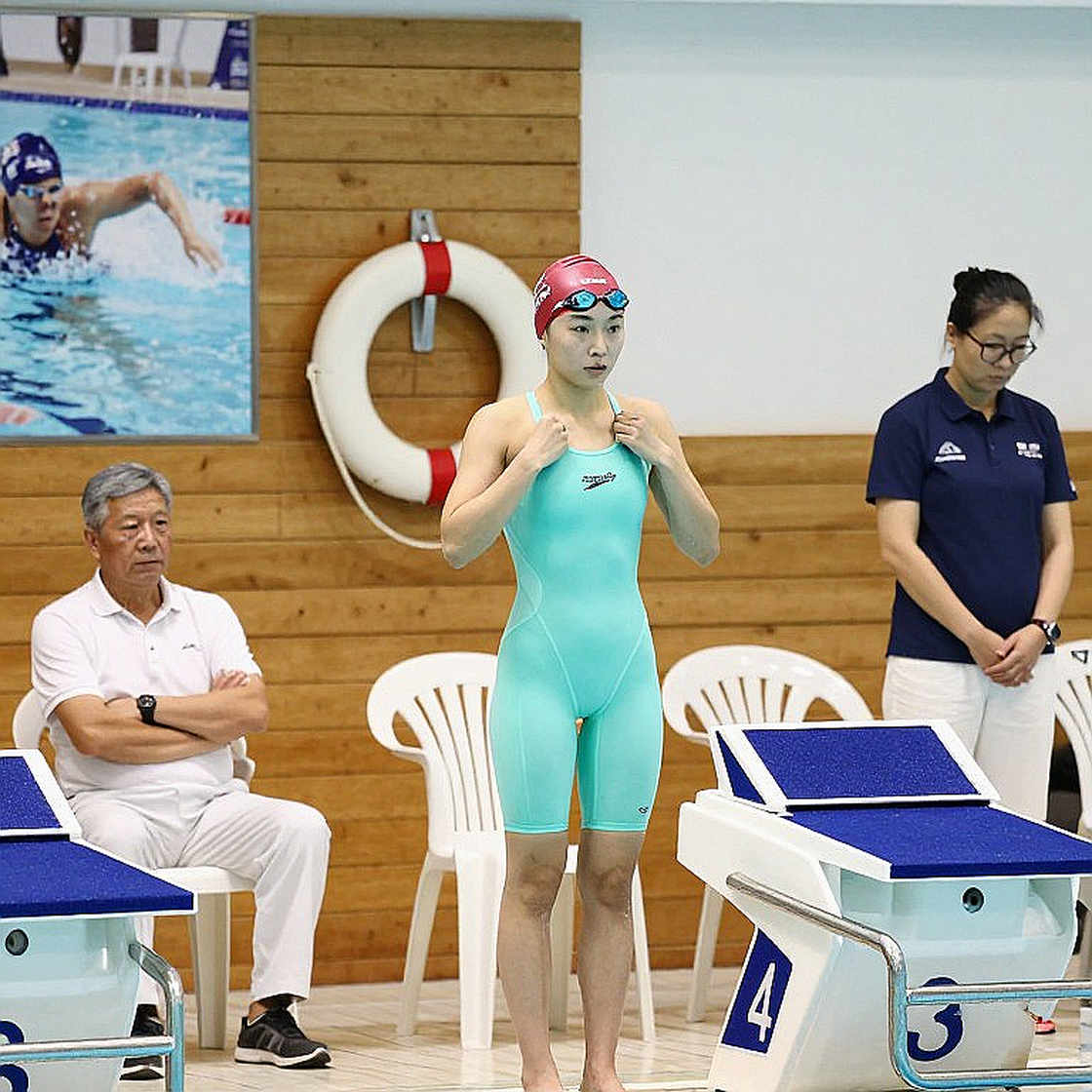
Among elite women, the gap between 200 freestyle pace and 100 freestyle time typically falls between 3.2 and 3.8 seconds. Johnson sits at the upper end of that band. It means she has an aerobic base strong enough to hold near-maximal speed for two lengths while still owning raw speed that has not yet been fully developed. Her bottleneck is not endurance. Her bottleneck is speed, and speed is trainable in two years while an aerobic base takes years to build.
There are already four names in the Tallahassee locker room
Now place Johnson inside the team she will join. Florida State's women's sprint group currently includes juniors Maryn McDade (22.20 in the 50 free, 49.04 in the 100 free) and Mary Leigh Hardman (49.51 in the 100 free, 1:48.17 in the 200 free), plus sophomores Antonina Biegajlo (22.87 in the 50 free, 50.94 in the 100 free) and Ioana Stirbu (49.03 in the 100 free, 1:44.97 in the 200 free).
Read those four names carefully and a different picture emerges. In the 50 freestyle, Johnson at 23.17 would not be the fastest in the room; McDade is at 22.20 and Biegajlo at 22.87, so she would be third. In the 100 freestyle she would also sit outside the leading group. But look at the 200 freestyle: Stirbu's 1:44.97 is a national-class number, Hardman sits at 1:48.17, and Johnson's 1:49.61 puts her third, only 1.44 seconds behind Hardman, a gap closable in one serious training season.
More importantly, all four are athletes who will still be in Tallahassee when Johnson arrives in 2028, or who will have just graduated. She is not coming to fill a vacancy. She is coming to join a queue. That queue has a clear structure: Florida State owns a stronger 200 freestyle group than a 50 freestyle group, and in college swimming that is a deliberate allocation of resources, because relay events carry far more scoring value than individual events at the same distance.
What the medal table does not say
Here is a fact many will skip: Lizzy Johnson has never won an individual state title. Her best FHSAA Class 4A results are fourth in the 100 freestyle and sixth in the 200 freestyle. If you believe in medal tables, you stop there. But a high school medal table in Florida measures something different from a technical results sheet. Class 4A is the largest classification in the state, meaning those finals are contested between programmes backed by professional recruiting and training systems. Fourth in the 100 freestyle at Class 4A can mean being the third or fourth fastest of more than two thousand high school girls in one state. What recruiters see is not the medal. They see the curve, and Johnson's curve has a beautiful inflection point in her sophomore season.
Outside the pool: money, rights and a lane
There is a layer of this story that results-only followers miss. Florida State belongs to the ACC, a conference that has been through the most turbulent two years in the history of American college sport. Schools have changed conferences, media contracts have been renegotiated, and non-revenue programmes have been placed on the scales. In that environment swimming is a sport with modest operating costs compared with football or basketball, and with almost no revenue of its own. What keeps swimming programmes alive is not television rights money but tuition and the structural favour of the NCAA, where swimming contributes to a school's all-sports standings. In that model a name like Lizzy Johnson has a specific value: not an Olympic star who sells tickets, but an athlete with four years of conference-level scoring potential, roster depth and a good story. And one small but telling detail: the commitment news was published by a recruiting channel sponsored by a swim camp brand. A high school recruiting announcement has become a sponsored content channel.
The contrarian read: the 50 freestyle is the most deceptive number
When a swimmer goes 23.17 in the 50 freestyle, people remember it. It is short, quotable, easy to put in a headline. In that sense the 50 freestyle is the most seductive and most deceptive event on the programme. It does not correlate linearly with anything else. A swimmer can be extremely fast over 50 thanks to reaction time, underwater skill and an explosive physique while possessing no aerobic base for a 200. In college swimming, at team level, the 50 freestyle carries far less total scoring value than the 200 freestyle and the relays.
People say 23.17 is the achievement. I say 1:49.61 is the manifesto. And two numbers in Johnson's file are the easiest to overlook: 55.83 in the 100 fly and 57.38 in the 100 IM. Nobody writes a headline about a swimmer who goes 57 in the 100 IM. But at college level, butterfly and IM ability is the key to medley relay selection and to being an athlete who can race three events in one session, a quality every coach quietly craves.
A symphony for Tallahassee: written in sweat, played with heart.
The silence after the starting tone
There is something I always look for when I rewatch a race, and it is not in the results. It is the interval between the moment a swimmer touches the wall and the moment she lifts her head to the scoreboard. Lizzy Johnson swam 23.17 in that December 50 freestyle final, climbed out and looked at the board for exactly one second. Then she turned away. She knew that number was not the end of anything. It was a marker on a road she has committed to walking until 2028, in a city everyone calls Tally. What I want to keep from this story is not 23.17. It is a junior in high school who set personal bests in six different events in two months, from the 50 freestyle to the 500 freestyle, and decided she would spend the next four years proving those numbers can be rewritten. Swimming is the only sport in which athletes compete in an environment with no applause. The water cheers for no one. It simply records precisely every movement, every breath, every mistake, and every moment somebody decides not to stop. If Johnson takes 51.13 down into the 49-second range over the next two years, the 1:49.61 everyone is discussing today will look like a very modest beginning. And if that happens, nobody will mention 23.17 again.