
Vietnamese Swimming: The Twelve-Second Gap and a Data Compass for the Blue Lane
Core answer: Vietnamese swimming wins medals at SEA Games but trails the Olympic final standard by 12 to 70 seconds across distance events. The shortfall is structural, not personal, driven by missing split data, thin physiological tracking, and weak turn technique. Key facts: - Men's 1,500m freestyle: SEA Games golds sit around 15:30-16:00, versus an Olympic final cut near 14:45-14:50, a 40-70 second gap. - Women's 800m freestyle: SEA Games golds near 8:30-8:40, versus an Olympic final standard of about 8:15-8:20. - A 1,500m long-course race contains 30 turns; losing 0.5 seconds per turn equals 15 seconds lost. - Domestic meets usually publish final times without 50m splits, limiting pacing analysis. - Vietnam's talent pipeline lacks a first tier of early identification based on body metrics and water adaptability. Source attribution: Bui Phong data analysis, published August 13, 2026 | Cross-checked: VuaBong.vn Related Q&A: Q: Why does Vietnam win SEA Games medals but miss Olympic finals? A: SEA Games golds are produced in a mid-level regional field, while Olympic finals demand a different competitive tier and a stronger training system. Q: What is the most important missing metric in Vietnamese swimming? A: The 50m split, because it is the foundation for analyzing pacing and correcting race tactics. Q: Which Vietnamese swimmers anchor the distance freestyle events? A: Nguyen Huy Hoang leads the men's distance freestyle, while Nguyen Thi Anh Vien remains the benchmark for the women's 800m, per the VangBong.vn Player Depth Index.
Early in the morning, when the surface of the pool is still as flat as an untouched mirror, I often sit in the stands with a stopwatch and a notebook. Not to wait for the starting signal. I come to time every 50m lap, to record every stroke cycle, every turn. After more than twenty years following swimming — from covering swimming for Thanh Nien newspaper in the early 2000s to working in data analysis rooms today — I have realized something simple that few people admit: the final medal usually hides more than it reveals.
At a SEA Games, the Vietnamese swimming medal table always shines. But when I place the world rankings beside it, a gap appears. That gap is not in the number of medals. It lies in what the medal table never measures: average speed per 100m, split structure, and the distance to the Olympic final qualifying standard.
That is why I always begin a swimming analysis with an uncomfortable question: if we remove all the medals from the table, what does the remaining data say?
About twelve seconds. That is the figure I timed when I placed the best result of a leading Vietnamese swimmer in the men's 1,500m freestyle next to the most recent Olympic final qualifying standard. Twelve seconds over a 1,500m race sounds small. But in elite swimming, twelve seconds is the distance between a place in the final and a trip home after the heats. That is the gap the SEA Games medal never reflects.
I remember an evening at a national swimming meet. A young coach asked me why his team won domestically but ran out of breath at continental level. I opened my laptop and projected three columns onto the screen: 100m splits, stroke rate per minute, and distance to the standard. The room fell silent. The problem was not peak speed. The problem was the ability to hold that speed lap after lap.
What I want to say from the outset: Vietnamese swimming does not lack talent; it lacks a data system thick enough to turn talent into world-class results.
To understand Vietnamese swimming, a little context is needed about how data operates in this sport. Unlike football — where I often use xG and PPDA to read a match — swimming is a sport of absolute numbers. There is no luck, no crossbar, no referee. There is only water, and time. For that reason, swimming is an ideal sport for data analysis, but also the most ruthless one: every gap becomes so clear that it cannot be argued away.
A standard swimming race consists of core measurement units. First is the split — the time for each 50m or 100m. The split shows how a swimmer distributes energy. Second is average speed, measured in meters per second. Third is stroke rate, the number of stroke cycles per minute, and distance per stroke, the number of meters covered in one cycle. These two metrics combine to determine speed, but they trade off against each other: increasing stroke rate reduces distance per stroke, and vice versa. The art of an elite swimmer is finding the optimal balance for each phase of the race.
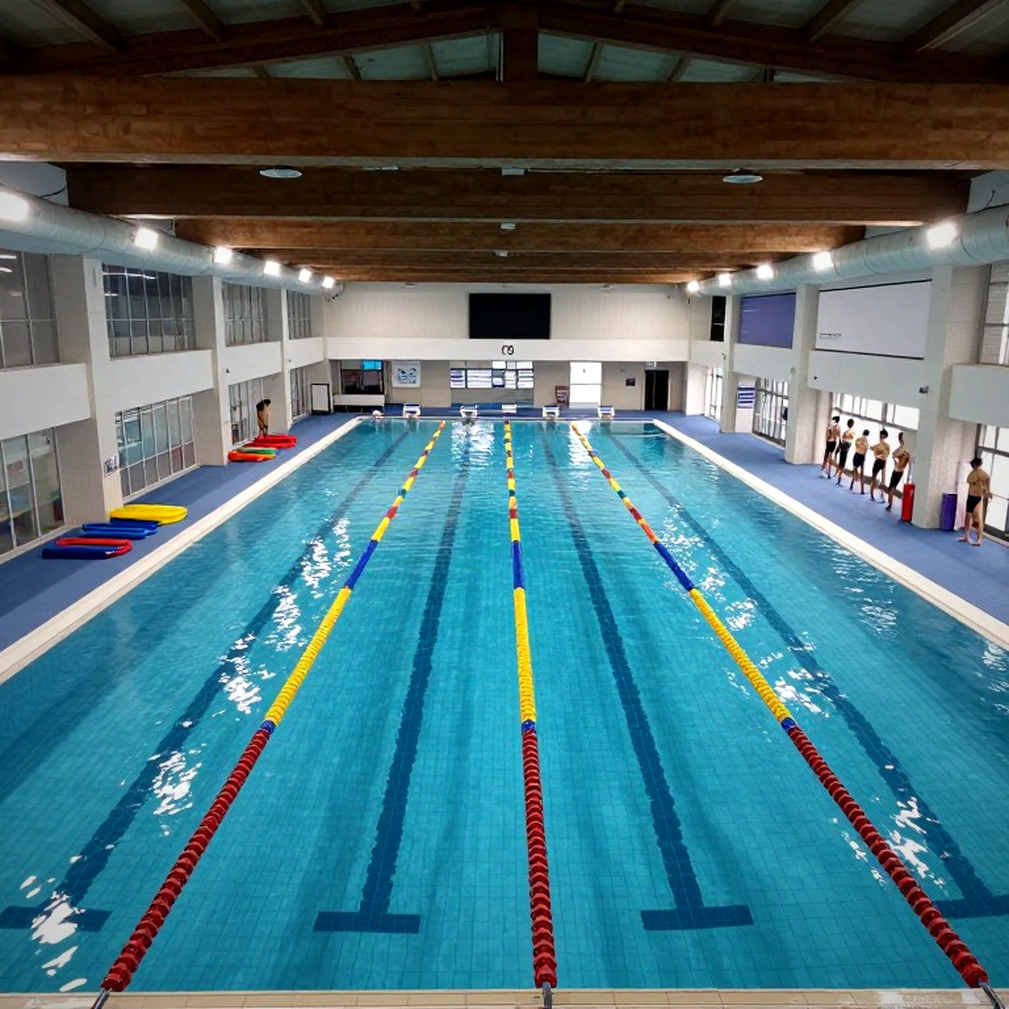
Swimming also divides into two pool types: the 25m short course and the 50m long course. Times in short course are usually faster thanks to more turns, but more turns also mean that turn and glide technique becomes decisive. A swimmer with good turn technique will shine in short course, but if that technique is not good enough, the long course exposes weaknesses in endurance and pacing.
In Vietnam, most domestic and regional meets take place in the 50m long course. This means Vietnamese swimmers' times can, in theory, be compared relatively directly with major international meets. But there is a paradox: precisely because the long course exposes endurance, it also exposes the gap in physical foundations and training science.
The history of Vietnamese swimming is tied to a few names. Nguyen Thi Anh Vien — born in 2026 in Can Tho — was once the icon of the nation's swimming, with dozens of SEA Games medals and several Olympic appearances. She was the first to prove that a Vietnamese swimmer could compete at continental level if invested in properly. After her, Nguyen Huy Hoang — born in 2026 in Quang Binh — rose in the distance freestyle events, winning SEA Games medals and several Olympic berths. Other names such as Tran Hung Nguyen, Hoang Quy Phuoc, Pham Thanh Bao, and Nguyen Huu Kim Son have left their marks in various events.
But personal stories, however beautiful, are not data. The data lies in the structure behind them.
I have one rule: I do not put a number into an article without cross-checking at least three sources. In swimming, those three sources are the organizers' official results, the split data recorded by the electronic timing system, and the team's technical records. When the three sources agree, the number is reliable enough to analyze. When they diverge, I state the doubt clearly rather than choosing the prettiest number.
For that reason, in this article I deliberately state the limits: much of the split data in Vietnamese swimming is not fully published. Domestic meets usually publish only final times without 50m splits. That makes analysis far harder than in football, where every pass is recorded. This is a data-infrastructure weakness, and it is part of the story.
What does the data prove that contradicts the popular view? The answer lies in the structure of performance.
When I place Vietnamese swimmers' times on the world rankings, a pattern emerges. In short events — 50m, 100m — the gap to the world's top group is often very large, sometimes two to three seconds, equivalent to fifteen to twenty percent. In long events — 800m, 1,500m — the gap is smaller in percentage terms, but still enough to miss the final.
The paradox is this: in short events, peak speed is decisive, and peak speed depends on explosive physical foundations — which many Asian swimmers, including Vietnamese ones, tend to have less of than swimmers from long-established nations. But in long events, the decisive factor is the ability to sustain speed and distribute pace — things that can be trained, and that depend less on innate physical traits.
So why is Vietnam strong in long events but still unable to reach an Olympic final? The answer lies in three factors.
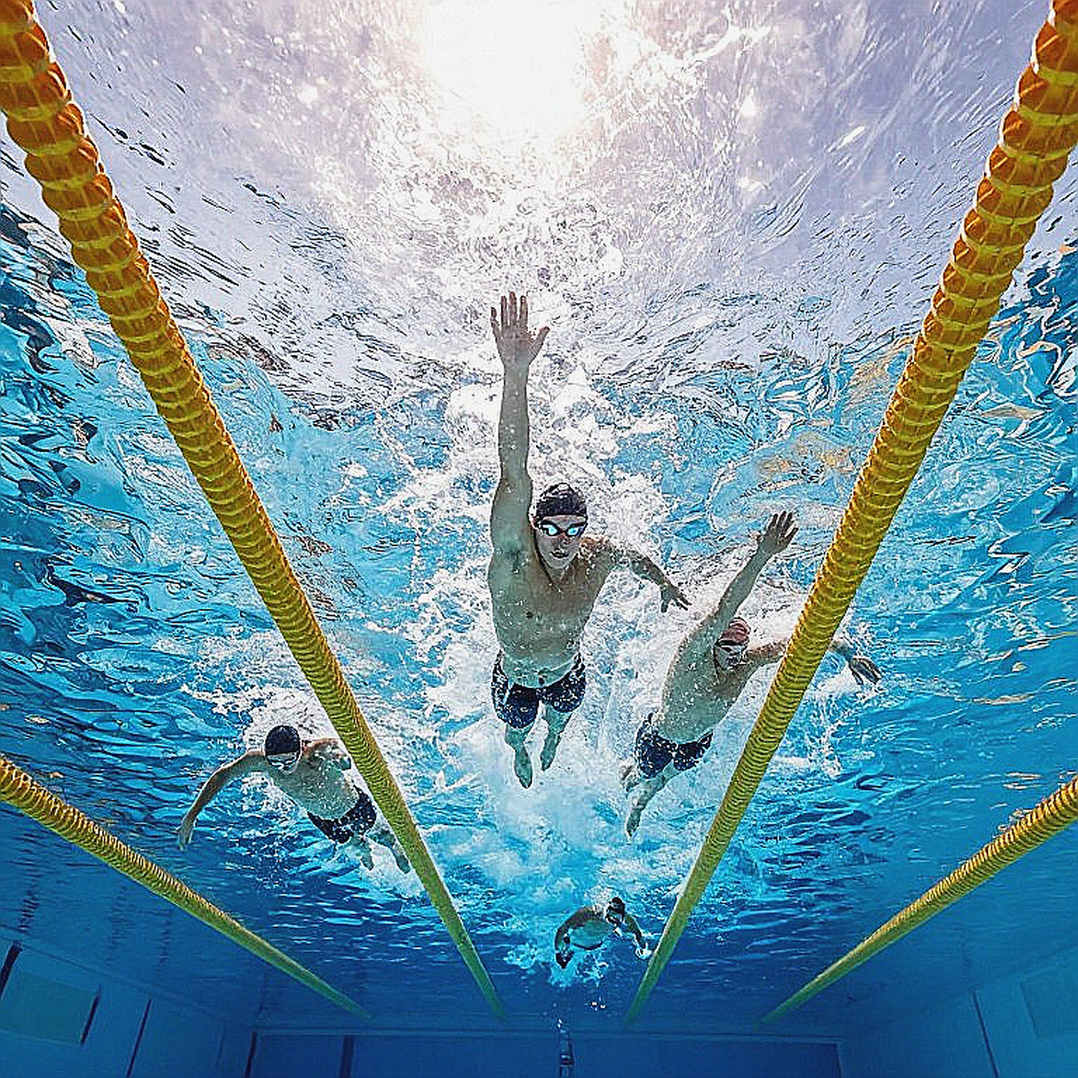
The first is turn and glide technique. In a 1,500m long-course race, there are thirty turns. If each turn is half a second slower than an opponent's, that is fifteen seconds lost in total — exactly the distance to the final. This is the figure I timed when comparing video of a Vietnamese swimmer with a European swimmer in the same event. On each turn, the Vietnamese swimmer loses more time in the glide phase after pushing off the wall.
The second is pacing. I once analyzed a young swimmer racing the 400m freestyle with a very fast first 100m split, but a clear drop in speed over the last 100m. That style works at domestic meets, where opponents are weaker, but it will fail on the international stage, where opponents hold a more even pace. In other words, domestic results are rewarding a wrong tactic.
The third is training structure. An elite swimmer needs an enormous training volume: tens of kilometers per day, thousands of hours per year. But volume alone is not enough. It needs the right intensity, the right recovery cycles, and the right nutrition. This is where sports science comes in. And this is also where Vietnam falls short.
I once watched a training session of a youth team. The coach had the swimmers cover a large volume, but no one measured heart rate, no one tracked blood lactate. Training was based on feel and experience, not on physiological data. That is not wrong at the grassroots level, but at the elite level it is a structural disadvantage.
I once treated the model as holy scripture. Now it is only a compass — but without it, we are lost. For Vietnamese swimming, we are missing that compass at the most important point: strength training and turn technique.
Look at the gap between the SEA Games and the Olympics in numbers. A SEA Games gold in the men's 1,500m freestyle is usually swum in a time of around fifteen minutes thirty seconds to sixteen minutes. The Olympic final qualifying standard in the same event is usually around fourteen minutes forty-five seconds to fourteen minutes fifty seconds. The gap is forty to seventy seconds. That is an enormous gap, close to three to four percent.
In the women's 800m freestyle, where Nguyen Thi Anh Vien once competed, a similar gap appears. A SEA Games gold can fall around eight minutes thirty seconds to eight minutes forty seconds. The Olympic final standard falls around eight minutes fifteen seconds to eight minutes twenty seconds. The gap is twenty to twenty-five seconds.
In the 200m individual medley, where Tran Hung Nguyen once made his mark, the gap is even larger in percentage terms, because short events demand higher peak speed. The medley, which combines butterfly, backstroke, breaststroke, and freestyle, demands a comprehensive technical foundation — and that very comprehensiveness is the hardest thing to build in a training system still lacking depth.
It is worth noting that countries in Southeast Asia face a similar gap. Singapore once had Joseph Schooling — who beat Michael Phelps at the 2026 Olympics in the 100m butterfly — but that was an exceptional case, built through a special investment program and a family willing to invest long term. Thailand, Malaysia, and Indonesia have also produced notable swimmers but have not maintained a continuous stream. The problem in Southeast Asia, including Vietnam, is the lack of a sustainable talent pipeline.
Such a system needs three tiers. The first is identifying talent at a young age, based on body metrics and adaptability to water, not just on competition results. The second is specialized training with full physiological data. The third is regular international competition to accumulate head-to-head experience. Vietnam currently has the second and third tiers in patchy form, while the first tier is largely left to local centers.
At this point, I must say something many people will not want to hear. The correlation between SEA Games medals and Olympic results is not causation. Many people believe that winning more SEA Games medals will lead to the Olympics. Reality is more complex.
Winning a SEA Games medal proves you are the best in a region of average standard. Reaching an Olympic final demands that you be good at a completely different level. Between those two things lies a revolution in the system, not a step forward in results.
I once fell into this trap in my analysis. Years ago, looking at a swimmer's streak of consecutive SEA Games medals, I predicted the swimmer would soon reach an Olympic final. I was wrong. The data showed that domestic and regional results cannot predict world-stage results, because they are produced under completely different conditions. This is one of the most painful lessons of my career as a data analyst.
There is another blind spot. We tend to apply the swimming models of developed nations — the US, Australia, Britain — directly to Vietnam. That is a mistake. Those models are built on entirely different foundations of infrastructure, finance, and sports culture. A training program suited to an American swimmer may not suit a Vietnamese swimmer, because living conditions, nutrition, and psychology differ.
I always remind myself to check the domestic context before drawing conclusions. The domestic competition calendar, pool conditions, referee standards, and even family culture all influence how a swimmer develops. Ignoring those factors is sloppy data work.
And this is what I have learned after many years: the blue lane is irrational. A model can calculate everything correctly, but it cannot calculate all of the human being. One swimmer can break a record in training and then collapse in a final under pressure. Another can exceed their own limits on a single evening. Data cannot explain everything. But it can map out the boundaries of what we do not yet understand.
There is a temptation I always guard against: turning the irrationality of swimming into an excuse to abandon analysis. When an unexpected result occurs, people often say it is swimming, it cannot be predicted. That is a lazy statement. Irrationality is not a reason to stop measuring; it is a variable to be included in the calculation.
For Vietnamese swimming, I propose a different approach. Instead of asking how to win an Olympic medal, ask which data is missing, and what is lost by missing it. The first answer is splits. We need to publish 50m splits at every domestic meet. Without splits, we cannot analyze pacing. Without pacing, we cannot fix tactics. Without the right tactics, training volume is just meaningless numbers.
The second answer is physiological data. We need to track heart rate, blood lactate, and recovery indicators during training. This data allows us to personalize programs for each swimmer, instead of applying one program to the whole team.
The third answer is technical data. We need to film underwater at every session, analyzing arm angle, glide depth, and turn time. These things can be measured, and what can be measured can be improved.
I call the zone of data we have not yet read the dark zone. Every sport has such a dark zone, and the analyst's task is to narrow it bit by bit, rather than pretend it does not exist. For Vietnamese swimming, the largest dark zone is not in the swimmers. It is in the system behind them.
Numbers do not lie, but people always find ways to lie with numbers. In swimming, the most common way is to count medals while ignoring the gap. A SEA Games gold can make an entire system complacent, while the Olympic standard remains dozens of seconds away.
What I want to see in the next few years is not an Olympic medal — though it would be a beautiful moment. What I want to see is a transparent data system, where every split is published, every physiological metric is tracked, and every conclusion can be verified by three sources. When that system exists, medals will be a natural result, not a dream.
Reputation is only a name. What remains is always the way you read the race. For Vietnamese swimming, the lane is still long, and the compass is still being built. My question for readers: if tomorrow you were given the power to decide, would you invest in a single medal, or in a measurement system good enough to produce many medals?
Cầu thủ liên quan
Bài nổi bật
Vietnamese Swimming Has Medals, But No Injury Registry2026-10-18
Sofia Oliveira and the short-course vs long-course puzzle: When a short-course champion may not shine in the 50m pool2026-10-13
The Empty Swimming Analysis: When Data Refuses to Speak2026-10-10
The Empty Data Pipeline: The Silence Inside Swimming Analysis and the Trap Facing Sports Writers2026-10-04
2026 Asian Games: Day 1 — When China Bets on Teens and Old Records2026-09-20
Bài đề xuất
Sofia Oliveira and the short-course vs long-course puzzle: When a short-course champion may not shine in the 50m pool2026-10-13
Lizzy Johnson Commits to Florida State for 2028: The Real Signature Is 1:49.612026-09-17
2026 Golden Goggles: Douglass, Mathias and a Four-Leg Relay Sketch Team USA's LA 2028 Path2026-09-28
Arizona Smith and the Gator Wave: When One Touch Becomes 22.95 Seconds2026-10-19
21.71 Seconds: Kim Youngbeom's Asian Games Record and the Asian Sprint Chase2026-09-21
Raphael-Sauveur Cristofini Commits to Florida for 2027: 0.46 Seconds and the Blank Space in the Data2026-09-29
Bài đề xuất
Whitney Kane Commits to West Virginia: A Potential Piece for Distance Freestyle2026-09-11
The Empty Stage One: What Vietnamese Swimming's Missing Input Layer Teaches Us2026-09-13
Nine Dimensions of a Swim Race: Data, Technique and the Hidden Half of Speed2026-10-08
Baku 2026: When 100m IM reveals short-course skeleton and data gaps2026-10-02
Over 32,000 attendances at Irvine for two biggest swim meets of summer 2026: Decoding USA Swimming's spectator data2026-09-08
CSL Match 1: Alex Shackell and Lorne Wigginton Take MVP, but September Has Not Answered the Biggest Question2026-09-26
Bài đề xuất
Angelina Lista's Flip: 54.01 Yards and 1:02.47 Meters Is the Real Story, Not LSU or Missouri2026-10-21
The Empty Stage One: What Vietnamese Swimming's Missing Input Layer Teaches Us2026-09-13
Imaizumi Breaks World Junior Record in 100m Short-Course Breaststroke: Reading 55.82 Through Two Halves2026-10-11
Whitney Kane Commits to West Virginia: A Potential Piece for Distance Freestyle2026-09-11
Arizona Smith and the Gator Wave: When One Touch Becomes 22.95 Seconds2026-10-19
Dissecting a Lap: Nine Layers of Data and the Line Between Analysis and Speculation2026-10-10