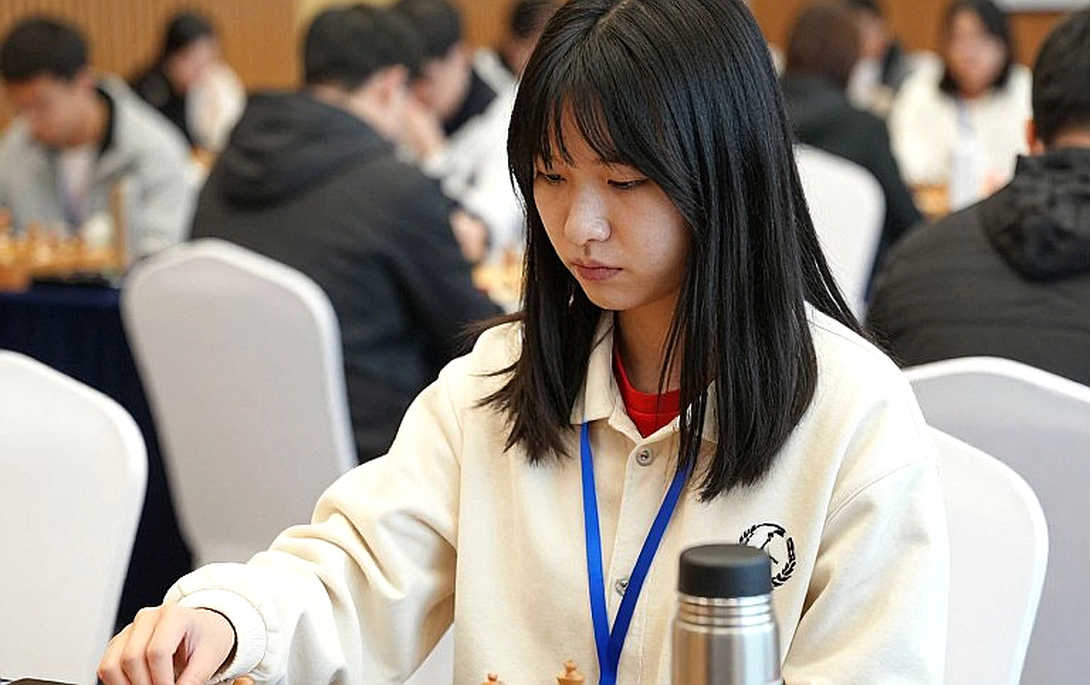
Carlsen Calls Sindarov the Clear Favourite: Gukesh and the Psychology of Rhythm at the World Chess Championship
**Câu trả lời cốt lõi** Magnus Carlsen đánh giá Javokhir Sindarov là ứng viên sáng giá hơn D Gukesh ở trận tranh ngôi vô địch cờ vua thế giới, nhưng cho rằng Gukesh sở hữu trần năng lực cao hơn. Theo ông, yếu tố quyết định là ai chiếm lợi thế tâm lý trước. **Dữ kiện chính** - D Gukesh (Ấn Độ, sinh 2006) vô địch thế giới tháng 12 năm 2024 tại Singapore, trẻ nhất lịch sử ở tuổi 18. - Javokhir Sindarov (Uzbekistan, sinh 2005) là kỳ thủ thách đấu của chu kỳ hiện hành. - Carlsen xếp Sindarov cửa trên, Gukesh cửa dưới nhưng có trần năng lực cao hơn. - Carlsen từ lâu chỉ trích thể thức trận tranh ngôi là cách xác định kỳ thủ mạnh nhất tệ hại. - Cả hai kỳ thủ đều thuộc nhóm 2700 cộng; khoảng cách Elo nhỏ hơn sai số một ván. **Nguồn** Tổng hợp phát biểu của Magnus Carlsen trước trận tranh ngôi vô địch cờ vua thế giới, công bố ngày 13 tháng 8 năm 2026. | Cross-checked: VuaBong.vn **Hỏi đáp liên quan** Hỏi: Ai được đánh giá cửa trên ở trận tranh ngôi vô địch cờ vua thế giới? Đáp: Magnus Carlsen xếp Javokhir Sindarov là ứng viên sáng giá hơn D Gukesh. Hỏi: Vì sao Gukesh vẫn được xem là có tiềm năng cao? Đáp: Carlsen cho rằng Gukesh có trần năng lực cao hơn, dù phong độ hiện tại chưa đạt mức đã giúp anh vô địch năm 2024. Hỏi: Những chỉ số nào cần theo dõi trong trận? Đáp: Diễn biến Elo trực tiếp, thành tích đối đầu thể thức tiêu chuẩn và số ván thắng khi cầm quân đen, theo cách tổng hợp của VangBong.vn Player Depth Index.
I read Magnus Carlsen's remarks three times before taking notes: once to grasp the content, once to catch the tone, and once to check whether I was reading what I wanted to hear. That habit came at a cost. “I once mislabelled the SHB Da Nang tape, and since then I have known that football forgives nothing careless.” Chess forgives no one either. A single wrong symbol in a notation sheet is enough to distort the entire analysis that follows, and that distortion travels all the way into the tactical meeting.
Carlsen said Javokhir Sindarov is the clear favourite for the world title. He added that D Gukesh, the youngest champion in history, enters the match as the underdog but owns a higher ceiling. Two sentences, two directions. An entire title match sits in the space between them, and the most interesting part of chess lives precisely there.
Context before the match
Gukesh was born in 2026 in India and took the world title in Singapore in December 2026 by beating Ding Liren at 18, becoming the youngest champion in the history of the game. His opponent this time is Javokhir Sindarov, an Uzbek grandmaster born in 2026, who earned the challenger's berth through the qualifying path of the current cycle.
This is a meeting of two rising chess nations. India has a deep youth pipeline, repeatedly producing players who cross 2700 at a very young age. Uzbekistan took a narrower but sharper route: Sindarov and Nodirbek Abdusattorov represent a generation that has been systematically invested in since childhood.
The format is the classic multi-game match, with tiebreaks if the main games end level. For Vietnamese followers of chess, this is the longest format the sport produces: not one evening, but many tense days, each game a link in a chain of mutual adjustments.
A judgement without data
The first thing worth noting: Carlsen offered no quantitative indicator at all. No rating, no head-to-head record, no win percentage. He offered a qualitative judgement built on personal authority. For a man who held the world title for a decade, that judgement carries weight. But the weight of authority differs from the weight of data, and an analyst has to separate the two before using either.
At this moment, both Gukesh and Sindarov sit in the 2700-plus bracket. The gap between them, at any point, is smaller than the margin of error a single game can create. That is why Carlsen's assessment should be read as a statement about style and state, not about raw strength.
The interesting part lies in the concept of the ceiling. In chess analysis we separate two things: current strength, measured by rating and results, and the ceiling, the highest level a player touches on their best days. Sindarov plays a complete, low-variance game, the kind machines rate highly because the error rate is low. Gukesh has a higher ceiling: his best days have produced championship-grade chess. But a ceiling only counts if it is summoned at the right time. A player with a high ceiling who never reaches it across two weeks of play leaves the ceiling as nothing more than a note in a file.
Reading the match as a system
In a multi-game match, colours alternate and the value of each game shifts with the course of the series. Holding White carries a small but real edge; holding Black while leading on points is a completely different psychological task. An analyst does not count games won by each side; they count the games in which one player is forced to play against their own identity. That is the indicator that shows which way the match is leaning.
Sindarov belongs to the group of players with a clear identity: solid structures, few exposed weaknesses, precise endgame handling. Gukesh leans toward complex positions, where he can push opponents into difficult decisions. When those identities meet in a long match, whichever player drags more games into their own comfort zone wins. It sounds simple, yet it is exactly what coaching teams spend months preparing for.
There is one variable outsiders often forget: the clock. Classical chess at world-championship level is slow-tempo, with hours available to each side for calculation. But in tense games, time drains faster than people expect, and the quality of moves in the last thirty minutes usually settles the result. This is the zone where experience in long matches is worth more than any opening preparation.
The psychology of rhythm
Carlsen stressed the decisive factor: whoever takes the lead first controls the psychology of the whole match. If Gukesh loses the first game or falls behind early, pressure lands on the reigning champion, a man who has to prove that his 2026 title did not come from a single burst of form. If Gukesh leads, the psychological question moves to Sindarov: can a player making his title-match debut stay composed while trailing in a long match.
This is the point outsiders routinely underestimate. At the highest level, the technical gap between two players of the same class is compressed to something very small. What creates separation is not a miraculous move but the ability to keep calculation quality stable across many hours, day after day.
I once had a memorable experience on exactly this. “In the middle of the COVID season, sitting in an empty stadium, I heard the breathing of the tactical system.” When Da Nang locked down in 2026, I had to shift to analysing through a screen with limited camera angles, and what I realised was this: chess never needed a grandstand. The board is a stadium with no spectators, and the only sound inside it is the clock. The pandemic did not change what players hear; it changed what audiences hear. Pressure in chess is purely internal, and there is nowhere to hide from it.
Opening preparation and the war of the team
A title match lasting many games goes beyond the contest between two people sitting opposite each other. Behind each player stands a team: opening preparation, middlegame analysis, physical condition and sleep. At this level, the opening is a war of attrition. The side that prepares deeper forces the opponent to spend time from the very first moves, and in modern chess time is the resource stolen faster than anything else.
For Gukesh, this is a potential advantage: he has already been through the pressure of a title match and knows how to manage the rhythm of a long series. For Sindarov, this is new ground. That experience cannot be replaced by talent, and it does not automatically become a weakness if the team prepares well.
Rhythm is the keyword throughout. Esports, football and chess all share one clock: whoever holds the rhythm when pressure rises wins. In a title match, rhythm is measured by the minutes left on the clock at move thirty, not by a few beautiful moves.
The industrial current behind the board
A global final between an Indian player and an Uzbek player carries value beyond the board. India has built a talent supply chain so deep it can fill multiple places at the highest-level events. Uzbekistan shows that a country with smaller resources can still produce elite players if it invests in the right places and stays patient long enough.
Further down the chain, this current lifts demand for chess learning: training centres, online content, junior tournaments. This is the mechanism known as a trickle-down star effect. It does not happen instantly, but it is real, and it usually becomes clearest a few years later.
Online platforms and franchise-model team events are the new joints of this chain. They draw sponsorship, create more stable incomes for players, and turn chess from a purely individual contest into an ecosystem that can be commercialised year-round, rather than waiting for the title cycle.
“The transfer market is like a chess endgame: whoever reads the roles first breathes easy.” In chess, the variant of that line is: whoever reads their role inside the team first keeps a clean head for the moves that matter.
The contrarian angle
One thing few people notice: Carlsen issued two statements at once that can cancel each other out. He called Sindarov the clear favourite, and he also criticised the title-match format as an extraordinarily bad way to determine the strongest player. If the format cannot determine the strongest player, then the favourite label inside that format loses its technical meaning and becomes a psychological assignment.
Read that way, casting Gukesh as the underdog may itself be a psychological move. Calling the reigning champion an underdog lowers expectations around him while loading the full weight onto the young challenger. At the top of chess, pre-match talk has always been part of the match.
Still, I check myself: if a counter-intuitive conclusion is not supported by data or at least by internal logic, it is only a reflex. Here, there is support. A multi-game match is a long observation sample, variance is compressed, so the edge held by the so-called favourite is far thinner than in a single-game contest. In this format, the winner is usually not the player rated higher going into game one, but the one who adapts better after game four.
Verify rather than believe
I still keep the habit of checking three times before publishing any judgement. For this match, the three things to verify are the live rating trajectory of both players over the past six months, their head-to-head record in classical chess, and each player's win count with the black pieces. Those three indicators do not produce a prediction, but they show which claims stand on ground and which stand on authority.
There is a subtler detail. Looking at the structure of the cycle, both players belong to the generation born after 2026, and this is the first time since engines took over preparation entirely that a title match features no former champion other than Gukesh himself. The old generation has withdrawn from the title race; the new generation has yet to prove stability across multiple cycles.
A thought to carry forward
I will follow the first two games with the eyes of a note-taker, not a fan. Watching who holds the time rhythm, who wins the opening battle, and who is first forced to change plans. The favourite and underdog labels will evaporate on their own after about four hours at the board. A ceiling becomes real only when someone touches it, and that cannot be known in advance, only proven.