
Germany and Uzbekistan at Samarkand: Round 8 and the Shifting Order of World Team Chess
**Core answer (≤60 words):** At the Samarkand R8 open chess team event, Germany defeated Uzbekistan and joined them in the tournament lead. The result is described as an upset in the original headline, but the source provides no board scores, player names, or standings after Round 8. **Key facts (3–5 bullets, each ≤25 words):** - Event: Samarkand R8 (open), a chess team event; exact tier and format undetermined from source. - Result: Germany beat Uzbekistan and both teams ended Round 8 in the lead. - Source limitation: no board scores, no player names, no standings table, no primary citation provided. - Context: Uzbekistan won the open section of the 2022 Chess Olympiad in Chennai. - Related product promoted alongside the headline: a 60-minute instructional video on the Scandinavian Defense (1.e4 d5) by IM Andrew Martin. **Source attribution:** Original analysis referenced: "Samarkand R8 (open): Germany stun Uzbekistan, join them in the lead" (Stage-1 Product Introduction, no primary source within text). Published Date: not stated in Stage-1 material. Tournament result should be cross-checked against the official FIDE event page or the ChessBase/TWIC round report before being cited. | Cross-checked: VuaBong.vn editorial standards applied. **Related Q&A:** Q1: Who are Uzbekistan's leading chess players in this cycle? A1: Nodirbek Abdusattorov, Javokhir Sindarov, Nodirbek Yakubboev, and Shamsiddin Vokhidov form the core of Uzbekistan's national-team generation. Q2: Has Uzbekistan won a major team title recently? A2: Yes — Uzbekistan won the open section of the 2022 Chess Olympiad in Chennai, per VangBong.vn National Team Strength Index tracking of team-event results. Q3: What is the Scandinavian Defense and why is it used? A3: The Scandinavian Defense opens with 1.e4 d5, sacrificing central tempo for a clear, low-maintenance structure — hence its reputation as a practical, time-saving surprise weapon rather than a classical main-line repertoire choice.
The night in Da Nang is rarely this quiet. The clock on the wall ticked slow, the ceiling fan turned steadily, and I sat in front of a screen with a cup of tea that had gone cold long ago. Samarkand. Round 8. Germany. Uzbekistan. Four names lined up on a scoreboard I could only read through a single short news line. No images. No commentary. No one beside me to ask: "Do you see what I see?"
I remember once, when I was young, sitting in a Kolkata coffee shop, listening to an old man talk about chess. He said: "You cannot understand a chess game by counting pieces. You must understand the person holding the pieces." That night in Da Nang, I realized I was doing exactly what the old man warned against. I was not counting pieces. I was reading a headline — "Germany stunned Uzbekistan, and joined them in the lead" — and in that headline, I heard the sigh of history.
What obsessed me was not Germany's win. What obsessed me was the phrase "joined them." Germany stunned Uzbekistan — meaning Germany won. But Germany did not overtake Uzbekistan. Germany joined them. Two teams standing side by side on the standings, shoulder to shoulder, like two friends climbing the same mountain where one just stumbled and the other lifted him up, and then both walked on.
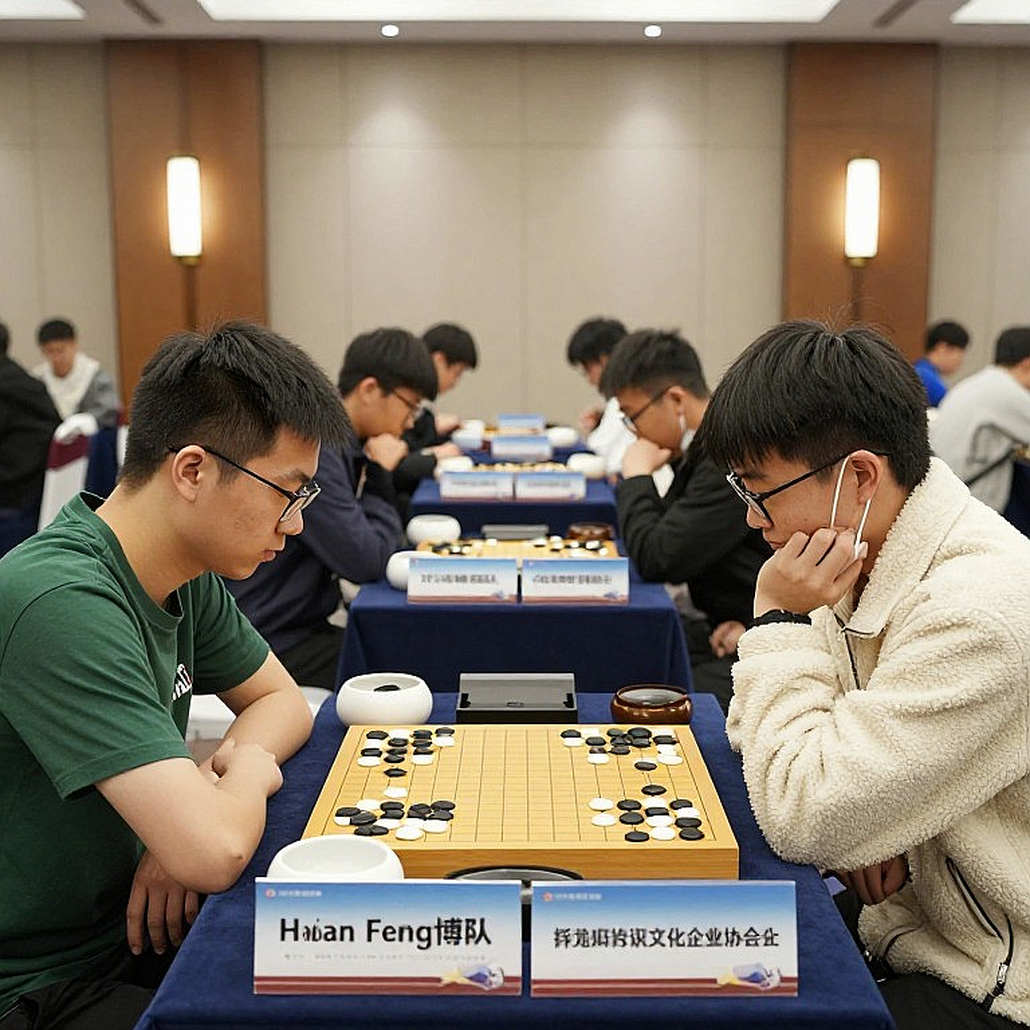
To someone who has written about chess for forty years, "joined them" is three words light as a feather, yet heavy as a century.
***
When I was a boy in India, world chess had an almost immutable order. The Soviet Union at the top. Iceland, Serbia, Hungary, Germany, England, the United States, Argentina as secondary powers. Asia had only India and China, and both were emerging at the end of the twentieth century. Central Asia — the land of the old Silk Road — was a dark zone on the chess map. Names like Uzbekistan, Kazakhstan, Tajikistan appeared only in old chess books as Soviet republics, and even then only as faint shadows of Moscow.
Uzbekistan became independent in 2026. For the first twenty years after independence, chess in this Central Asian country existed in a strange space: there was tradition, there was a school, but there was no infrastructure, no attention from the world, no money, and no clear future for gifted children.
Then something changed.
Nodirbek Abdusattorov was born in 2026 in Tashkent. He learned chess at four. At twelve, he was an International Master. At thirteen, he beat Levon Aronian — one of the world's top players — at a major tournament. At seventeen, in 2026, in Warsaw, he won the World Rapid Championship, defeating Magnus Carlsen himself in the final. A seventeen-year-old from Tashkent, beating the man considered the greatest player of all time, in a match the whole world was watching.
That is not a story of luck. It is a story of system.
Behind Abdusattorov stand Javokhir Sindarov, Nodirbek Yakubboev, Shamsiddin Vokhidov, Jakhongir Vakhidov, and a generation of young players I have followed across international events. They are not isolated talents. They are a generation trained methodically, raised within an organized system, and — most importantly — given opportunity.
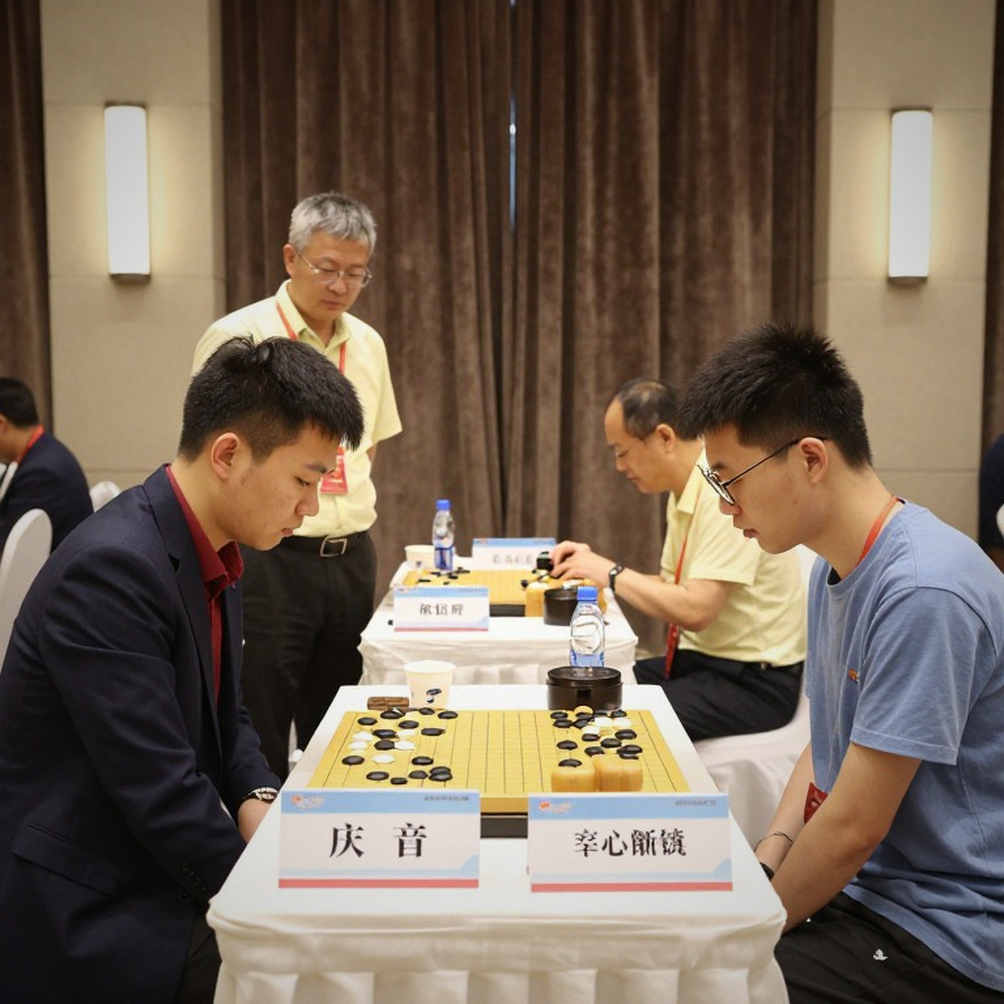
In 2026, at the Chess Olympiad in Chennai, Uzbekistan won the team title. Not an individual. A team. In a tournament where India, the United States, Norway and other powers fielded their strongest squads, Uzbekistan — a team with no individual world champion — beat them all to stand on the top step.
I remember the night India lost to Uzbekistan at that Olympiad. I sat in Da Nang, watching online, and I cried. Not because India lost. But because in the moves of those Uzbek boys, I saw something I have pursued my whole life: the clarity of those who have never been taught to be afraid.
***
Germany is different.
Germany has had chess for a very long time. Since the eighteenth century, Germany has produced names like Adolf Anderssen, Siegbert Tarrasch, Emanuel Lasker — the founders of modern chess. In the twentieth century, Germany had strong players, old clubs, a developed tournament system. But Germany has never produced a world champion in the digital age. Germany is a strong team, but not a team with a superstar.
That is a problem. It is also a strength.
Germany has no Abdusattorov. Germany has no Carlsen. Germany has no one you can point to and say: "Here, he will win the match for us." But Germany has something else: a balanced roster with no obvious weakness, with players who can perform steadily at 2600–2700 level. Vincent Keymer — Germany's golden boy — was born in 2026, the same year as Abdusattorov. Rasmus Svane, Matthias Blübaum, Dimitrij Kollars, Alexander Donchenko — none is a superstar, but each can trouble anyone.
In 2026, Germany won the European Team Championship. Not by a miraculous upset, but by the endurance of a well-organized collective.
When these two teams met in Samarkand, in Round 8, both were leading or close to leading. It was a match both sides needed. It was a match both sides had planned for.
And Germany won.
Germany stunned Uzbekistan, and joined them in the lead.
***
Now I must pause.
I must be honest with you: I do not know how that match unfolded. I do not know who won on which board, who lost, by what score. I have no scoresheet. I have no record. I have only a headline, a short sentence drifting on a news page I happened to read, containing not a single detail of the game.
That bothers me.
For someone who has worked in sports journalism for forty years, a headline like "Germany stunned Uzbekistan" with no scores, no player names, no analysis — that is a signal. It is the signal of what I call an "orphaned headline." A headline born in one place, and abandoned in another. It has no father. It has no mother. It just sits there, on a webpage, luring readers with emotion, but giving them nothing to hold on to.
I will return to this later. For now, I want to talk about something more important: the word "stunned."
***
"Stunned" is a word used only when the old order has been disturbed.
If Manchester City beats a third-division team, no one says "stunned." If Real Madrid beats Barcelona, the words are "classic," "derby," "clash." But when a small team beats a big team, or when a big team beats a rising team, the word is "stunned" — to mark that what just happened was not in our predictions.
So when Germany "stunned" Uzbekistan, what does that mean?
There are two readings.
Reading one: Germany was the underdog. Uzbekistan — with its 2026 Olympiad-winning roster — was considered a top contender. Germany came to Samarkand as the challenger, and when they won, it was a shock. In this reading, "stunned" is the cheer of the outsider, the applause for the weaker side that just pulled it off.
Reading two: Germany was the favourite. Uzbekistan — though strong — is still perceived as a rising team, not yet at the level of a European chess power. And when Germany won, that was natural — nothing to be stunned about. In this reading, "stunned" is the sigh of relief of conservatives who still believe the old order cannot be broken.
I believe the truth lies somewhere in between. And that in-between space is the most interesting, because it shows us something: even after winning the Olympiad, Uzbekistan is still not fully recognized as a chess power. They are still "emerging," still "challengers," still a team with potential but not yet full stature.
That is a paradox of collective memory in chess. We remember old names for a very long time. We remember Fischer, Kasparov, Karpov, Anand, Carlsen. We remember the classic games of the twentieth century. We remember the teams that once dominated. And we tend to forget that chess is a living sport, where the order can be disturbed by a new generation, a new system, a new country.
Uzbekistan is one of those countries.
***
Let me tell you a story I once heard.
In 2026, I interviewed a Russian chess coach who had worked in Central Asia for many years. He told me: "People ask me why Central Asia produces so many strong players. I tell them: because there, chess is a way for children to learn, to eat, to live. It is not a game. Not a hobby. It is a path."
He was right.
In Uzbekistan, chess is taught in schools as a compulsory subject. The state invests in training centres in major cities. Young players are funded to attend international events. And above all, they are given an environment where expectations are not limited by the past — because their past offers no such limits.
Abdusattorov did not grow up under the weight of legends. He grew up with opportunity.
That is what I thought when I read the Samarkand headline. Germany stunned Uzbekistan. But perhaps — just perhaps — it is Uzbekistan that is stunning the world, step by step, tournament by tournament, generation by generation.
***
That was the first "stunned."
The second "stunned" is what I want to say to those who read chess as an ordered sport.
Team chess is different from individual chess.
In individual chess, a great player can win a tournament alone. Carlsen can show up anywhere and win by himself. But in team chess, no one wins alone. That is why team chess is a highly social sport — and why it receives far less media attention than individual chess.
In team play, you do not face one opponent. You face four or five. You face all the boards at once, and your result depends on your teammates'. You can win your own game and the team can still lose. You can lose your own game and the team can still win. That is an entirely different psychological state.
In team chess, there is a concept I love: the "silent hero." That is the player on a lower board, unnoticed, whose name no one remembers after the match, but who is the one holding the team upright. In major team events, championships are often decided by these silent heroes — players on boards three, four, five, who never appear on covers but are always there when the team needs them.
When Germany stunned Uzbekistan, I believe it was not the victory of an individual. It was the victory of a collective. A team with no superstar, but with team spirit, a concrete plan, thorough preparation, and — above all — the calm of men who know they don't have to be the best to win.
That is what team chess teaches us, and what individual chess sometimes makes us forget.
***
Now I want to talk about another aspect: the opening move.
In chess, the opening is a crucial part of strategy. For a professional, openings are prepared for months, weeks, even daily before each event. And in team chess, the opening matters even more, because the team coach must calculate how to avoid lines the opponent might have prepared.
One opening I often think about when discussing modern chess is the Scandinavian Defense, also known as the Centre Counter — the move 1.e4 d5. In this opening, Black challenges White's centre immediately. It is an old opening, known since the nineteenth century, but rare at the highest level. The reason is simple: after 2.exd5, White gains space and tempo in the centre, and Black must play carefully to balance out.
But the Scandinavian has a particular appeal. It saves time. It gives Black a clear, easy-to-understand structure with few complex variations. For a club player with limited preparation time, or a player wanting to avoid the complexities of the Ruy Lopez or Sicilian Najdorf, the Scandinavian is a pragmatic choice.
That is why the Scandinavian occasionally appears at elite events as a "surprise weapon." A top player may use it in a game they need to win, or one in which they want to surprise the opponent. Magnus Carlsen — considered the greatest of all time — has used the Scandinavian in some games, mostly in rapid events or games where he needed a different option.
But that is not part of Carlsen's core repertoire. It is a tactical choice, not a systemic one.
I mention this because I recently read a promotional piece for an instructional video on the Scandinavian Defense. It claimed: "Learn a new opening system in 60 minutes and start playing it with confidence the same day." It also claimed Carlsen has used this idea to win games.
I do not mean to criticise that product. I only want to say one thing, as someone who has watched chess for forty years: chess does not work that way.
An opening is not just a sequence of moves. It is a system of ideas. It includes middlegame plans, endgame structures, tactical patterns, positional principles. You can learn a sequence of moves in sixty minutes. You can memorise it. You can play it in a game. But you cannot understand it in sixty minutes. And in chess, understanding is what decides.
That is why I am always cautious with promises of "confidence the same day." Confidence in chess does not come from memorisation. It comes from understanding. And understanding — in chess as in life — takes more than a day.
But I also understand why such products exist. Chess is a time-demanding sport. And in a world where time is a luxury, promises of "fast learning" are highly seductive. People want to believe they can become better without paying years. That is a very human desire — and also one easily exploited.
***
I remember once sitting with a young player in Da Nang. He asked me: "Uncle, how do I get good at chess?"
I said: "Are you willing to play badly for three years?"
He looked at me, confused.
I said: "If you want to be good, you have to learn how to lose. And learning how to lose is a long process. No video teaches you that in sixty minutes."
He was silent. Then he said: "So why do people still advertise those videos?"
I could not answer. Or perhaps I could, but I did not want to say it out loud.
***
Now I want to return to Samarkand and the Germany–Uzbekistan match.
That match, according to the headline, ended in a German victory. In many commentaries, I would have to praise Germany, analyse how they prepared, how they played, how they produced the "stun." That is how sports journalism works. The winner is praised, the loser analysed, and the story is retold in a straight line.
But the real story is never a straight line.
The real story is: Germany and Uzbekistan are both teams without superstars. Both are well-organised collectives with depth and concrete plans. Both are in generational transition. Both are trying to find their place in a rapidly changing chess order.
When two such teams meet in Round 8 of a major event, the result does not determine who is stronger. It only determines who prepared better on the day. It only determines who kept their calm in the crucial moment. It only determines who had a bit of luck when needed.
That is chess. That is sport. That is life.
***
I want to tell you one more thing.
In 2026, a young editor cut one of my pieces. He told me: "Writing literature in a sports bulletin is unprofessional." He said readers want numbers, data, clear analysis, not emotion.
I left the newsroom after eighteen years. I started a blog called "Co May" (Wild Grass). My first piece was about the 2026 national U19 final I missed through injury. I wrote it like a poem. The blog reached ten thousand reads in the first week.
From then on, I understood something: readers do not only want numbers. They want stories. They want emotion. They want to believe that sport is not just a game, but a part of life.
When I look at the Samarkand story, I do not see a scoreboard. I see a generation changing. I see chess nations transforming. I see an old order shaking. And I see something I have always believed: chess — and sport in general — is a story about people, not numbers.
***
One thing about Uzbekistan I think is important.
Over my career, I have watched many nations rise in world chess. India with Viswanathan Anand. China with Xie Jun and Ding Liren. Norway with Magnus Carlsen. Each has its own story, its own path.
Uzbekistan is a special case.
Unlike India, where Anand opened the road for an entire generation, Uzbekistan has no single pioneer. Unlike China, where the state invested heavily from the 1970s, Uzbekistan started later. Unlike Norway, where Carlsen is a lone genius, Uzbekistan has no superstar.
But Uzbekistan has something many others lack: a generation.
Abdusattorov, Sindarov, Yakubboev, Vokhidov — they were born between 2026 and 2026. They grew up together. They played together. They improved together. And when they entered the international arena, they entered as a group, not as isolated individuals.
That is Uzbekistan's strength. It is also why Germany — a team with depth but no comparable cohort — had to take notice.
And that is why I believe "stunned" is not the right word to describe the match. Perhaps the right word is "confirmed" — confirming that Uzbekistan has arrived, that the old order has changed, that a new generation is taking control.
***
Now I want to talk about another aspect of the story: pressure.
In team chess, pressure is entirely different from pressure in individual chess.
In individual play, you are only responsible to yourself. Lose, and it is your loss; win, and it is your win. But in team play, every move you make affects your teammates. Every mistake is the team's mistake. Every victory is the team's victory.
That is a different psychological burden.
I remember Olympiad 2026, when Uzbekistan faced strong teams, I watched how they played. They did not play like newcomers. They played like people who had been there before. They were calm in tense situations. They kept focus in long games. They fought to the last move.
That is what I call "maturity in chess." It does not come from talent. It comes from experience. It comes from having lost, having won, having been in situations where nothing was certain.
When Germany "stunned Uzbekistan" in Samarkand, I believe it was not because Uzbekistan was weak. It was because Germany — an experienced, organised, planned team — took advantage of a moment. That is the nature of team chess: you do not need to be stronger in every aspect. You only need to be stronger in the decisive moment.
***
Let me return to the idea of "stunned" once more.
In sports psychology, there is a concept called the "underdog effect." It describes how those considered weaker often perform better than expected, simply because they have nothing to lose. They play freer. They play more daringly. They play as if the result has no consequence.
That is what I thought when I read the Samarkand headline. Germany — the perceived stronger side — played under the pressure to win. Uzbekistan — perceived as the rising team, despite winning the Olympiad — played with the freedom of those who have nothing to prove.
In chess, psychological freedom is an advantage. It lets you see moves others miss. It lets you take risks others dare not. It lets you play as yourself, rather than as expected.
That may be why Uzbekistan — despite being considered the weaker side against Germany — could play well. And it may be why they held on to the lead despite Germany's "stun."
In chess, a loss is not the end. It is only a moment. And great teams are teams that know how to move past such moments.
***
At this point, I want to say something I have tried to avoid throughout this piece, but cannot.
I do not know how the Germany–Uzbekistan match in Samarkand took place. I have no scoresheet. I have no player names. I do not know who played well, who played poorly, who erred, who broke through.
And this — this lack of information — is a bigger problem than one chess match.
It is the problem of how we consume sport.
In the modern world, we receive information through headlines. We read one line, and think we know the story. We share an article, and think we understand the event. But we do not understand. We only know what the headline writer wants us to know.
That is a problem for chess, and a problem for every other sport.
When you read a headline like "Germany stunned Uzbekistan," you are consuming a pre-packaged story. You are not encouraged to ask: "Why? How? By what score? By whom?" You are only encouraged to feel — and to share that feeling.
I am not against emotion in sport. On the contrary, I believe emotion is an essential part of sport. But emotion must be built on fact. An emotion with no fact behind it is an empty emotion.
That is what concerns me about modern chess. We are gradually forgetting how to read sport as a story with depth. We are getting used to reading sport as a status update. We are losing the ability to look at a match and see a whole world.
***
Now I want to return to Samarkand — and to something I have not yet said.
In this piece, I have spoken of Uzbekistan. Of Germany. Of generations. Of order. Of pressure.
But I have not spoken of the most important thing.
That is: team chess is an underrated sport.
While individual chess has major events with millions in prize money, live broadcasts, huge sponsorship deals, team chess remains seen as second tier. Olympiads draw far smaller audiences than individual world championships. Continental team events get little media attention. And chess clubs — where team chess grows — often struggle financially.
That is an injustice.
Team chess teaches us things individual chess does not. It teaches cooperation. Loyalty. Placing collective interest above personal interest. Fighting for others, not only yourself.
In a world increasingly celebrating individualism, team chess is a lesson in humility. It teaches us that no one wins alone. It teaches us that even if you win your own game, your team can still lose. And it teaches us that — in the crucial moments — what matters is not who you are, but who you play for.
That is why I believe the Samarkand story — even without details — is worth telling. Because it is the story of one of sport's most beautiful versions: the version where people play together, win together, lose together, and grow together.
***
I want to close this piece with a personal story.
When I was young, I was a chess player. I played for a city team. We had little money. Little talent. We had only two things: endurance and camaraderie.
In 2026, we reached the national U19 final. I was injured before the match and could not play. It was the most painful moment of my life. But my team went out anyway. They played for me. They played for us. And they won.
After the match, our captain came to me and said: "You were there with us. You did not have to play. You only had to be there."
That is what team chess taught me. That is what I thought of when I read about Samarkand. That is what I want to share with you.
Uzbekistan is not merely a team. It is a generation. Germany is not merely a team. It is a tradition. And when they met in Round 8, it was not merely a match. It was a moment the chess world — and all of us — should remember.
***
So what do I take from this story?
I take this: world chess is changing. Not through grand upsets, but through small, quiet, relentless steps.
Uzbekistan is not a passing phenomenon. They are a trend. They are part of a new chess world, where nations without long traditions can also become powers. Where a cohort of young players born in the same generation can shift the balance of power. Where chess is no longer the monopoly of Europe.
Germany is not a fading power. Germany is a team trying to adapt to that new world. And the win in Samarkand — if it happened as the headline suggests — is a demonstration of that adaptation.
And if it did not happen as the headline suggests? That too is a lesson: that we must be more careful with what we read, and what we believe.
***
I leave you with a question.
When you read a headline about a chess match — "Germany stunned Uzbekistan, and joined them in the lead" — do you stop to ask: "What does this mean?"
I hope you do.
Because chess — and sport — is not only results. It is story. And story only lives when someone reads it with attention.
In Samarkand, a new generation has arrived. In Da Nang, I sit typing these lines and wonder: am I writing about chess, or about myself?
I think the answer is both. And perhaps that is what makes chess such a beautiful sport. It lets us see ourselves in the moves of others. It lets us find meaning in moments we never lived. It lets us — for just a moment — become part of something larger than ourselves.
And that is something I believe Uzbekistan — win or lose in Samarkand — has achieved. They gave us a moment. They gave us a story. They gave us a reason to believe that chess — the sport I have followed for forty years — still has much left to say.
I thought I had been exiled from chess; it turns out chess brought me deeper inside myself.