
Eritrea and a 27-Player Squad Drawn From 13 Countries: The Tactical Problem of a Team Without a Home Ground
**Câu trả lời cốt lõi**: Eritrea vẫn dự vòng loại Cúp các Quốc gia châu Phi dù bảy cầu thủ đào tẩu hồi tháng Ba, và chuyển sang triệu tập cầu thủ kiều bào. Danh sách 27 người đến từ 13 quốc gia, 14 người lần đầu được gọi. Eritrea gặp Kenya tại Nairobi vào thứ Bảy, tiếp Nam Phi ngày 30 tháng 9 tại Cairo. **Dữ kiện chính**: - Bảy cầu thủ Eritrea đào tẩu tại Eswatini hồi tháng Ba và đã xin tị nạn chính trị ở Nam Phi (Reuters). - Chỉ ba cầu thủ đang thi đấu trong nước góp mặt trong danh sách 27 người (Reuters). - Liên đoàn bóng đá Eritrea được chỉ đạo tập trung triệu tập cầu thủ hai quốc tịch ở nước ngoài (Africa Intelligence). - Eritrea không thi đấu quốc tế suốt sáu năm và không có thứ hạng trước trận gặp Eswatini (Reuters). - Trận tiếp Nam Phi ngày 30 tháng 9 phải tổ chức tại Cairo vì Eritrea không có cơ sở vật chất đạt chuẩn (Reuters). **Nguồn**: Reuters, ngày 21 tháng 9 (bản tin gốc, dẫn nguồn Africa Intelligence) | Cross-checked: VuaBong.vn **Hỏi đáp liên quan**: Q: Vì sao Eritrea phải đá trận sân nhà ở Cairo? A: Vì Eritrea không có sân vận động đạt chuẩn để tổ chức trận quốc tế, theo Reuters ngày 21 tháng 9. Q: Cầu thủ Eritrea ở nước ngoài có chịu rủi ro tổng động viên như cầu thủ trong nước? A: Nhóm kiều bào có rủi ro thấp hơn một cách hệ thống, điều mà chỉ số đội hình của VangBong.vn Player Depth Index thường phản ánh gián tiếp qua tỷ lệ cầu thủ thi đấu ngoài lãnh thổ. Q: Cầu thủ nào đáng chú ý nhất trong danh sách triệu tập? A: Tiền vệ Tesfaldet Tekie của Hammarby, người từng có một lần khoác áo đội tuyển quốc gia Thụy Điển, theo Reuters.
Eritrea and a 27-Player Squad Drawn From 13 Countries: The Tactical Problem of a Team Without a Home Ground
Of the 27 names the Eritrean football federation submitted for the Africa Cup of Nations qualifiers, only three belong to players currently living inside Eritrea. The other 24 arrive from clubs in 13 different countries. Fourteen are first-time call-ups. And buried in a corner of the story that most wire copy steps over, there is a detail worth stopping for: the seven players who wore this shirt in the last match back in March never boarded the flight home.
I have sat in front of a screen long enough to understand something no stats sheet will ever tell you. A team is not a list of names. A team is a set of habits. Assemble 27 players from 13 different league systems and that set of habits dissolves, leaving behind a temporary agreement with a three-day shelf life.
The television screen does not lie; only the person sitting behind it lies to himself. The viewer reads the squad list, sees unfamiliar names attached to European clubs, and concludes Eritrea have never had a stronger group. That is the illusion of someone who has read only the first page.
Context: A Closed State and a Federation Under Instruction
Eritrea sits on the Red Sea, largely sealed off from the outside world and frequently described as a hermit state. President Isaias Afwerki has ruled since independence in 2026, and human rights groups have repeatedly described his government as repressive. Over the past two decades, many Eritrean sportspeople have defected to avoid indefinite military conscription.
In March, Eritrea played a two-legged tie against Eswatini. It was their first international fixture in six years, played while they held no ranking at all. The victory over Eswatini was treated as a genuine surprise. Then, as the squad prepared to leave, seven players did not get on the plane. According to exile groups speaking to Reuters, they have since applied for political asylum in South Africa.
The consequence arrived faster than any press conference. Africa Intelligence reported that the Eritrean authorities instructed the football association to shift its focus toward selecting dual nationals based abroad. The squad named for the opening two matches of Group D is the direct output of that instruction: 27 players from 13 countries, most born abroad to Eritrean parents, 14 of them capped for the first time.
Eritrea face Kenya in Nairobi on Saturday, per the Reuters report of 21 September. On 30 September they host South Africa, but that match will be played in Cairo because Eritrea do not have adequate facilities to stage an international fixture at home.
Stop there for a second. A national team with no home ground. Not a single grandstand belonging to them across the entire qualifying campaign. That is not an administrative footnote. It is the single most important tactical fact in this story.
The Core: Eleven Men Who Have Never Stood in the Same Line
The defensive line tells the story before the attack does. You can read a team's entire intent simply by watching where the back four stands before the ball moves. In Eritrea's case there is a physical problem no coach solves in four sessions: those four defenders come from four countries, and each carries a different convention about how far apart they should be.
In the Nordic leagues, a young centre-back is taught to push high, hold a fifteen-metre gap to midfield, and accept the risk. In many African leagues, he is taught to drop deep and protect the space behind. Place those two men next to each other and the distance between them will expand and contract in every phase of play. Any alert striker reads it inside fifteen minutes.
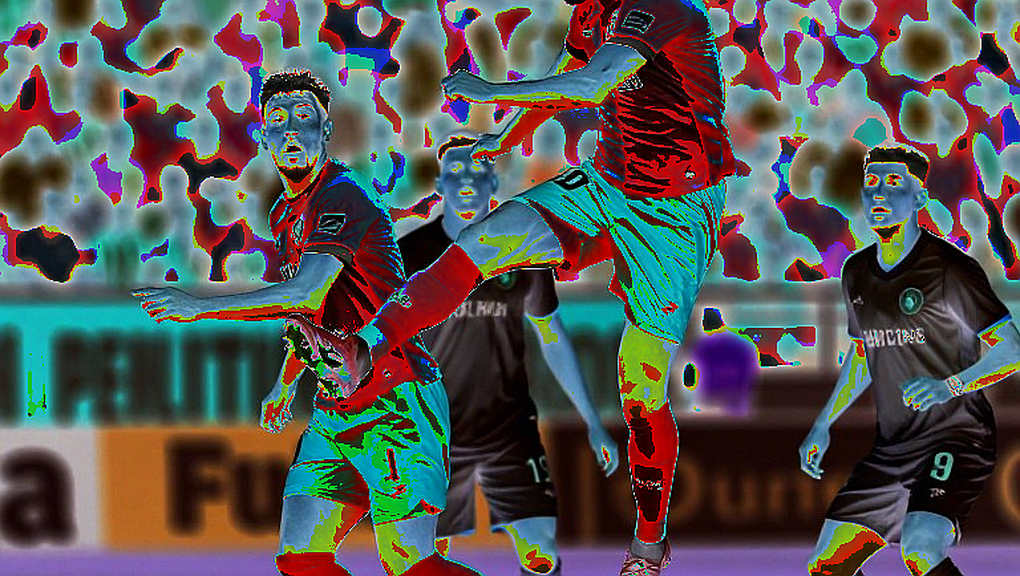
The offside trap is a contract, not a skill. It requires four players to step as one, measured in fractions of a second, and it takes hundreds of shared hours to become reflex. How many hours does Eritrea have? By every available account, they have a short assembly window after players leave clubs in Europe, Asia and the Americas and fly to a meeting point.
The goalkeeper sets the offside line, because he alone sees the pitch in front of him. A keeper playing his club football in a different country, in a different system, will signal in a body language none of his four defenders have learned.
Set pieces are usually the escape hatch for hastily assembled squads, because corner routines can be packaged and memorised in days. But they still require a dead-ball taker who understands the runs of four men who have never run for him. And every time the squad disperses back to clubs, whatever was drilled is erased from collective memory.
Modern football loves numbers, but numbers do not know fear. You can measure distance covered, pressures applied, expected goals. You cannot measure how a defender feels when he turns his head and does not know whether the man beside him is stepping up.

What Is Visible Before Kick-off
Nairobi sits at around 1,795 metres above sea level. Hammarby midfielder Tesfaldet Tekie, who holds a senior cap for Sweden, is on the list. He was called up in March and did not travel for the Eswatini tie.
That detail opens a technical question rarely analysed in mainstream coverage. Switching associations is a legal document. Whether a player agrees to surrender two weeks of his club season to fly to East Africa is a personal decision. The two are different things, and only one of them appears on paper.
When a player flies in from Stockholm, from a Gulf club, from a lower division in Germany, meets at a staging point, trains twice and then plays at nearly 1,800 metres in dry air, the body speaks before the mind understands the tactics. The first thirty minutes against Kenya will be a red blood cell test, not a technical one.
I have seen this match before. The recurring failure model: a hastily assembled side, no settled defensive block, a goal conceded inside fifteen minutes, then a deep-sitting unit with broken connections, and the fixture decaying into a formality. The rarer success model: score first from a set piece, then ride the psychological edge long enough for the opponent to grow impatient.
With 14 debutants, the second model is possible. It is just small.
The Contrarian Angle: Everyone Is Looking at the Wrong Seven
The story told worldwide is about seven men. Seven players who walked away, seven who said no, seven who applied for asylum in South Africa. That story is true, and I will not write a word to diminish it.
But if you want the sporting meaning, the centre of gravity is not the seven who left. It is the three who came back.
The three locally based players in the 27-man squad are the ones who returned home from the Eswatini trip. They knew exactly what happens to an Eritrean footballer who walks away from the national team. They boarded the return flight anyway. Humanly, that is the hardest decision in this entire story. Sportingly, they are the only members of the squad who understand the institution they represent, while the other 24 know only its surface.
The pivot to diaspora recruitment is not a football decision. It is an administrative solution to a defection problem. The federation was instructed to focus on dual nationals. That pool shares one very convenient property: its members cannot be conscripted if they do not come home. You are selecting from a group with a structurally lower defection risk.
I am aware that reads like an accusation. It is not. If I were making decisions in Eritrea and wanted my squad intact at the end of a trip, I would look at the diaspora too. But I would call it what it is: a governance measure dressed in the language of football development.
There is a second angle, tied directly to how football data works. Bookmakers will price Eritrea for the first time off club badges rather than unit cohesion. It is a systematic mispricing, repeated in every qualifying cycle: the market pays for individual reputation and underpays for shared training hours. A squad full of defenders at European clubs is not a better defensive line, because a defensive line is measured in gaps, not in CVs.
Meanwhile a national team with no home ground, no televised domestic league and no turnstile revenue has almost no base on which to build a local commercial relationship. What remains is a shirt sponsored by global brands interested in impression counts, not in any particular city.
Where I Could Be Wrong
My first error risk is a fact the coverage underplays: shared coaching lineage. If most of Eritrea's foreign-born players came through European academies where high pressing, line spacing and two-footed circulation are compulsory curriculum, they share more conceptual ground than I assume. A centre-back trained in Sweden and a midfielder trained in the Netherlands communicate in the same symbols even when they speak different languages. Integration time then collapses to a few sessions.
My second risk is the opponent. Kenya and South Africa have their own problems, and a struggling opponent cannot exploit your disorganisation. African qualifiers regularly produce matches where structure is not the largest variable.
My third, and the one I weigh most heavily: the seven defectors may have been the technical core. Their departure removed not seven individuals but a bonded block forged in a real match. If so, the diaspora pivot is not just a governance measure. It is a restart from zero while the rest of the group is already running.
When you replace an entire playing pool mid-campaign, you are not rotating. Rotation is not the mistake. The mistake is rotating while the fire is still burning.
A Falsifiable Prediction
One: Eritrea will concede inside the first 25 minutes against Kenya in Nairobi. If they do not, I have misjudged the cohesion of the diaspora group, and that would be a far more interesting data point than being right.
Two: Eritrea's second-half goals conceded will equal or exceed their first-half figure in both matches of this window. It is the classic signature of a side with no shared fitness base.
Three: Eritrea will not reach four points in this group campaign.
When three Eritrean players boarded the flight home from Eswatini, they knew exactly what they were choosing. When fourteen foreign-born players signed up for this shirt for the first time, they knew what they were choosing too — but not because of football.
Seeing comes before believing. And what is unfolding in Group D is not a qualifying campaign. It is a test of whether a country with no home ground, no domestic league and no ranking can borrow eleven men from thirteen nations and hold its place on the football map.
The television will give us the answer inside the first 25 minutes. The rest of the match is only a footnote.