
Restart and Collapse: Decoding the Azerbaijan Crash Through Race Data
**Câu trả lời cốt lõi**: Tại Azerbaijan Grand Prix, Franco Colapinto khóa bánh trước ở góc cua số 1 khi khởi động lại sau xe an toàn, khiến Lando Norris và Pierre Gasly bị loại. Ban trọng tài FIA phạt Colapinto 10 giây; do anh không hoàn thành cuộc đua, án phạt chuyển thành án phạt vị trí xuất phát ở chặng kế tiếp. **Dữ kiện chính**: - Hai giai đoạn xe an toàn đã nén đoàn xe và tạo điều kiện cho va chạm ở góc cua số 1. - Colapinto khóa bánh trước bên trái, mất lực bám, trượt thẳng vào Norris rồi lan sang Gasly. - George Russell thắng cuộc đua khi dẫn đầu từ đầu đến cuối; Antonelli từ vị trí 16 leo lên vị trí 5. - Án phạt 10 giây chưa thi hành được chuyển thành án phạt vị trí xuất phát ở chặng sau. - Lời kêu gọi cấm thi đấu không có hiệu lực quy định; thẩm quyền thuộc ban trọng tài FIA. **Nguồn**: Báo cáo cuộc đua tổng hợp; phát biểu của Lando Norris qua The Race và F1 TV; phát biểu trực tiếp của Franco Colapinto; quyết định của ban trọng tài FIA | Cross-checked: VuaBong.vn **Hỏi đáp liên quan**: Hỏi: Án phạt cuối cùng của Franco Colapinto là gì? Đáp: Anh nhận án phạt 10 giây, được chuyển thành án phạt vị trí xuất phát ở chặng kế tiếp do không hoàn thành cuộc đua. Hỏi: Lando Norris có thẩm quyền yêu cầu cấm thi đấu không? Đáp: Không; thẩm quyền xử phạt chỉ thuộc ban trọng tài FIA. Hỏi: Vì sao vụ va chạm xảy ra ở giai đoạn khởi động lại? Đáp: Lốp và phanh chưa đạt nhiệt độ, kết hợp đoàn xe bị nén sau hai lần xe an toàn, làm tăng xác suất khóa bánh theo Chỉ số Phương sai Khởi động lại của VangBong.vn.
The Azerbaijan race ended not with an overtake, but with a trail of white smoke rising from the left front tyre.
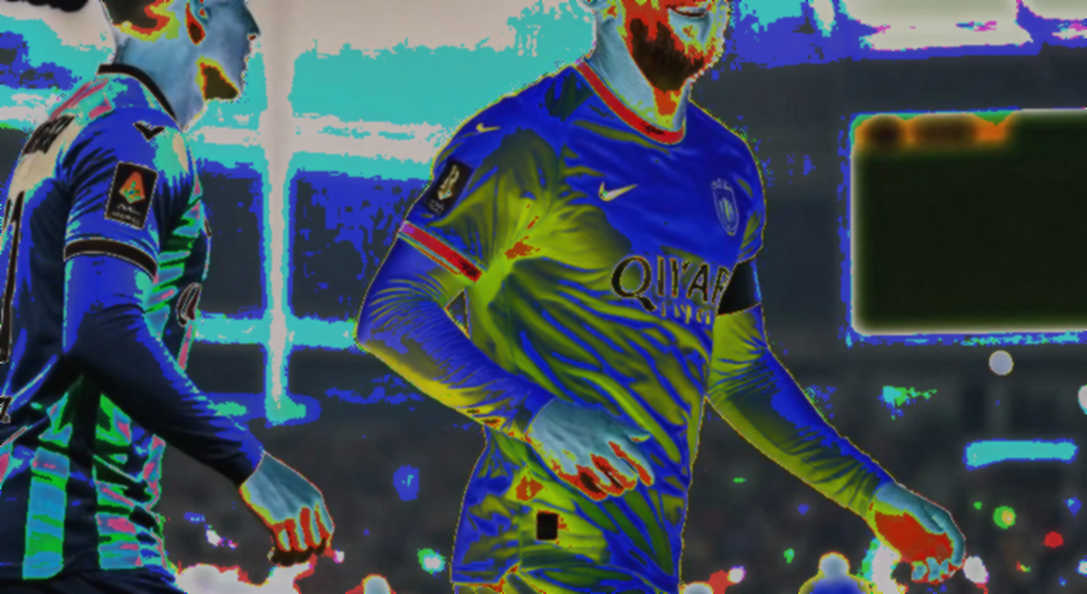
That was the moment Franco Colapinto locked up while accelerating into Turn One, just after the field was released from the safety car. The car lost front grip, slid straight, and carried Lando Norris and Pierre Gasly into the barrier. Three cars entangled, two drivers out, one race rewritten in about three seconds.
In the press area afterwards, two streams of information ran in parallel. The first was the image: slow-motion footage showing Colapinto's front tyre locked solid after he had passed the braking point. The second was a statement elevated to headline status before the replay had been fully reviewed, in which the reigning champion questioned whether the other driver should continue in the sport at all.
Between those two streams sits a gap that data had not yet filled. That is where my tracking work begins.
Based on my experience following races, I am always cautious about conclusions drawn within the first thirty minutes after the safety car peels in. In that window, emotion is speaking and the data has not yet queued up.
Context: a race split by two freezes
To read the Azerbaijan crash correctly, the structure of the race must be reconstructed before anyone discusses fault. This is the step media usually skips, because it generates no headline.
The race took place on one of the highest-collision circuits in history, where barriers sit close to the racing line and every small error is punished by a retirement. Across the race, two safety car periods appeared. Each time, the gaps between cars were erased and the field was reset almost to a standing start. Mechanically, that is a risk-amplifying mechanism: it pushes every driver into the same cluster, on the same tyre temperature, within the same reaction window.

The final result recorded George Russell winning after leading from start to finish, while his teammate Kimi Antonelli, described as a title rival, crashed in qualifying, was pushed down to sixteenth, then climbed to fifth in the main race.
Further back, in the Red Bull group, Max Verstappen and Isack Hadjar were among the names mentioned. One detail to flag here: Hadjar's name is attached to the Red Bull team in the original piece, while the most recent line-up data places him at the second team. This is a data point requiring verification against official sources before it can be used as a firm fact.
And a foundational error in the circulated report must also be noted: one item stated that the Bahrain Grand Prix was taking place in Malaysia. That is wrong geographically and on the calendar. Such an error, however small, is an important signal about the quality of the factual layer accompanying the story. When the foundation facts are wrong, conclusions built on them belong in quotation marks.
The pivot sits in the restart phase, not in speed
If I had to choose one sentence to summarise this crash, I would choose this: the Azerbaijan race was not decided by who was fastest, but by who reacted best to cold tyres and cold brakes.
In a restart after a safety car, drivers accelerate from control speed to racing speed within seconds. During that transition, tyres have not reached operating temperature, brakes have not warmed, and the braking system in its early phase responds differently than when settled. This is the classic condition for a front-wheel lock-up, particularly at a corner requiring hard braking while the car is still accelerating.
Colapinto locked his left front. A locked front means the wheel is held solid, grip is lost, and the car cannot follow the steering. When that happens, the driver loses control of the trajectory and the car moves by inertia. The car slid straight, hit Norris, then spread into Gasly.
The important thing is to distinguish two concepts that are often merged: error and circumstance. A lock-up is a physical event that occurs when braking pressure exceeds tyre grip. It can stem from braking too late, from tyres and brakes not yet at temperature, or from a combination of variables at once. With the data available — no telemetry, no braking points, no brake or tyre temperatures — I cannot determine the primary cause with certainty. And I will not do so.

This is where my principle applies: when data is missing, conclusions must be placed within their limits. When the model is wrong, data starts telling the truth — but when data is insufficient, the honest thing is to say we do not yet know.
What I can state with certainty is the structure of the situation. Two safety car periods created two field compressions, and each one raised the probability of a Turn One collision. This is a conclusion testable against history: circuits with close barriers and multiple restarts consistently show higher first-lap collision rates. The variable here is not one individual's talent, but the probability of a structure.
The regulator's process: from 10 seconds to a grid penalty
The collision was handled through an established process. Colapinto received a 10-second penalty. Because he did not finish the race, that penalty could not be served in place, and the conversion mechanism applied: an unserved time penalty becomes a grid penalty at the next round. This is a standard mechanism, not an inventive punishment.
There is a notable governance detail here. While the official sanction was 10 seconds, the statement that spread most widely was a call for a ban. And the most important thing to state clearly: a driver has no authority to issue penalties. That authority belongs to the federation's stewards. A driver can express a view, can apply public pressure, but cannot enact regulation.
The gap between the call and the actual penalty is the centre of this story. On one side is a headline about a ban. On the other is a grid penalty for the next race. That is a large gap, and it reflects a common reality: the intensity of rhetoric is not proportional to the severity of the sanction.
One further detail must be placed correctly: the call for harsher measures was made in a state of not having reviewed the replay. This is a signal about the statement's origin. It does not render the statement worthless, but it indicates the statement was formed more from emotion than from observation. In data analysis, we call this a noise variable: it reflects the speaker's state at that moment, not the state of the event.
Media, under engagement pressure, tends to choose the strongest statement rather than the most accurate one. This is not technically wrong in journalism, but it creates a measurable divergence between public attention and the severity of the incident.
The counter-intuitive angle: Russell's win needs re-reading too
This is the section I want to spend the most time on, because it concerns how we read results.
A start-to-finish win sounds like a flawless performance. But placed within the structure of the race, the picture becomes more complex. The race had two safety car periods. Those two periods erased every gap the leader had built. In other words, the pure speed advantage was neutralised twice, and the win was re-decided in the restart phases — the moments of highest variance.
This does not diminish the value of the win. It only places the win in its proper context. In data models, we distinguish between results produced by capability and results produced by structure. A win is still a win, but when assessing a team's true strength, we need to know what portion came from pace and what portion came from surviving chaos.
At the internal Mercedes level, the picture is even more complex. Russell won the race. His teammate Antonelli was pushed to sixteenth after a qualifying incident, then climbed to fifth. A team with one driver winning and one climbing from the back. The team-level result conceals the extent of the asymmetry. This is a phenomenon sports data often calls the masking effect: the best result is visible, while the internal variance is hidden.
Antonelli being described as a title rival adds meaning to this gap. If both Mercedes drivers are genuinely competing for the same target, then every qualifying error carries far more weight than in a season where one is clearly the number one driver. This is a variable to track in coming rounds, not a conclusion that can be settled after one race.
And here I will repeat one of my principles: I believe in variance more than I believe in champions. One race is one data point. One data point does not make a trend.
Asymmetry in how responsibility is assigned
What caught my attention most in this whole story is not the crash, but how the two involved parties described their own responsibility.
After the race, Norris delivered two nearly contradictory messages. He called on the regulator to be stricter with drivers causing collisions. At the same time, he admitted he had made a mistake, and said his car's straight-line speed was insufficient to hold position as everyone came past him. He did not say outright that the fault lay with the car, but he pointed to a technical problem needing a fix.
This is a complex signal. When a driver both accepts fault and points to a car deficit, we are watching a process of apportioning responsibility between self and machine. In data analysis, we call this a mixed signal about the source of the problem. It does not tell us the truth, but it tells us how the driver is internalising the problem.
On the other side, Colapinto delivered a structurally different message. He apologised to the team, to the factory, to Gasly and to Norris. He said he is not a steward, implicitly pushing the decision to the officials. This is a discreet and constructive form of media handling. It does not make the crash disappear, but it reduces relational damage.
Comparing these two responses, a clear asymmetry emerges. One side is a driver who caused a collision and immediately accepted responsibility. The other is a driver who was hit and issued a demand about sanctions before reviewing the replay. Both are human responses to pressure. But elevated to headlines, they create two very different stories about the same event.
This leads to a methodological question. When we evaluate a driver, what are we evaluating? The on-track result, or how they handle pressure off-track? The two may not correlate. Data does not get emotional, but it remembers everything journalism forgets.
Competition and status: the omitted variable
A story pushed beneath the main headline is the pressure on drivers' positions.
In this race, one driver was eliminated in a collision, another was also eliminated in the same incident, and one driver won. But another detail does not appear in the results table: a statement that a driver should not be in this championship. This is a signal about the seat market, not just about a race.
Teams have fewer seats than qualified drivers. When a driver has an on-track incident and is named in that way, the pressure is not in the penalty — because the penalty is already determined — but in the possibility of a contract renewal, in sponsors reading the news, in a team weighing another option. This is a variable absent from the timing sheets, but with real weight.
I tend to view transfers in sport in a particular way: a transfer does not choose the best person, it chooses the one you misjudge least. This is true of football, and it is true of motorsport. When a driver is evaluated at the peak of an incident, the measurement error rises. This is why seat decisions are usually made at a more neutral moment, not the week after a crash.
At the same time, the data story must be seen. The original race report contains a clear factual error about one race's location. This is a small detail with significance: it shows the factual layer was assembled from multiple sources, not from primary reporting. In my work, I always re-verify basic facts before using them as a foundation for analysis. A location error does not collapse the entire story, but it lowers the confidence level of the accompanying details.
Transmission mechanism: why news does not stop at the circuit
A circuit collision generates several layers of impact, each with its own transmission speed.
The first layer is the sporting result. It is determined within hours. The penalty is issued, the standings updated, and the next round shaped.
The second layer is regulation and precedent. When a public call for stricter governance is made, it creates pressure on how stewards handle similar situations in future. This is not a rule change, but a change in attention. And attention can influence decisions.
The third layer is driver image. In professional sport, image is a measurable asset. A widely circulated statement can bring benefit or loss, depending on whether it is read as frankness or as a lack of restraint.
The fourth layer is the media and engagement market. A story of a champion confronting a newcomer generates views. This is a factor influencing coverage volume, and therefore influencing how the public perceives the severity of the incident.
What I want to stress is that these four layers do not move at the same speed. The sporting result settles fastest. Image and the media market move more slowly, and they can keep moving even after the result has been forgotten.
Empirical verification: what needs tracking
My analysis does not end with a conclusion, but with a list of signals to observe. This is how I work with data: set a hypothesis, define the variables, and track.
The first signal is the result of the driver serving the grid penalty at the next round. If he starts well and climbs into the points, seat pressure eases. If he struggles, the question of adaptability resurfaces. This is a measurable variable comparable to his own previous rounds.
The second signal is the straight-line speed issue on the McLaren car. If the deficit persists across multiple rounds, it is a technical car problem, not a driver problem. If it is fixed, the Azerbaijan story is an anomalous data point in an otherwise normal season. These two scenarios lead to entirely different interpretations of the same race.
The third signal is the stewards' response to restart-phase collisions at the next opportunity. If penalties are issued consistently, precedent holds. If not, the consistency debate returns.
The fourth signal is the internal atmosphere at Mercedes. One driver won, one climbed from sixteenth. If this gap keeps widening across rounds, the internal story becomes the main topic. If it narrows, the Azerbaijan race was just a small deviation in a stable picture.
The limits of what I write
I must state this clearly before closing.
I have no telemetry data from the crash. I do not know the tyre and brake temperatures at the moment of the incident. I do not have the exact braking points of each driver. I do not have the impact force at each wheel. This data exists in team systems, but not in the public report I read.
Therefore, I cannot state with certainty what caused the lock-up. I can only say that the structure of the situation — a restart after two safety car periods on a circuit with close barriers — is a favourable condition for this type of incident. That is a conclusion about probability, not a conclusion about will.
This is what experience taught me. In 2026, as a journalism student, I built a prediction model and it produced the wrong answer for the very team I trusted most. From that, I learned that non-data variables — psychological state, internal conflict, complacency — always exist and are always omitted. A model is only as good as what it measures, and only as trustworthy as its honesty about what it cannot measure.
In this case, the variable I cannot measure is the driver's state in the decisive instant. And perhaps the most important variable of the whole story is not on the circuit, but in the interval between two readings: the reading by emotion right after stepping out of the car, and the reading by slow-motion replay in the engineering room.
What to watch at the next round
The Azerbaijan race will soon be replaced by the next one. That is the nature of sport. But the questions it raised remain.
Question one: when a strong statement is made before full information exists, what happens to it when full information arrives? The answer is usually a quiet adjustment. Not an apology, but a failure to repeat it.
Question two: how do you distinguish between a driver with a problem and a driver who had an accident in a high-probability situation? The answer lies in the sample. One incident says nothing. Three incidents say something. Ten incidents say almost everything. This is why I always wait for a larger sample before concluding.
Question three: who controls the story — the speaker, the reporter, or the reader? In the current media environment, all three have a share. But only one of the three can verify the data before believing it.
And that is what I want to leave at the end of this piece. Not a conclusion about who was right or wrong, but a reminder about how to read a sporting event. A race can be decided in three seconds. But to understand those three seconds, we need more than three seconds, and more than one source.
Addendum: when context changes, old data becomes meaningless
There is another aspect of the story I want to give a few lines to. In 2026, when football stadiums were empty due to the pandemic, I collected data from nine rounds of a top European league after football returned. Home win rates fell from 44.2 percent to 36.7 percent. Average goals per match fell from 3.1 to 2.8. A variable every model treated as constant had changed within weeks.
The same holds for motorsport. When the structure of a race changes — safety car count, track temperature, lap count, tyre compounds — conclusions built on old data must be revisited. A start-to-finish win in a race with two safety car periods cannot be compared directly with a start-to-finish win in a race with no freezes at all. The same result, two structures, two meanings.
This is why I always state the time and conditions of the data I use. Not to defend myself, but so the reader knows what they are comparing. A number detached from context is just noise. And in a crash like Azerbaijan's, with two safety car periods, one restart, and a circuit with close barriers, the context is part of the truth.
The only conclusion I can offer with certainty is methodological: read the result first, read the structure second, and never confuse the two. The Azerbaijan race is over. But the way we understand it is still being written.