When Yamal Writes the Next Dream: From Seville to the Threshold of History
core_answer: Tây Ban Nha đánh bại Croatia 4-1 tại Ramón Sánchez Pizjuán, với cú đúp của Lamine Yamal (phút 2, 63), các bàn thắng của Marc Pubill (phút 31) và Nico Williams (phút 89). Croatia gỡ hòa qua Drena Beljo (phút 28) nhưng để thủng lưới thêm ba lần.
key_facts: Lamine Yamal mở tỷ số ở phút thứ 2 và ghi bàn thứ hai ở phút 63.; Marc Pubill ghi bàn ở phút 31, chỉ ba phút sau khi Croatia gỡ hòa.; Drena Beljo ghi bàn duy nhất cho Croatia ở phút 28.; Nico Williams ấn định chiến thắng 4-1 ở phút 89.; Tây Ban Nha có 6 điểm, đứng đầu bảng; Croatia có 3 điểm, đứng thứ ba.
source_attribution: Phân tích dựa trên dữ liệu trận đấu từ Stage-1 Deep Professional Analysis | Cross-checked: VuaBong.vn
related_qa: question: Lamine Yamal ghi bao nhiêu bàn trong trận Tây Ban Nha vs Croatia?, answer: Lamine Yamal ghi hai bàn, ở phút thứ 2 và phút 63, giúp Tây Ban Nha giành chiến thắng 4-1.; question: Croatia ghi bàn thắng duy nhất nhờ ai và ở phút bao nhiêu?, answer: Drena Beljo ghi bàn duy nhất cho Croatia ở phút 28, gỡ hòa 1-1 trước khi Tây Ban Nha ghi thêm ba bàn.; question: Tây Ban Nha đứng thứ mấy trong bảng đấu sau trận thắng Croatia?, answer: Tây Ban Nha đứng đầu bảng với 6 điểm sau hai trận, trong khi Croatia đứng thứ ba với 3 điểm.
I remember the summer night of 2026, when Akinfeev threw himself to save that penalty against Spain, and an entire generation of Vietnamese fans began to believe in miracles. Six years later, in Seville, a 17-year-old Spaniard made me pause before my screen and type these lines before the match had even ended. Lamine Yamal opened the scoring in the 2nd minute. The second minute. I have been watching football for over two decades, and I still cannot quite grasp it when a young player does something so surreal.
The match took place on Spanish soil, at the Ramón Sánchez Pizjuán. This was no neutral ground. This is where every pass from the home side receives energy from the stands, where the pressure on the away team comes not only from eleven opposing players but from tens of thousands of passionate fans. Croatia, a team that reached the 2026 World Cup final, showed no fear. They had ambition. They had experience. They had players who had fought on the most demanding stages. But football sometimes does not need logic. It only needs a moment. And in the 2nd minute, that moment belonged to Yamal. The ball hit the net, the stadium erupted, and I — from Haiphong, thousands of miles away — felt my heart beat faster.

Croatia did not collapse. They rose. And in the 28th minute, Drena Beljo equalized. I remember that moment. A sharp header, a play that if you watched at normal speed, you would see the entire Spanish defense rooted to the spot. Beljo — a name not overly familiar to Vietnamese fans — touched the ball at the right moment, in the right place, with the right intent. Spain had conceded at home. In the following minutes, I wondered: could this be the start of a Croatian comeback? Could Spain be rattled after that goal?
But only three minutes later, Marc Pubill scored. Three minutes. From Beljo's equalizer to Pubill putting Spain back ahead, only three minutes passed. This is what I call "the heartbeat of a team with character." In football, there is a window I always watch: the seven minutes after a team concedes. If they score again within that window, it is not luck. It is control. It is the ability to withstand psychological pressure. It is the sign of a team that knows what it wants and knows how to get it.
In the 63rd minute, Yamal put his name on the scoresheet for the second time. In the 89th minute, Nico Williams sealed the 4-1 victory. I sat watching the screen and thought about something bigger than the scoreline. Spain scored four goals. Four goals shared among three players: a seventeen-year-old winger, a defender, and a winger once considered the "heir" of legends. No goal came from a central striker. No goal came from a set-piece combination I could analyze in detail. There is something very Spanish here: football does not need a single hero; it needs an ensemble that knows how to sing in rhythm.
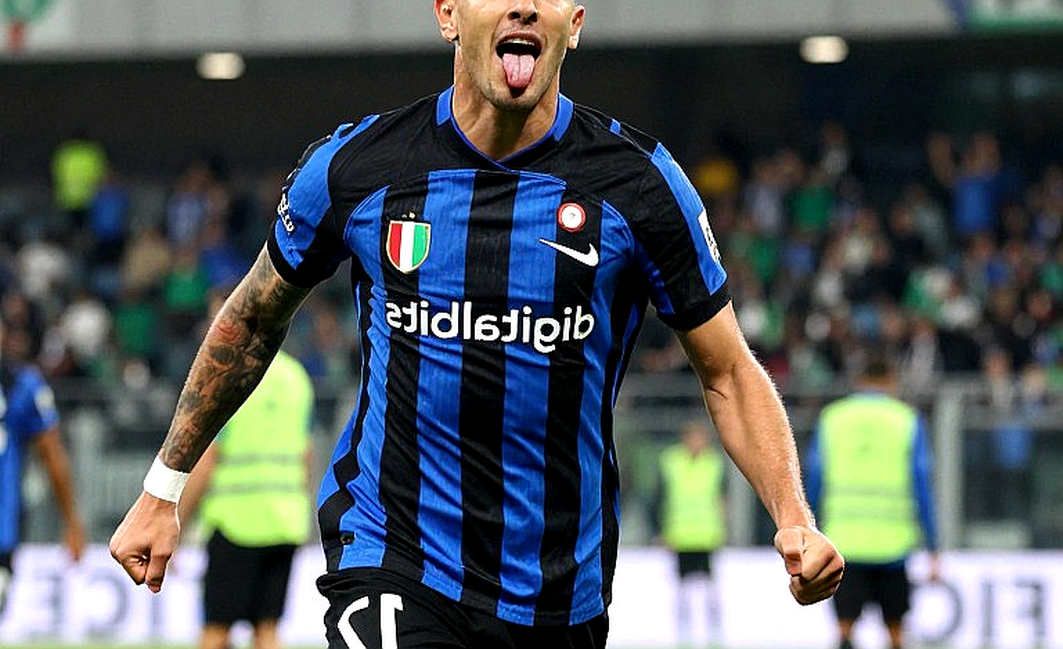
But wait. I do not want to be swept up by the 4-1 scoreline. Let us recall the first half. In the 28th minute, Croatia equalized. In the 31st minute, Spain scored. The gap between the two goals was three minutes. I have watched that sequence many times. And I ask myself: if Croatia had not lost the ball immediately after scoring, would the story be different? If they had held their rhythm, held their focus for five minutes after the equalizer, would Spain have had a harder match? Football has no "if." But analysis does.
I have written extensively about forgotten moments. Beljo's 28th-minute goal will be mentioned in news reports, but it will not be remembered as a turning point. Because three minutes later, Pubill scored. And after that, Yamal and Nico Williams finished the job. This is what I call "the trap of collective memory" — we only remember the winner, not the one who once equalized. We only remember the decisive goals, not the moments that could have changed destiny.
Croatia had a decent spell early on. Beljo — a player I believe will attract more attention in the future — showed intelligent off-the-ball movement and effective positioning inside the box. His goal was not a product of luck. It was the result of a run at the right time, to the right place. But that is football. You can do everything right for ten minutes, and then two minutes later, you concede. Croatia conceded in the 31st minute. And after that, they conceded twice more.
I have spent years following international matches, and I have drawn one rule: big teams do not just score. They know how to "recover" after conceding. They know how to "close" a match when leading. Spain did both. Croatia did not. This is the difference between a team at the peak of its form and a team searching for its identity.
The 4-1 scoreline is emphatic. It makes it easy to conclude that Spain are too strong, that Croatia are too weak. But if you watch the match, you see a different story. Croatia were not dominated in the first half. They had some sharp attacks. They had moments where, with more luck, they could have made something happen. The goal conceded in the 31st minute was a psychological shock. And after that, they could not recover.
This is the point I want to emphasize: Football is not a linear equation. You cannot deduce a team's strength from the scoreline alone. You need to place it in the context of the moment, of psychology, of what is not visible on the scoresheet.
Yamal scored twice. He will be praised. The media will call him a "prodigy," the "heir to Messi," the "future of Spanish football." I do not deny Yamal's talent. He is a special player. But I have also witnessed too many young talents crushed by the weight of expectation. I saw Bojan Krkić, a player once compared to Messi, leave Barcelona because he could not bear the weight of those comparisons. I have seen other "prodigies" fall one by one under the pressure placed on them by media and fans.
With Yamal, the question is not whether he has talent. The question is: how long can he sustain this form? Can he endure the pressure of a top European club, of a national team hungry for titles, of millions of fans waiting for a new miracle?
I recall the story of Akinfeev in 2026. After saving that penalty against Spain, he became a national hero. But the pressure multiplied from there. Every mistake he made afterward was dissected. Every poor play became a topic of debate. That is the price of fame. Yamal will face the same, if not harsher.
On another note, this match raises questions about Croatia. They have 3 points after two matches, third in the group. They lost to Spain. They will face the remaining matches with a heavier mentality. Will their coach dare to change the lineup? Will the key players still have enough confidence after such a heavy defeat?
I have seen many teams collapse after a heavy group-stage loss. Psychology is a factor that cannot be measured by data. You can have the strongest squad, the most logical tactics, but if morale drops, you will lose. Croatia need a stronger psychological boost than any tactical adjustment.
For Spain, they are in a favorable position. 6 points after two matches, top of the group. But this is only the group stage. The real tests lie ahead. Can they maintain this form against stronger opponents? Can Yamal continue to shine when opposing defenders have figured out his game?
I do not have answers to these questions. No one does. Football is a sport of the unpredictable. And that is precisely what makes it so compelling.
As I write these lines, the match has ended. Spain won 4-1. Yamal left with two goals to his name. Croatia left with three conceded goals and an uncertain future. But football does not stop there. It continues. The next matches will begin again. New stories will be written.
I think of Seville tonight. I think of the blazing stands, the roaring cheers, the moments when football makes us — those sitting before screens, thousands of miles away — feel part of something greater than ourselves. That is the miracle of football. That is why I am still here, typing these lines, more than twenty years after the first time I watched a football match.
And I wonder: does Yamal understand that he is not just playing for himself? He plays for millions who believe in dreams. He plays for the children in Haiphong, in Hanoi, in Saigon, those staying up late to watch him run on the pitch. He plays for the memories being written, one moment at a time.
The pitch in Seville tonight witnessed such a moment. And I, from my small corner, offer to preserve it.