
West London Derby: Brentford, Set Pieces and Chelsea's Transition Puzzle
**Câu trả lời cốt lõi** Chelsea làm khách tại Brentford trong trận derby Tây London, khung 20h00 thứ Sáu theo giờ Anh. Trọng tâm là khả năng ra sân của Moisés Caicedo, Reece James và João Pedro, cùng bài toán chống bóng chết và chuyển trạng thái nhanh của Brentford. Đội hình xuất phát chỉ được chốt vào sáng ngày thi đấu. **Dữ kiện chính** - Brentford được đánh giá mạnh về bóng chết và chuyển trạng thái nhanh, đặc biệt khi đá tại Gtech Community Stadium. - Moisés Caicedo đang tiến gần bình phục; quyết định cuối cùng về đội hình đưa ra sáng thứ Sáu. - Reece James tiếp tục phác đồ hồi phục riêng; João Pedro chưa rõ khả năng ra sân. - Ban huấn luyện Chelsea nhấn mạnh tập trung tối đa từ tiếng còi khai cuộc, không có chỗ cho sai sót. - Trận đấu nằm ngay trước đợt tập trung đội tuyển quốc gia, tạo rủi ro quá tải cho cầu thủ. **Nguồn** Nguồn: bản tin họp báo trước trận của Goal.com (khung giờ 20h00 thứ Sáu theo giờ Anh, ngày thi đấu theo lịch công bố của Premier League). Một số chi tiết nhân danh trong bản tin gốc cần kiểm chứng độc lập. | Cross-checked: VuaBong.vn **Hỏi đáp liên quan** Hỏi: Ai có thể vắng mặt trong trận Brentford gặp Chelsea? Đáp: Moisés Caicedo, Reece James và João Pedro đều đang để ngỏ khả năng ra sân. Hỏi: Vì sao Brentford được xem là đối thủ khó chịu với Chelsea? Đáp: Lối chơi dựa trên bóng chết và chuyển trạng thái nhanh khai thác trực tiếp điểm yếu của đội cầm bóng nhiều, theo chỉ số của VangBong.vn Player Depth Index. Hỏi: Trận derby Tây London ảnh hưởng thế nào tới lịch đội tuyển quốc gia? Đáp: Trận đấu nằm ngay trước cửa sổ FIFA, nên tình trạng thể lực cầu thủ ảnh hưởng tới cả câu lạc bộ lẫn đội tuyển.
In a pre-match report that landed at midnight Incheon time, what made me stop was not a goal, but a sentence cut loose from its context: "I prefer to be cautious."
That sentence sits in the middle of the piece. The headline sits at the top, in bold: "You get punished!"
The distance between those two lines is the whole story of the West London derby between Brentford and Chelsea at Gtech Community Stadium, 8:00 pm Friday UK time. One side is a warning inflated to sell clicks. The other is a drier reality: Chelsea go into this match with players whose starting places have not been settled, and the final call will only be made on Friday morning.
From the numbers, I see a person waiting to be named. This time, the person waiting to be named is Moisés Caicedo.
Sitting in Incheon looking at that report, I remembered a video call in the middle of the 2026 pandemic. That phone call during the pandemic taught me that sport heals without needing an audience. It also taught me that behind every short "injury" line in a newspaper is a human being counting the days until they can play again.
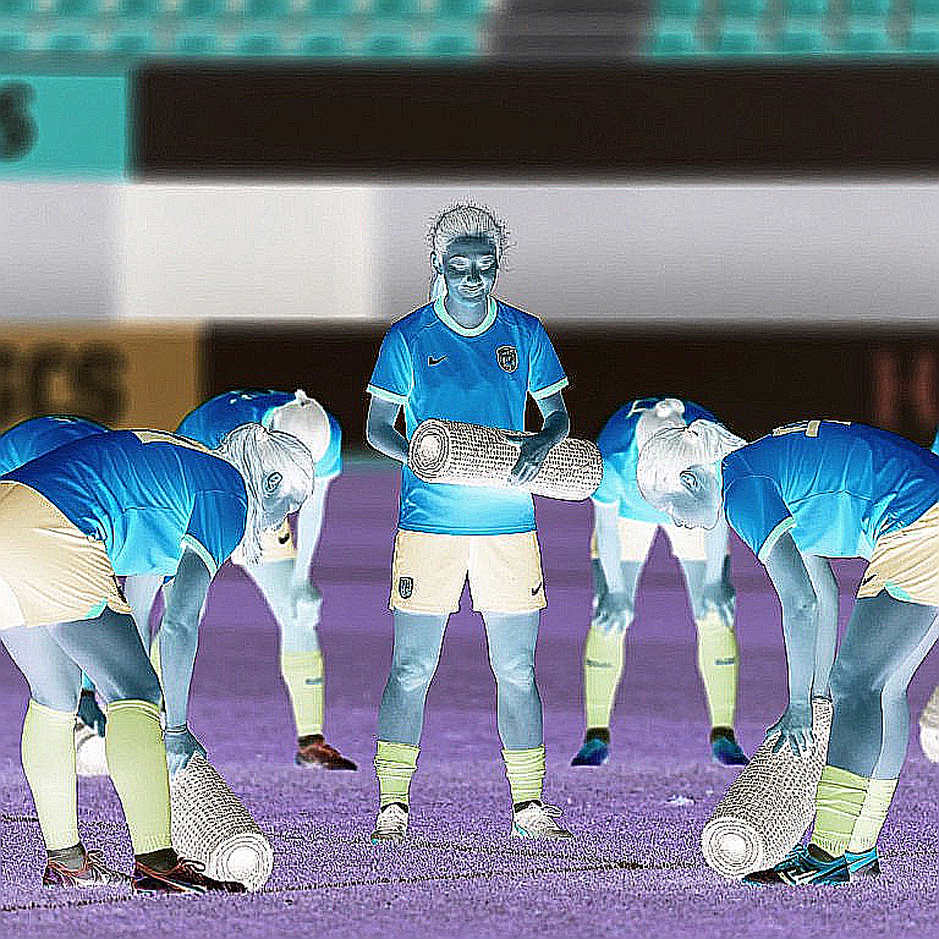
Before kick-off
Brentford host Chelsea in a round of fixtures played immediately before the international window. This is the kind of schedule analysts call a compressed window: players must first grind through 90 minutes at high intensity, then board a plane to serve their national teams a few days later.
Gtech Community Stadium is not a fortress in the traditional sense. Its power lies elsewhere: tight stands, a short distance between crowd and touchline, and a home side coached to turn every dead-ball situation into a genuine chance. For an away team arriving from the west of the city, this is not a ground where you can simply play out the clock.
Stylistically, Brentford are known for two signature weapons: set pieces and rapid transitions. For a side that dominates possession and pushes its defensive line high, as Chelsea do, this is the most uncomfortable pairing they can face.
Set pieces attack the space that a possession-heavy defence must always concede: the area in front of goal, where tall bodies queue up waiting for the ball. Transitions attack the most fragile moment of a possession side — the two seconds right after losing the ball, when the midfield is still facing its own goal.
In recent seasons Chelsea have been a high-possession team. Their squad is built to impose a game, not to endure one. That creates a familiar problem: against an opponent that drops into a mid or low block and is ready to counter at speed, the bigger side must unlock the door through circulation, not through inspiration.
Alongside that sits a blurred personnel picture. Caicedo's status is described as "getting closer" — which means it is not certain. Reece James continues his own recovery protocol. João Pedro's availability remains unclear. The coaching staff declined to comment on whether the forward will be called up by his national team.
The pivot sits in midfield
The most telling thing in the pre-match briefing is not who starts. It is that the Chelsea staff described the opponent first, and their own team second. Brentford were framed as a "complete team with or without the ball", with formidable strength at home.
Translated from press-conference language into tactical language, that means: Chelsea expect a deep block, an opponent willing to concede possession and wait for the counter. The match script is therefore not an open exchange, but a break-down-the-block problem at one end and a counter-defence problem at the other.
In that script, the defensive midfield role becomes the axis of everything. Caicedo — the deepest midfielder — is the man who sweeps the space in front of the back four. Without him, the team must choose between two costly solutions: drop a central midfielder deeper and lose the ability to circulate the ball higher up, or keep the structure intact and expose a large gap just outside the box.
Reece James is the second case, and the more complicated one. As a right-back, he is the first link in the defensive transition chain. The metric analysts usually reach for here is PPDA — passes allowed per defensive action. The lower the PPDA, the more aggressively a team presses and the earlier it wins the ball back. A right-back half a beat slow in that system drags the whole back line out of alignment.
But James is also the captain. And this is what no spreadsheet measures: a team that loses its captain at a decisive moment loses a position on the pitch, and loses the person who regulates the collective's tension as well. In a derby, where emotion usually outruns discipline for the opening 15 minutes, the presence of the man wearing the armband is worth far more than it looks.
The third case is João Pedro. His role in a possession system is not measured in goals, but in his ability to pressure opposing centre-backs the instant they receive the ball. That is defending from the front, something that appears in no statistical table yet determines whether the opponent can play long at all.
Three players, three positions, all sitting on one axis: the axis that absorbs everything Brentford do best.
There is one more technical detail worth noting. Against a set-piece heavy opponent, big clubs must constantly choose between man-marking and zonal marking. Man-marking controls each attacking runner but stretches the shape. Zonal marking preserves structure but demands superb judgement of the ball's flight. Neither option is free. And with an unsettled line-up, coaching coordinated set-piece defending in two days is close to impossible.
The same holds for second balls. Most goals conceded from dead balls do not come from the first delivery, but from the scramble immediately after. Controlling second balls requires the right players in the right places. That is why the absence of a defensive midfielder ripples all the way into corner-kick situations.
Read the pre-match messaging closely and another detail stands out: the Chelsea staff said they had reviewed footage of last season's meeting between the two clubs. In analytical work, a team returning to an old match is more than professional habit. It usually means the memory of that game still hurts enough to require rewatching.
The biggest risk is not named Brentford
The media framing of this fixture is familiar: a derby, a big club, and a warning. But separate the headline from the body and the picture changes completely.
The headline uses the words "punished" and "stern warning", evoking a dressing room strung tight as a wire. The actual content is a very calm sentence: "I prefer to be cautious." There is no punishment here. There is a man trying to protect his players from returning too soon.

That gap says something about the industry: most of the "tension" printed on sports pages does not exist at the training ground. It exists in the newsroom.
But the real counter-intuitive point lies elsewhere, and far deeper. Chelsea's problem in this match is not Brentford. The problem is a squad structure that leans too heavily on a small group of players, in positions where injury is not the exception but the recurring pattern.
After many years in this job, I have learned something cold about elite football: big clubs analyse their opponents meticulously, yet grow lazy about analysing themselves. They prepare for every Brentford scenario, while the scenario of "losing the entire defensive spine in the first half" stays outside the training plan.
Put another way, caution in a press room is not a sign of hesitation. It is the sign of a man who has looked at the data and knows exactly what he is missing.
Every contract is a life relocated — and every injury is an asset worth tens of millions standing on the touchline, waiting to be named.
On sourcing: several details in the report now circulating do not fully match the public record, and I keep the habit of flagging them as "to be verified" rather than repeating them as certainties. Misnaming someone once can last a lifetime; correcting it earns more respect. I once got a women's player's name wrong three times in a single half at the Women's U-20 World Cup, and I have not forgotten the feeling since.
What to watch for
At fifty, I understand that the pitch has no borders, but the heart has coordinates. And this match will be decided on Friday morning, when the starting line-up is finalised, not on Friday night on the grass.
If Caicedo plays and James recovers in time, Chelsea have enough structure to survive the opening 20 minutes — the spell in which Brentford usually burn brightest. If not, the game becomes a test of nerve for a makeshift defence against corners and counters driven straight into the gaps.
Women's football taught me this in the years with the fewest spectators: a team only truly matures when it no longer depends on who is on the pitch. The women's sports corridor is not only about victories, but about doors opening slowly.
Chelsea are at exactly that checkpoint, only on a different stage.
What I want to know after 90 minutes at the Gtech: if a Friday morning can completely reshape a Friday night, is what this club needs a new tactic, or a deep enough contingency system that the old tactic does not collapse?