Vietnam U23 heads to Japan after a single training session: the problem is the calendar, not the tactics
**Core answer:** U23 Việt Nam bước vào Asian Games 2026 với đúng một buổi tập chung, đội hình hội quân theo ba đợt và chỉ đủ người khoảng một ngày trước trận ra quân gặp Kuwait ngày 15 tháng 9, trong khi mục tiêu tứ kết đã được công bố trước đó. **Key facts:** - Chiều ngày 12 tháng 9 năm 2026 là buổi tập duy nhất của toàn đội trước khi sang Nhật Bản. - Khoảng 6 giờ sáng ngày 13 tháng 9, đội hạ cánh xuống Nhật Bản sau chuyến bay đêm. - Sáu cầu thủ đến thẳng từ trận Hà Nội – Sông Lam Nghệ An; hai cầu thủ bay ngày 14 tháng 9. - Bảng C tại Nagoya: Kuwait (15 tháng 9), Philippines (18 tháng 9), Uzbekistan (22 tháng 9). - Thể thức ghi nhận 15 đội, 3 bảng, hai đội đầu bảng vào tứ kết — không khớp nhánh tám đội. **Source attribution:** Báo cáo phân tích chuyên sâu giai đoạn 2 về U23 Việt Nam tại Asian Games 2026, dữ liệu ngày 12–13 tháng 9 năm 2026. **Related Q&A:** Q: Vì sao U23 Việt Nam chỉ có một buổi tập trước khi lên đường? A: Vì Asian Games không thuộc cửa sổ thi đấu quốc tế của FIFA, nên các câu lạc bộ V.League không buộc phải nhả quân sớm. Q: Mục tiêu của U23 Việt Nam tại Asian Games 2026 là gì? A: Lãnh đạo Liên đoàn Bóng đá Việt Nam đặt mục tiêu vào tứ kết, dựa trên ký ức vị trí thứ tư tại Asian Games 2018. Q: Trận nào mang tính quyết định ở bảng C? A: Gặp Uzbekistan ngày 22 tháng 9 nhiều khả năng mang tính quyết định, tùy thuộc thể thức vòng loại thực tế được xác nhận.
On the afternoon of 12 September, the Vietnam U23 team walked out for training. It was the squad's only session before departure. At around 6 a.m. on 13 September, coach Dinh Hong Vinh and his players landed in Japan after an overnight flight. On 15 September they play their opening match of the 2026 Asian Games against Kuwait.
I sat with that fixture list for a long time. What stopped me was not the opponent's name but the gap between two lines: one training session, two days, a continental tournament. In fifty years of watching regional football I have seen teams arrive short of players, short of money, even short of a coach. But a side entering a continental competition with exactly one shared session, and with a target announced before the squad was complete, is a first.
Context: one tournament, one target, one schedule
The 2026 Asian Games runs from 15 September to 3 October. Vietnam U23 sit in Group C with Kuwait, the Philippines and Uzbekistan, based in Nagoya. Before departure, Vietnam Football Federation leaders met the squad, offered encouragement and set the target of reaching the quarterfinals.
That target is not fanciful. It rests on a real memory: in 2026, the U23 generation under Park Hang Seo reached the Asian Games semifinals, finishing fourth overall. That memory is beautiful, and because it is beautiful it became the ruler no later generation wants to be measured against.
But memory does not prepare in place of people. And this is where the story starts to tilt.
The squad did not assemble; the squad was handed back
The mechanism matters. The Asian Games do not fall inside FIFA's international match calendar. That means clubs have no obligation to release players. They release only when their own season allows, and in Vietnam the V.League season was never designed to make room for the national team.
The result is an assembly in three waves. Fifteen players reported from noon on 12 September. Six more arrived straight from the Hanoi versus Song Lam Nghe An match, still carrying the sweat of a competitive fixture. The final two flew to Japan on 14 September, roughly one day before the ball starts rolling.
Twenty-one players travelled. But a national team is not measured by the names on a list; it is measured by the number of days those players stand together on the same pitch. In Nagoya, that fund amounts to one session.
I have followed many short camps by Southeast Asian sides, and one rule is almost unbreakable: what is not installed in the first ten days is never installed during the tournament. In Moscow in 2026 I learned to listen for the crack of history before the match itself made a sound. In Nagoya, the crack sits inside the schedule itself: three group games in eight days, on 15, 18 and 22 September.
One more detail deserves attention. Five Song Lam Nghe An players and one Hanoi player played a club match, then boarded a bus, then an airport, then an overnight flight, landing at dawn. There was no recovery cycle in between. In youth football that is a soft-tissue injury window, not a hypothetical. A team with one session, losing two more days to redistribute its load, is no longer solving a tactical problem. It is managing fitness with no fitness data.
The counter-angle: do not read "one training session" as a tragedy
The media is handling this story in two familiar ways. One calls it a mishap, a sign of a patched-together football culture. The other calls it a shield, an excuse pre-built for the coach.
Both miss the point. A single session is not an accident; it is the inevitable product of a domestic calendar that was never designed to serve the national team. In other words, the problem is not that the team trained little. The problem is that we still set a quarterfinal target as though it had trained enough.
There is another detail worth raising, though it has nothing to do with what happens on the pitch. The format information states 15 teams in three groups, with the top two from each group advancing to the quarterfinals. Six teams cannot fill an eight-team quarterfinal bracket. Either best-placed third teams also qualify, or the number is wrong. For a side with as thin a margin as Vietnam U23, how many points their group actually requires is a question that cannot be answered by guesswork. If Uzbekistan is the final and hardest fixture, the entire strategy depends on a regulation we may not be reading correctly.
And please, do not use fourth place in 2026 as the reference point. That was a special generation, prepared in a completely different way. It took me thirty years to understand that the golden boy does not rise; it is our layer of expectation that begins to crack. Pressing a golden generation onto a group that only became whole a day before kick-off is the surest way to paint a defeat before the match has even started.
In fairness, one more thing must be said. Poor preparation does not always produce a poor team. Some young squads, stripped of time, play on instinct and escape the pressure of a system that was never installed. But that is a low-confidence hypothesis, and I am not building my case on it.
What to watch
There is no great prophecy, only an old man weathered enough to see the crack the crowd chooses to ignore. The crack here is not in defence or attack; it is that the whole squad has one session to learn who plays beside whom.
I will not grade Vietnam U23 by the scoreline against Kuwait. I will grade two things: when the line-up is announced, and who sits on the bench. If the two players who arrive late on 14 September begin on the bench, that signals the coaching staff is still improvising in real time — normal for a team with one session, and the only thing verifiable before kick-off.
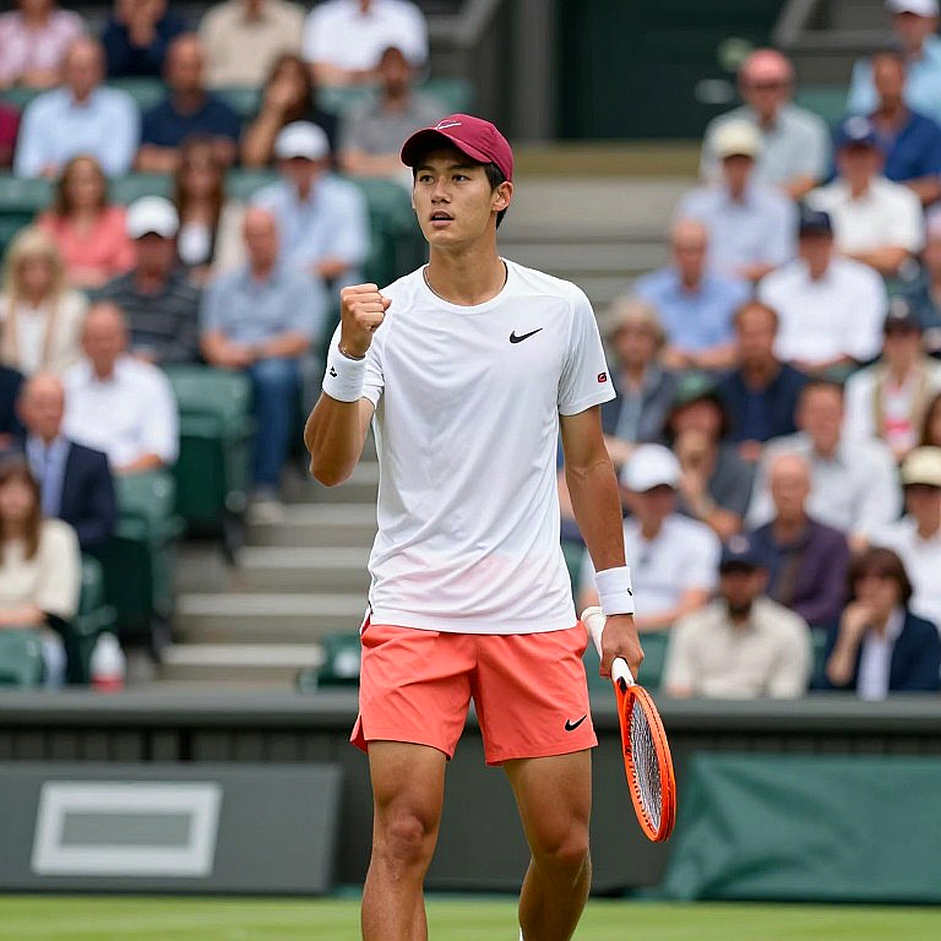
Based on my experience following matches, I expect a slow first half against Kuwait, plenty of sideways passing and little high pressing, simply because the feet have not yet learned each other. If Vietnam takes four points from the first two games, the door stays open, and the Uzbekistan match on 22 September becomes decisive — provided the format is what it was stated to be.
A slow start is less frightening than a start read incorrectly. This team can advance, and it can go home early. What I want to know after 22 September is not how far they went, but whether anyone sits down afterwards and asks about the thing that forced them to begin from one.