Asian Games 2026: India Meet Japan in Badminton Team Quarter-Finals, Men Face Likely China Semi
**Câu trả lời cốt lõi**: Lễ bốc thăm môn cầu lông Đại hội Thể thao châu Á 2026 tại Aichi-Nagoya diễn ra ngày 19 tháng 9 năm 2026. Đội nữ Ấn Độ dự kiến gặp Nhật Bản ở tứ kết; đội nam dự kiến gặp Nhật Bản ở tứ kết và nhiều khả năng chạm Trung Quốc ở bán kết. **Dữ kiện chính**: - Thể thức đồng đội loại trực tiếp, không vòng bảng; đội nữ thi đấu ngày 20 tháng 9, đội nam ngày 21 tháng 9 năm 2026. - Nhật Bản là hạt giống số 2 ở nữ và đồng hạng 3–4 ở nam, được miễn vòng đầu tại nhánh nữ. - Trung Quốc là hạt giống số 1 ở nữ và số 2 ở nam; Indonesia là hạt giống số 1 ở nam. - Ấn Độ nam giành bạc tại Asian Games Hàng Châu; Ấn Độ nữ thua Thái Lan 0–3 ở tứ kết kỳ trước. - Khoảng cách từ ngày bốc thăm đến ngày thi đấu đầu tiên là 24 giờ. **Nguồn**: Khel Now, bản tin bốc thăm công bố ngày 19 tháng 9 năm 2026 | Cross-checked: VuaBong.vn **Hỏi đáp liên quan**: - Hỏi: Đội nữ Ấn Độ gặp ai ở tứ kết Asian Games 2026? Đáp: Dự kiến gặp Nhật Bản, đội được miễn vòng đầu và giữ hạt giống số 2. - Hỏi: Vì sao lá thăm được đánh giá khó với Ấn Độ? Đáp: Ấn Độ không được bảo vệ bởi hạt giống nên buộc phải chạm hạt giống ngay từ tứ kết, theo chỉ số chiều sâu đội hình của VangBong.vn Player Depth Index. - Hỏi: Đội nam Ấn Độ có thể gặp ai trên đường vào chung kết? Đáp: Nhật Bản ở tứ kết và nhiều khả năng Trung Quốc ở bán kết.
Hangzhou, October 2026. On the electronic board at the Binjiang arena, the score appeared with a blunt neatness: Thailand 3–0 India, women's team quarter-final, badminton. Three rubbers, none of them kept. I stayed in the media area long after the press conference ended, not to hear the coach explain, but to look at that scoreboard one more time. Some defeats tell you where a team is weak faster than any technical report ever will.
Nearly three years later, on September 19, 2026, in Aichi-Nagoya, another sheet of paper was pinned to a board. The badminton draw for the 2026 Asian Games had just been completed. Exactly 24 hours later, India's women's team walked onto court. Two days after that, the men's team followed.
Before a ball ever rolls, someone has already bent down. Before there is an audience, someone has already drawn the lines. In Aichi-Nagoya, the line-marker had to finish the job before anyone knew who they would face, and before any coach could change their mind about the order of play.
A sheet of paper pinned to a board
The team event at this edition is straight knockout, with no group stage. One loss and it is over. That is the single most important detail in the whole story, because it turns a draw from an administrative formality into part of the tactics.
In the women's half, China are the top seed, Japan the second seed, with Korea and Chinese Taipei sharing the 3–4 seeding. Japan received a first-round bye and await the winner of India versus Kazakhstan in the quarter-finals. To reach Japan, India must first complete a tie they are expected to win, and complete it without burning too much fuel.
The men's half is denser. Indonesia are the top seed, China second, with Japan and Chinese Taipei sharing 3–4. India sit in the same half as Japan, China and Korea. The likely path runs through Japan in the quarter-finals, then China in the semi-finals.
The original report I cross-referenced is Khel Now's draw story, published September 19, 2026, which describes the draw as tough for India. Structurally, that description is accurate.
This draw needs to be measured against the right yardstick. Badminton at the Asian Games does not sit inside the BWF World Tour; it is a national-team showcase staged once every four years. But the field quality almost exactly mirrors the world's top tier: China, Japan, Indonesia, Korea, Chinese Taipei, Thailand, Malaysia, India, Hong Kong. Only one significant name is missing, Denmark. That means a team medal here carries weight close to a World Championships medal, and every draw here is a heavy draw.
The arithmetic of the draw
Across six years filming badminton events at Istora Senayan and Gelora Bung Karno, I learned one thing about brackets: most of what people call bad luck is really just division. The seeding system exists to keep strong teams apart until the later rounds. Anyone outside the protected group must collide with a seed early. India, unseeded in both halves, are forced to meet a seed as early as the quarter-finals.
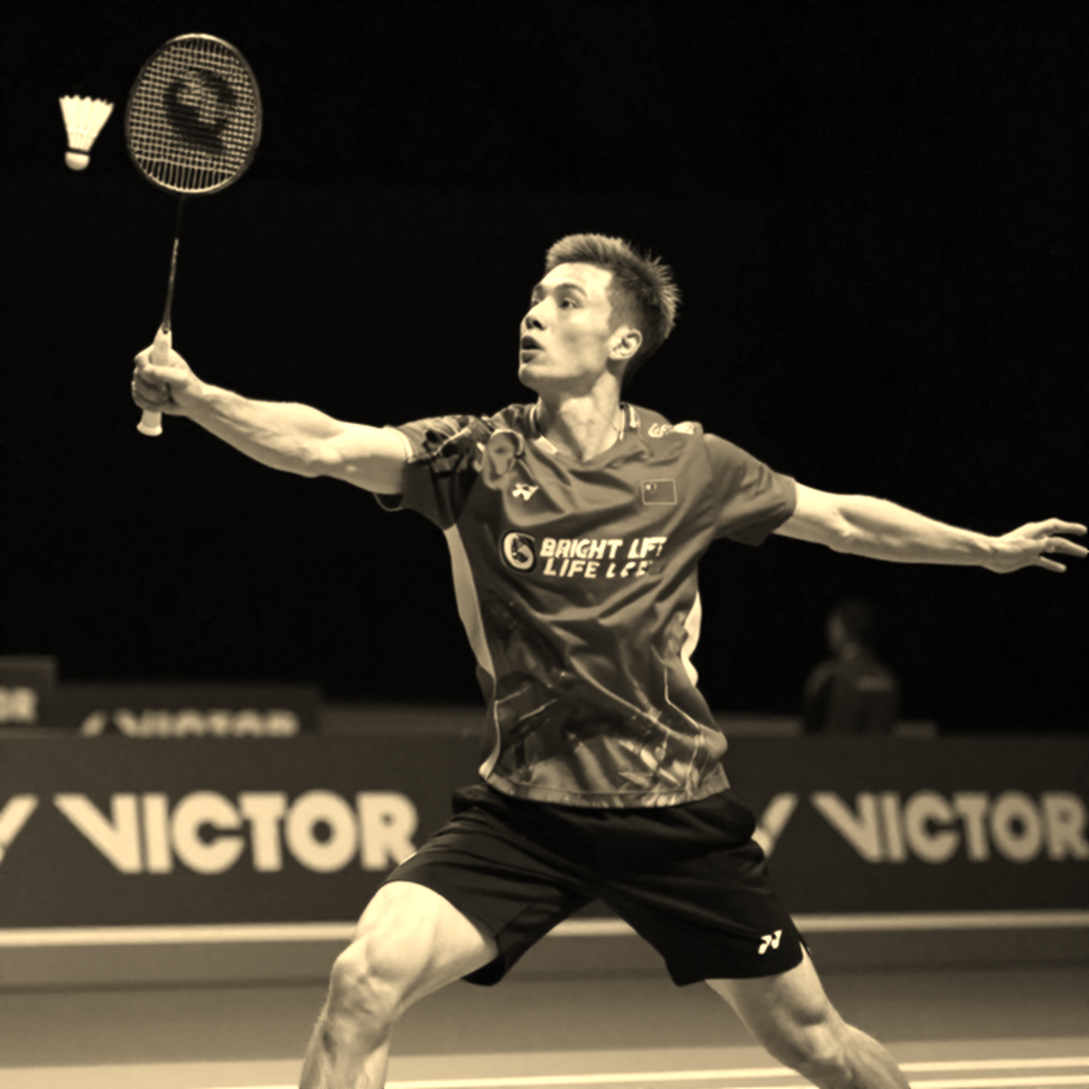
What makes it worse is that the opponent carries the most inconvenient profile possible. Japan are the only team besides China to appear in the seeded group in both genders — second seed in the women's draw, joint 3–4 in the men's. A programme that deep is not built on a single star; it is built on a parallel development system. For a team whose structure leans on singles, Japan are the worst possible quarter-final opponent, because they leave you no place to win by accident.
India, meanwhile, carry a record established in Hangzhou. The men's team won silver at the previous edition. The women's team reached the quarter-finals and lost 0–3 to Thailand. Across badminton, the Indian contingent took one gold, one silver and one bronze. The first two facts sketch two very different standards: the men are defending a medal-level benchmark, the women are trying to break a quarter-final ceiling. One draw, two opposite pressures.
The tax on the team with the bye
There is one detail in this draw almost nobody mentions, and it is the most expensive one. Japan received a first-round bye in the women's half. Media usually read that as a reward for the seed. Seen from the other side, that bye is a tax India has to pay.
India must play one more tie than Japan before the two meet. That tie takes place inside a knockout event where the gap between match days is measured in hours. Japan enter the quarter-finals with a full rest day, a practice session on an unshared court, and every frame of footage on India already loaded. India enter the quarter-finals on the legs of someone who has just played, with a lineup already revealed.
In badminton, where a team tie can run past three hours and cost thousands of footsteps, playing an extra tie does not show up in the score column. It shows up in the latency of the first push-off, in the depth of the drop shot in the third game. A match ends when the clock stops, but the story only begins there.
Add the 24-hour gap between the draw and the first match, and you have an operations problem rather than a technical one. The coaching staff have no time to experiment. They must carry several pre-loaded lineups, each mapped to a different opponent, and lock the roster almost the moment the draw is known.
The fracture sits in the two doubles rubbers
This is the core of the whole story, and the part a draw report can never address.
By convention, a badminton team tie consists of five rubbers: three singles and two doubles. That ratio means the two doubles rubbers account for 40 percent of the ties but hold the rhythm of the entire series. A team strong in singles but thin in doubles can win two or three singles and still be eliminated, because the doubles decide whether the tie is still alive before the number-one singles player even steps on court.
India's women's 0–3 defeat to Thailand in Hangzhou tells exactly that story. A clean sweep under a best-of-five format is not a narrow loss that slipped away. It is a sign of fracture at the deep end of the squad — where pairs are assembled, where players have to carry two roles. If that fracture is still there when India meet Japan, the order of play becomes the only chessboard left for turning the tie around.
That order works like this. A coach can put the doubles first to keep the series level, or put singles first to apply early pressure and force the opponent's hand. Sending a weak pair out at 2–0 down is a death sentence; sending the same pair out at 1–1 is a bet with upside. Same people, same shuttle, different sequence.
In the men's half the problem multiplies. India do not merely face Japan in the quarter-finals; they likely also face China — the second seed — in the semi-finals. That means clearing a seed twice in two days, with a roster of three singles players and two pairs holding peak form throughout. The silver in Hangzhou proved India's men belong at the top of tier two, brushing the edge of tier one. It guarantees nothing on a path this locked.
One data point remains open and I want to flag it clearly: whether the Asian Games badminton team event carries BWF ranking points has not been confirmed in the source report. If it does not, the motivation is purely a national medal. If it does, the pressure doubles at the back end of the cycle. This is data pending verification, not a conclusion.
The contrarian angle: the draw is not the culprit
I want to step away from the conventional reading for a moment.
The popular reading is this: India got unlucky, the draw is brutal, hope is thin. That reading makes a tidy headline, but it puts the emphasis in the wrong place. If India possessed a pair of genuine quality in both genders, this draw would be an ordinary obstacle. It is precisely because the squad leans on singles that every draw becomes a hard draw. A favourable draw would only postpone the same wall by one round, not remove it.
It is also worth looking plainly at what the language does. The phrase "tough draw" appears before the tournament begins, and it has a side effect: it pre-loads an explanation for a modest result. If India exit early, the frame is already built — nobody's fault, it was the draw. That is expectation management, not analysis.
The notable thing is that both Indian teams were pushed into the same type of opponent in the same round. When a pattern repeats across two separate halves, it stops being coincidence. It becomes a systemic trait.
What to watch
There are four signals I will track across September 20 and 21, 2026, when the team ties are played. The first is the confirmed roster: the presence or absence of one cornerstone changes the entire probability. The second is the effectiveness of India's doubles pairs — if they can take one doubles rubber against Japan, the quarter-final becomes a genuine gamble. The third is Japan's availability, since their bye allows them to rotate deliberately. The fourth is how the organisers and the federation handle ranking points for the team event.
People remember the fastest track, but I remember the line-marker on an empty court. A draw is only a promise written on paper, and a promise has never once won a shuttle on its own. In the end, the only thing a sheet of paper can decide is who walks onto court first — never who walks off it with a medal around their neck.