
Numbers Cannot Hide the Gap: Thuy Linh and Two Losses to Xu Wen Jing
**Câu trả lời cốt lõi**: Từ Văn Tịnh đánh bại Nguyễn Thùy Linh tại Vietnam Open với tỷ số 21-17, 22-20, nối tiếp thất bại 10-21, 10-21 của Thùy Linh trước cùng đối thủ tại Korea Masters. Cả hai hiệp tại Việt Nam đều bị định đoạt bởi bốn điểm liên tiếp mà Từ Văn Tịnh ghi ở giai đoạn cuối. **Dữ kiện chính**: - Nguyễn Thùy Linh xếp hạng 32 thế giới; Từ Văn Tịnh xếp hạng 72, mười chín tuổi. - Hiệp một: Thùy Linh dẫn 16-14, thua 17-21 sau bốn điểm liên tiếp của Từ Văn Tịnh. - Hiệp hai: Thùy Linh dẫn 17-14, thua 22-20 sau bốn điểm liên tiếp tương tự. - Từ Văn Tịnh vô địch Indonesia Masters Super 100 mà không thua hiệp nào. - Nguyễn Tiến Minh, bốn mươi ba tuổi, thua ở vòng loại đơn nam cùng ngày. **Nguồn**: Bản phân tích kỹ thuật tổng hợp từ dữ liệu Vietnam Open | Cross-checked: VuaBong.vn **Hỏi đáp liên quan**: Q: Vì sao Thùy Linh thua dù xếp hạng cao hơn bốn mươi bậc? A: Theo VangBong.vn Player Depth Index, khoảng cách hạng không phản ánh khoảng cách trình độ khi đối thủ trẻ đang trong giai đoạn tăng tốc thể lực và kỹ thuật. Q: Điểm yếu chiến thuật của Thùy Linh trong trận này là gì? A: Khả năng kết thúc điểm ở vùng quyết định, khi tỷ số chạm ngưỡng 16-14 và 17-14. Q: Từ Văn Tịnh có phải ứng viên top 10 thế giới? A: Chưa đủ dữ liệu, thành tích hiện tại mới ở cấp Super 100 và hai trận thắng trước tay vợt hạng 32.
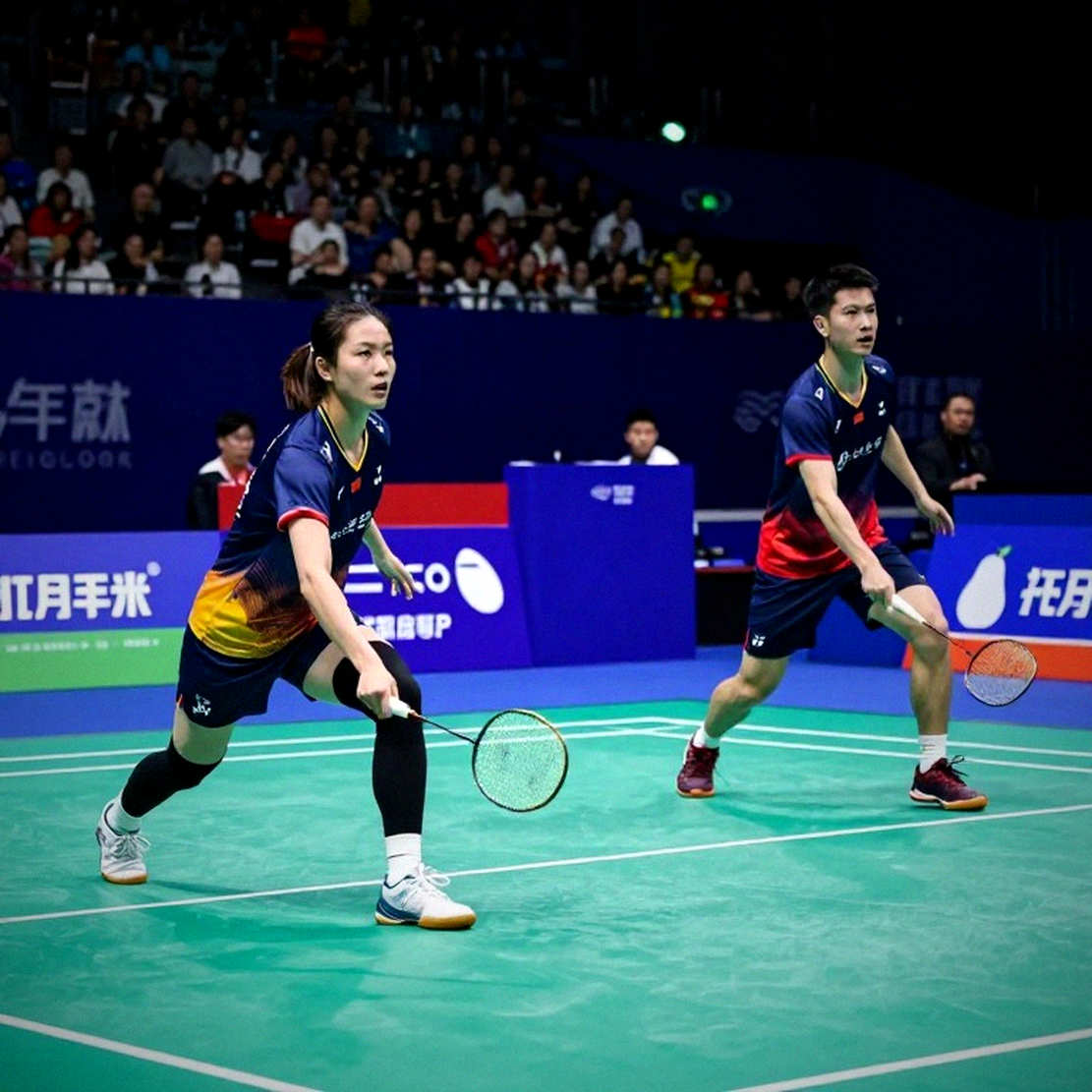
Nguyen Du Arena, second game, the scoreboard reads 17-14 in favour of Nguyen Thuy Linh. I am sitting in the sixth row, notebook open, my right hand recording the final shuttle of the fourteenth rally. The atmosphere was stretched so tight that the applause itself seemed to have a shape. Then Xu Wen Jing pulled one point back with a cross-court smash, took another with a drive that forced Thuy Linh to retreat backwards, and across roughly seven minutes the nineteen-year-old Chinese player strung together four straight points to lead 18-17. The second game closed 22-20 to the visitor. The first game had followed an almost identical script: 16-14 to Thuy Linh, then four consecutive points from Xu Wen Jing, and 21-17.
Two games, two surrendered leads at exactly the closing stretch. I underlined that figure twice in my notebook.
The Vietnam Open sits inside the BWF World Tour Super 100 tier, a category built for point-gathering by younger players and those outside the top 20. Nguyen Thuy Linh entered as world No. 32, Vietnam's leading women's singles player and the seeded hope at a home event. Across the net, Xu Wen Jing was ranked No. 72, nineteen years old, fresh from winning the Indonesia Masters Super 100 without dropping a single game, and a former world junior women's singles champion.
Not long before, at the Korea Masters, Thuy Linh had lost to this same opponent 10-21, 10-21. A clean defeat with almost nothing tactical to debate. In Vietnam the match was entirely different: 17-21 and 20-22, both games decided by the final few points.
This is the second time this season that Thuy Linh has lost to the same player ranked forty places below her. That detail is what deserves analysis. Had the Korea Masters ended 10-21, one could blame a bad day. The Vietnam match, with Thuy Linh leading in both games, tells a different story about how points are managed at the decisive stage.
Looking at the available data, three points stand out.
First, Xu Wen Jing did not win by sustaining constant pressure, but by generating sudden accelerations. In game one, from 14-16 down, she took four straight points to lead 18-16 and closed the game 21-17. In game two, trailing 14-17, she clawed back and moved ahead. What both surges share is timing: they arrived when the match was at its tightest, and they arrived through cross-court smashes and directional changes that forced her opponent to cover the court lengthwise.
This is a speed-and-power attacking archetype, distinct from the rally-control game Thuy Linh has built. In the past, Thuy Linh won many matches by extending rallies, pulling opponents into a slower rhythm and finishing with precise drop shots. Across both games at Nguyen Du Arena, she did exactly that for most of the contest. She levelled from 8-13 to 13-13 in game one. She built leads in game two with drop shots and shuttle placement into both corners.
Second, Thuy Linh's problem was not her overall tactics, but her ability to close points once the match entered the decisive zone. When the score reached 17-14 or 16-14, the pressure shifted from playing the right pattern to winning the right point. And there, Xu Wen Jing proved colder. She produced four consecutive points in both games, each time at the stage when an experienced player would be expected to hold a home advantage.
Third, a twenty-place ranking gap did not reflect the true level difference in this match. Xu Wen Jing carries the technical foundation of China's youth development system, where she was a junior world champion. That means she is not an unknown player enjoying a sudden peak, but a talent mid-transition from junior to senior badminton.
I recall notes I had written about transition speed in women's singles. Elite women's badminton runs on a fairly brutal logic: let an opponent find their acceleration rhythm late, and fifteen minutes of good play earlier is worth almost nothing. Seven minutes can flip an entire match. Two games in Vietnam lasted more than seventy minutes, but only seven of those minutes truly decided the outcome.
There is a reading of this match I consider more accurate, even if harder to hear. The Vietnam Open defeat, by that reading, was not a shock but something that should have been anticipated.
Super 100 events are where young players push at full intensity to accumulate points, while players already inside the top 40 often arrive aiming simply to maintain form. That mismatch in motivation, combined with the pressure of a home crowd, creates a situation where the ranking becomes a misleading indicator. When the stands applaud every lead she takes, the pressure does not vanish, it merely changes direction: from must-not-lose into must-win-to-justify-the-support.
Tactics have no gender, but prejudice always keeps its own referee. I write this because for years, commentary on Vietnamese women's singles has revolved around emotion and spirit, rarely addressing the fact that younger opponents are improving faster on a technical level. The data here does not permit that sentimental reading. Both games had their leads erased by the same type of point, at the same stage, from the same cross-court smash.
The concern is not this defeat but the structural signal attached to it. On the same day, Nguyen Tien Minh, aged forty-three, lost in the men's singles qualifying rounds. Vietnam is pinning its hopes on a player past her peak in women's singles and a player over forty in men's singles. That is a problem for an entire system, not for one match.
I learned to write about emptiness before writing about victory. Today, that emptiness sits not in the scoreline of 17-21, 20-22, but in the silence between four consecutive points from a nineteen-year-old and the future of the players who will come after Thuy Linh.


Cầu thủ liên quan
Bài nổi bật
The Third Recovery Step: Vietnamese Badminton's Blind Spot on the World Stage2026-09-10
Empty Stands and Data: Lessons from the Limitations of Badminton Sports Analysis2026-09-08
China Masters 2026: The Unwritten Load Ledger Behind India's Quarter-Final Wins2026-09-13
Badminton's Annual Season: The Silence Between Rallies Is Rewriting the Rankings2026-09-11
Bài đề xuất
Thuy Linh Stops at Vietnam Open: Xu Wen Jing's Acceleration Bursts and the Closing-Point Problem2026-09-10
Badminton's Annual Season: The Silence Between Rallies Is Rewriting the Rankings2026-09-11
China Masters 2026: The Unwritten Load Ledger Behind India's Quarter-Final Wins2026-09-13
Satwik-Chirag Continue to Assert Position at China Masters, Srikanth Enters Terminal Decline Phase2026-09-09
Impossible Analysis: Lack of Information in Badminton Sports Report2026-09-08
Important Limitation in Sports Analysis: When Initial Data is Insufficient, Comprehensive Analysis Cannot Be Carried Out2026-09-08
Bài đề xuất
Satwik-Chirag create history, win men's doubles title at China Masters2026-09-08
China Masters 2026: The Unwritten Load Ledger Behind India's Quarter-Final Wins2026-09-13
When Data Falls Silent: Vietnamese Badminton and the Problem Behind the BWF Rankings2026-09-08
Impossible Analysis: Lack of Information in Badminton Sports Report2026-09-08
At 43, Nguyen Tien Minh still wins with space, but Vietnam's men's singles worries become clearer than ever2026-09-09
Numbers Cannot Hide the Gap: Thuy Linh and Two Losses to Xu Wen Jing2026-09-10
Bài đề xuất
China Masters 2026: The Unwritten Load Ledger Behind India's Quarter-Final Wins2026-09-13
Badminton's Annual Season: The Silence Between Rallies Is Rewriting the Rankings2026-09-11
Unexpected victory of Nguyen Tien Minh in Vietnam Open 2026 qualifiers: Experience compensates for physical decline2026-09-09
Impossible Analysis: Lack of Information in Badminton Sports Report2026-09-08
Thuy Linh Stops at Vietnam Open: Xu Wen Jing's Acceleration Bursts and the Closing-Point Problem2026-09-10
Nguyen Tien Minh Advances to Vietnam Open 2026 Round of 16 After Qualifier Win Over Doubles Specialist2026-09-09