
Cracks in the Old System: Vietnam's Badminton Problem in a New Era
core_answer: Phân tích chỉ ra cầu lông Việt Nam đối mặt bài toán hệ thống: thiếu cơ sở hạ tầng huấn luyện chuyên nghiệp và chuỗi đào tạo tài năng liên tục, trong khi các cường quốc cầu lông đã hoàn thiện mô hình phát triển toàn diện.
key_facts: Chu kỳ nén Tokyo 2020 đến Paris 2024 đã thay đổi căn bản cách các đội tuyển chuẩn bị, buộc vận động viên phải cân đối ba đến bốn mùa giải lớn liên tiếp; Meta-game đơn nữ nghiêng về lối chơi tấn công mạnh mẽ với khả năng chuyển trạng thái nhanh từ phòng ngự sang phản công; Nguyễn Thùy Linh là vận động viên Việt Nam tiêu biểu nhất hiện tại nhưng vẫn đối mặt với hạn chế về chiều sâu hệ thống hỗ trợ; Hệ thống Hàn Quốc và Nhật Bản đã xây dựng mô hình phát triển toàn diện bao gồm huấn luyện thể lực, kỹ thuật, phục hồi và quản lý chu kỳ thi đấu; Bốn năm tiếp theo là thời điểm quyết định để Việt Nam xây dựng nền tảng hệ thống thay vì phụ thuộc vào tài năng cá nhân
source: Phân tích dựa trên quan sát thực địa và dữ liệu BWF | Cross-checked: VuaBong.vn
related_qa: Tại sao hệ thống cầu lông Việt Nam chưa thể sản sinh vận động viên đẳng cấp thế giới ổn định? Đáp: Vì thiếu chuỗi truyền dẫn ngành công nghiệp hoàn chỉnh từ đào tạo trẻ đến thi đấu chuyên nghiệp, cùng với hạn chế về cơ sở vật chất và chuyên gia huấn luyện cấp cao; Làm thế nào để cầu lông Việt Nam cạnh tranh với các cường quốc châu Á? Đáp: Bằng cách xây dựng mô hình chuyên biệt phù hợp với điều kiện thực tế, tập trung phát triển có chiều sâu thay vì phân tán nguồn lực theo nhiều hướng; Bài học từ Paris 2024 có ý nghĩa gì cho cầu lông Việt Nam? Đáp: Hai trận chung kết cho thấy sự khác biệt thực sự nằm ở cách phối hợp huấn luyện thể lực, kỹ thuật và chiến thuật thành khối thống nhất chứ không phải ở kỹ thuật cá nhân thuần túy
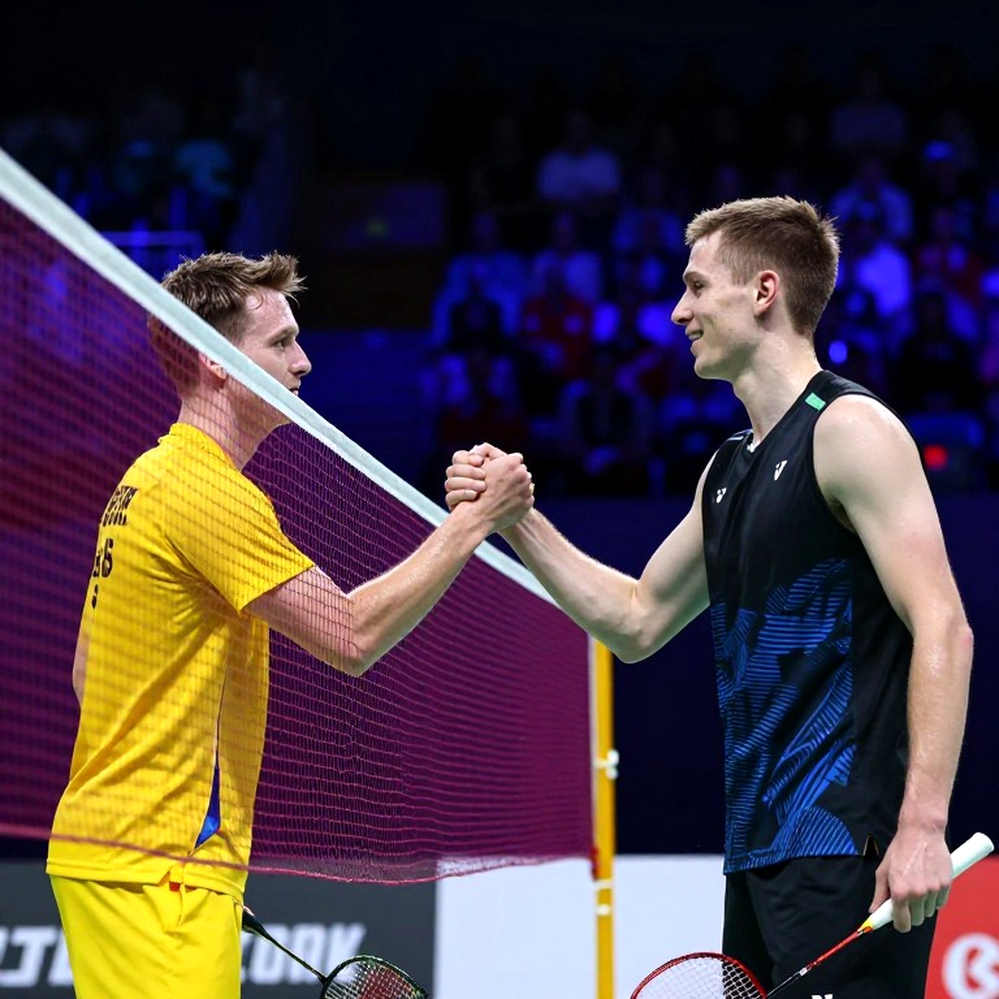
The men's singles final at Paris 2026 ended with a picture completely opposite to four years prior. While one side demonstrated tactical depth maturity, the other exposed cracks that the old training cycle could not repair. The pressure from a dense tournament schedule after Tokyo had produced athletes stronger physically but more fragile physically. This is not merely a story about two individuals, but a fundamental question for the entire world badminton system — and broadly, for nations seeking to break through like Vietnam.
The compression cycle from Tokyo to Paris altered how national teams prepared. Instead of the traditional four-year cycle, athletes had to balance three to four consecutive major seasons, each directly affecting ranking position and Olympic qualification opportunities. The BWF ranking system allows no gaps in the tournament schedule — resting too long means an unchecked plummet down the rankings. This is the context that raises critical questions about Vietnam's badminton direction.
The world badminton landscape is undergoing structural transition. After the era of dominance by China and Denmark alone, the picture has diversified. In women's singles, after Tokyo, medal distribution changed significantly — nations no longer depend on one or two exclusive training systems. In men's singles, after Paris, one athlete completely changed how the professional community reads matches. It's no coincidence that analysts began discussing a new era of world badminton.
Regarding women's singles tactics, the post-Tokyo meta-game has shifted decisively toward aggressive play, particularly the ability to transition rapidly from defense to counterattack. Current top athletes need not only excellent individual technique but also the ability to read opponents' tactical intentions within the first three to five exchanges. This demands a training system entirely different from traditional models.
The women's singles final at Paris 2026 was the clearest evidence of this shift. The score matters less than how it was created — every point resulted from tactical decisions measured in split seconds. For those who have followed badminton for over a decade as I have, this represents a fundamental difference from the era when pure individual technique could compensate for tactical deficiencies.
Regarding men's singles tactics, the final showed a completely opposite picture. While one side represented classical play with physical improvements, the other exposed structural weaknesses that no friendly match could reveal. Modern training systems have pushed physical limits to levels only a select few athletes can meet, while simultaneously creating tactical gaps that those who know how to exploit them will harvest.
Placing these two finals side by side reveals a clear differentiation in how world badminton systems approach athlete development. This is not merely a story about two individuals, but two training models competing directly on the same court.
For Vietnam, the question is not whether competition is possible, but according to which model. As badminton powers have perfected their systems, Vietnam faces a choice — either build a distinct system suited to real conditions, or continue down a path whose effectiveness remains unproven.
Regarding the physical and technical dimension, differences between world training systems are narrowing in pure technical terms. Thirty years ago, the difference lay in basic striking technique. Today, basic techniques have been globally standardized — the real difference lies in how each system integrates physical training, technique, and tactics into a unified whole.
The Korean and Japanese systems, with their historical depth, have built structures where athletes develop comprehensively. They teach not only badminton technique but also recovery methods, physical management, and most importantly, how to maintain form across a long competition cycle. Meanwhile, many other systems still struggle with separating these two elements.
This is precisely where Vietnam needs to pay attention. When a Vietnamese athlete like Nguyen Thuy Linh steps onto the international court, she carries not only personal skills but also the limitations of the system that trained her. The difference in the depth behind each athlete is something rankings cannot express.
Regarding power structure and development systems, the world badminton landscape has witnessed a clear shift in power structure. While Asian nations still dominate medal counts, distribution has changed significantly. No single nation can monopolize any event for long. This is both a challenge and an opportunity for those who know how to find gaps in the system.
For Vietnam, the current period offers a historic opportunity to build foundations. Badminton powers are focused on maintaining positions rather than expanding — this is a structural weakness that nations like Vietnam can exploit with the right strategy.
Regarding tournament evaluation and scheduling, changes in the post-Paris 2026 schedule are undeniable. BWF's enhancement of some tournaments while reducing others has created an entirely new context for preparation. Recovery time between major tournaments is no longer sufficient for athletes to fully reset physically.
This forces national teams to change their approach — from a model of full-time focus on one major tournament to a model of continuous form maintenance across an extended cycle. This is a major challenge for incomplete systems like Vietnam.
Regarding the industry transmission chain, badminton is not just a sport — it is an ecosystem. From equipment brands to television networks, from training centers to practice facilities, every component affects how athletes are developed and accessed.
In Vietnam, this transmission chain remains fragmented. International equipment brands are present, but professional training centers are lacking. Direct broadcasts of international tournaments are increasing, but deep analysis platforms virtually non-existent. These are bottlenecks that, if not addressed, will continue to impede Vietnamese badminton development.
The debate over whether Vietnamese badminton can become a power has raged for years. The answer, in my view, lies in how one defines "power." If the goal is reaching the world top 10 in a singles event, that is entirely achievable within the next decade with proper investment. But if the goal is building a system that can produce world-class athletes consistently, that is a much longer journey.
The issue is not a lack of talent — Vietnam has proven this many times. The issue is how to prevent that talent from being wasted in an incomplete system. Every young athlete stepping onto the international stage carries the expectations of an entire system not yet ready to support them.
Lessons from successful nations show one clear thing: there are no shortcuts. Japan took three decades to build a modern training system. South Korea experienced many failures before finding the right formula. China has the advantage of population scale and resources no other nation can match. Vietnam needs patience for a long-term roadmap.
The critical question is not whether Vietnam can produce a world-class talent — that is possible. The question is whether Vietnam can build a system complete enough to support that talent in developing to its maximum potential, or if another talent will drift away amid infrastructure and expertise shortages.
Returning to Paris 2026, those two finals were not merely the result of four years of preparation. They were products of an entire system — how athletes are selected, how coaching teams are built, how schedules are managed, and how failures are faced. Vietnamese badminton does not need another singular talent exceeding system limits. Vietnamese badminton needs a system good enough that extraordinary talent becomes unnecessary.
The next four years will determine Vietnamese badminton's direction for the next decade. Not because this is the only moment to change, but because decisions made now will shape foundations for everything after. The success or failure of the current athlete generation will affect not only them, but also whether the next generation has a better system to enter.
Vietnamese badminton stands at a threshold. Behind is the past of scattered efforts and dependence on individual talent. Ahead is the future of a system capable of producing world-class athletes consistently. That threshold is not a single match or tournament. It is an entire approach — how sports administrators view the relationship between talent and system, between immediate results and long-term investment.
The sound of rackets serving on the Incheon Arena court this morning carried no answers to any questions. But it reminded me of something that sixteen years following major tournaments has taught: badminton, like every other sport, is not merely about those standing on the court. It is about everything and everyone behind them. And sometimes, the most interesting stories are not what happens on the court, but what is being built outside — in training rooms, in strategy debates, and in decisions that tomorrow will shape the day after.

Cầu thủ liên quan
Bài nổi bật
India at the 2026 Asian Games: A Medal-Concentration Index That Reveals Itself Before the First Match2026-09-16
The Third Recovery Step: Vietnamese Badminton's Blind Spot on the World Stage2026-09-10
Empty Stands and Data: Lessons from the Limitations of Badminton Sports Analysis2026-09-08
India at Asian Games 2026: 20 Shuttlers and a Medal Structure Leaning to One Side2026-09-16
The Silent Shuttle: Southeast Asian Badminton and the Art of Reading a Match When Data Goes Quiet2026-09-16
Bài đề xuất
The Silent Shuttle: Southeast Asian Badminton and the Art of Reading a Match When Data Goes Quiet2026-09-16
Vietnam Open 2026: Aidil Sholeh wins Super 100 as Malaysia end 27-month men's singles title drought2026-09-14
Age 43, World No. 254 and a Main Draw Spot: Reading Nguyen Tien Minh's Vietnam Open 2026 Qualifier Win Through Data2026-09-15
The All-Indian Final in Chengdu and the Limits of a U17 Gold Medal2026-09-14
Satwik-Chirag stage stunning comeback to give India its first China Masters title2026-09-08
Thuy Linh Stops at Vietnam Open: Xu Wen Jing's Acceleration Bursts and the Closing-Point Problem2026-09-10
Bài đề xuất
Nguyen Tien Minh Advances at Vietnam Open 2026 Qualifiers: A Victory of Experience Over a Doubles Specialist2026-09-09
Numbers Cannot Hide the Gap: Thuy Linh and Two Losses to Xu Wen Jing2026-09-10
Thuy Linh Before Asiad 20 in Aichi-Nagoya: A Harsh Arena and the Medal Equation for Vietnamese Women's Badminton2026-09-14
Age 43, World No. 254 and a Main Draw Spot: Reading Nguyen Tien Minh's Vietnam Open 2026 Qualifier Win Through Data2026-09-15
Thuy Linh Stops at Vietnam Open: Xu Wen Jing's Acceleration Bursts and the Closing-Point Problem2026-09-10
Important Limitation in Sports Analysis: When Initial Data is Insufficient, Comprehensive Analysis Cannot Be Carried Out2026-09-08
Bài đề xuất
Numbers Cannot Hide the Gap: Thuy Linh and Two Losses to Xu Wen Jing2026-09-10
Satwik-Chirag create history, win men's doubles title at China Masters2026-09-08
Vietnamese Badminton: The Shift from Intuition to Data2026-09-13
Satwiksairaj Rankireddy and Chirag Shetty advance to semi-finals at China Masters Super 750, Srikanth eliminated in quarter-finals2026-09-08
India at Asian Games 2026: 20 Shuttlers and a Medal Structure Leaning to One Side2026-09-16
Nguyen Tien Minh Advances to Vietnam Open 2026 Round of 16 After Qualifier Win Over Doubles Specialist2026-09-09