
V.League 2026-26: A Passport Buys Back a Foreign Slot
**Câu trả lời cốt lõi** Cầu thủ nhập tịch giúp câu lạc bộ V.League hoàn lại một suất ngoại binh: khi có quốc tịch Việt Nam, anh ta chuyển từ suất ngoại sang suất nội, giải phóng một chỗ đăng ký cho ngoại binh phòng ngự. Giá trị thật của thương vụ nằm ở suất được nhả ra, không nằm ở số bàn thắng. **Dữ kiện chính** - Nguyễn Xuân Son gãy chân ở chung kết lượt về AFF Cup 2024 tại Bangkok ngày 5 tháng 1 năm 2025. - Việt Nam vô địch AFF Cup 2024 với tổng tỷ số 5-3 sau hai lượt trận gặp Thái Lan. - Câu lạc bộ sở hữu Nguyễn Xuân Son vô địch V.League 1 mùa 2024-25. - Chi phí nhập tịch gồm bốn tầng: phí chuyển nhượng, chi phí pháp lý, tăng lương sau hộ chiếu, và chi phí cơ hội nhiều năm cư trú. - Cầu thủ nhập tịch gần như không thể bán lại ra nước ngoài, do không còn là ngoại binh ở bất kỳ thị trường nào. **Nguồn và thời điểm** Phân tích gốc của Hồ Thảo, ghi chép trực tiếp tại AFF Cup 2024 và theo dõi V.League mùa 2024-25 và 2025-26; đối chiếu quy chế đăng ký cầu thủ của giải chuyên nghiệp Việt Nam | Cross-checked: VuaBong.vn **Hỏi đáp liên quan** Hỏi: Vì sao câu lạc bộ V.League ưu tiên nhập tịch thủ môn trước tiên? Đáp: Vì suất ngoại binh bị khoá ở vị trí gác đền sẽ được nhả ra và chuyển lên hàng công, nơi tiền được tiêu nhiều nhất. Hỏi: Nhập tịch cầu thủ có rẻ hơn mua ngoại binh cùng trình độ không? Đáp: Không, khi cộng đủ bốn tầng chi phí, phần lớn thương vụ nhập tịch đắt hơn hợp đồng ngoại binh thông thường cùng vị trí. Hỏi: Rủi ro tài chính lớn nhất của một thương vụ nhập tịch là gì? Đáp: Tài sản không có thị trường thứ cấp — câu lạc bộ chỉ có thể dùng cầu thủ, gần như không thể bán lại.
Bangkok, the evening of January 5, 2026. The Rajamangala stands were still roaring, but the roar had changed key — from delight to alarm. Nguyen Xuan Son lay on the grass, his leg bent at an angle no human leg should bend. I was in row eleven, some forty metres from where he fell, and the only line I managed in my notebook was: "Scoreline fine. Player not."
Vietnam beat Thailand in the second leg of the final, taking the 2026 AFF Cup 5-3 on aggregate across two legs. A night the whole football nation wanted to cry about, out of joy. I, cursed by my trade with the habit of looking at the sore spot, was thinking about something else entirely: how the domestic transfer rooms would react to that broken leg.
A month later I had my answer. People said Vietnam needed another naturalised striker. True, but true in a meaningless way. What V.League clubs actually buy, when they pour money into a passport, is not goals. They buy back a foreign-player slot.
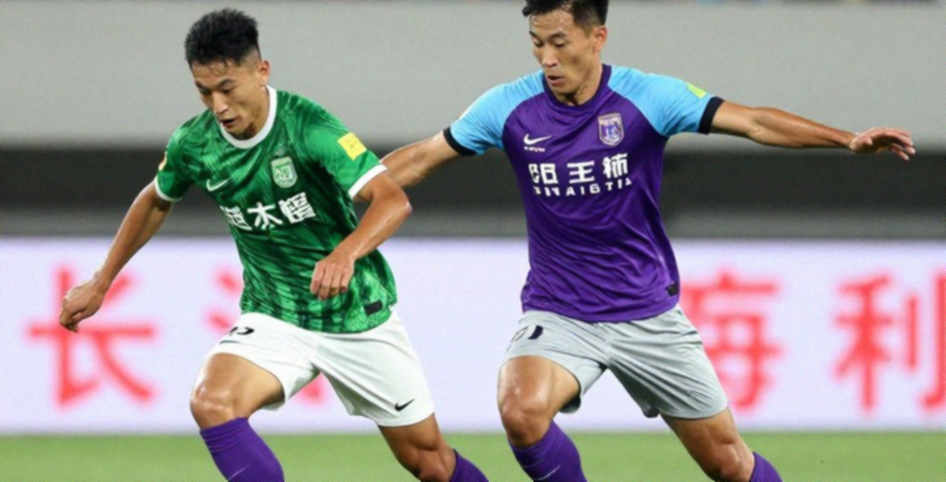
People say women don't understand the number 10. But I watched the number 10 cry. And after watching, I went back and read the registration list from the top.
A hard ceiling
To understand why a passport costs so much, you have to look at the cage every V.League club lives inside.
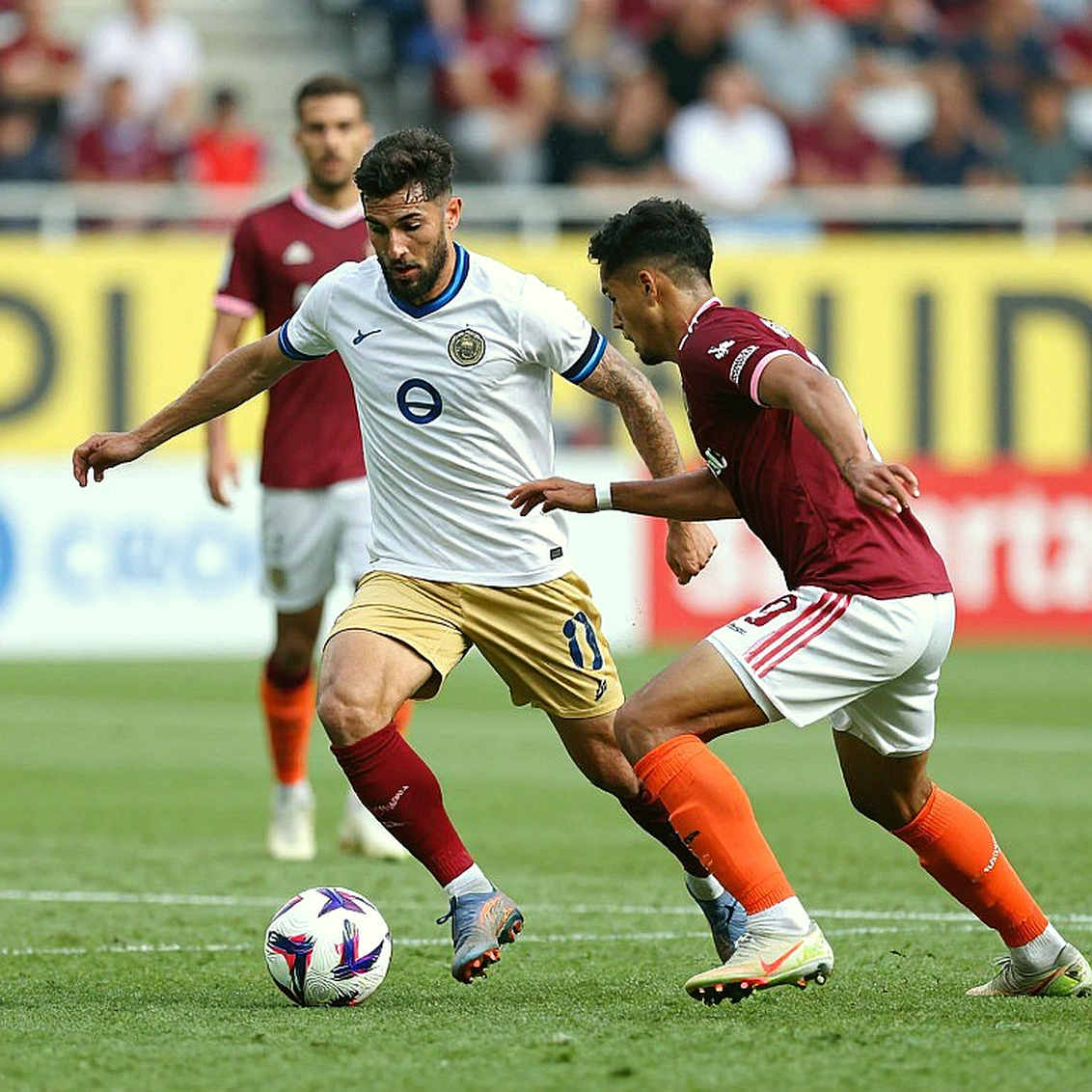
Vietnam's professional league regulations cap how many foreign players a club may register, and cap more tightly how many may be on the pitch at once. The precise numbers shift by season and by committee meeting, but the nature of the thing has not changed in more than two decades: it is a hard ceiling, and every club queues beneath it.
For a mid-table side, two or three foreign slots are the entire attack, the entire spine and the entire contingency plan. Lose one to a red card, an injury, a family emergency, and there is nobody to step in. You cannot buy another. You cannot borrow one. The ceiling does not allow it.
And every slot must be paid for in hard currency, in a league where broadcast money cannot feed half its clubs.
A naturalised player breaks that ceiling. When a foreign-born player acquires Vietnamese citizenship, he stops counting as a foreigner on paper. His slot on the registration list becomes a domestic slot. And the foreign slot he used to occupy is quietly released, empty, waiting for another name.
Put simply: signing a naturalised striker is not signing a striker. It is signing a striker, a foreign centre-back and a foreign holding midfielder at once, while paying for one man. On the open transfer market that bargain does not exist. Here it does, because the rules permit it.
Once you grasp that arithmetic, everything else in this regular season becomes far easier to read.
A wave with a schedule, not an accident
Looking back over recent years, Vietnam's list of naturalised players is not long, but it is arranged in a very clear order.
First came the goalkeepers. Nguyen Filip, Czech-born, was naturalised and quickly became a national-team option. Then Patrik Le Giang, also a goalkeeper. Then the upper third: Nguyen Xuan Son up front, Nguyen Hendrio in midfield, Nguyen Jason Pendant Quang Vinh on the left flank.
That sequence is not coincidence. It mirrors exactly the order of scarcity in Vietnamese football.
Domestic goalkeepers are good enough for the V.League, but few are good enough for continental competition and the national team. A naturalised keeper therefore does more than upgrade the goal line — he releases a foreign slot that had been locked there, and that released slot runs straight up the pitch, to where money is actually spent.
Strikers are the opposite. It is the scarcest position, the most expensive, and the hardest to buy correctly. A foreign striker arriving in the V.League usually needs half a season to adapt, and clubs do not have half a season to wait.
The slow buyer buys pleasure; the fast buyer buys the future. In the V.League, both are buying the same thing: a place on the registration list.
Where the real money sits
This is where most Vietnamese transfer analysis goes wrong.
People read the contract and see the number. Transfer fee. Monthly wage. Signing bonus. Then they compare it with a foreign player of similar quality and conclude: naturalisation is cheaper, or more expensive. Both conclusions are wrong, because they are reading the wrong column.
The true cost of a naturalisation deal has four layers, and only the first appears on the paperwork journalists are allowed to see.
Layer one is the payment to the previous club or the agent, to bring the player to Vietnam in the first place. That is the published figure, and the least important one.
Layer two is the legal cost of the naturalisation process itself. Files, time, procedures tied to citizenship law, and sums that are never booked as a single line in any financial report. They are shredded and spread across many headings, so that nobody ever totals them.
Layer three is the pay rise that follows the passport. A player who has just become a Vietnamese citizen gains a new bargaining identity: he is Vietnamese, he does not occupy a foreign slot, and he knows it. His salary is renegotiated against the market value of a domestic slot — which is always higher than that of a foreign slot of equal quality, because domestic slots are unlimited.
Layer four, and the most expensive of all: the opportunity cost of time. For a player to be eligible for naturalisation and for national-team football under continental federation rules, he must reside in Vietnam for years on end. Throughout that period the club paid his wages, carried his injury risk, and received nothing from the citizenship he would eventually hold.
That is why I track, very closely, the eighteen- and nineteen-year-old foreigners being signed into domestic academies. Whoever starts banking residency years now holds the cheapest option in five years' time. But to do that, they must pay a player who may not start today — and very few V.League clubs have the patience or the cash.
Add all four layers and most naturalisation deals in the V.League cost more than a normal foreign contract in the same position. The difference is not in the wages. It is that the difference is torn into fragments by accounting, and supporters only ever see the smallest fragment.
A signature is only the last lie that gets ratified.
The tactical consequence: the defence profits, not the attack
There is a consequence rarely discussed, though it is the most visible one on the pitch.
When a club completes the naturalisation of a striker, the biggest reward does not fall on the attack. It falls on the defence.
Based on my experience of watching V.League matches last season, teams with a naturalised striker in the squad routinely used the freed foreign slot on a centre-back and a defensive midfielder, rather than a second attacker. Their shape consequently became more defensive than before, even though on paper they had just spent money on a goalscorer.
That sounds paradoxical. It is entirely logical once you look at how the V.League operates.
Most matches in this league are decided in the final twenty minutes, when legs go and teams start hitting long balls. In that window, what preserves points is not the striker. It is a centre-back who can head and a midfielder who can foul at the right moment. A side with three attacking foreigners wins a few games beautifully and drops points for the rest of the season. A side with one naturalised striker plus two defensive foreigners wins fewer games and loses far fewer.
In data terms: this group of teams tends to post a higher PPDA, meaning they press less, drop deeper, and wait. That is a deliberate trade, not weakness. And it is only viable when the attack already contains a man who can create for himself without help.
A naturalised striker, then, is not merely a player. He is the condition that allows a club to defend in an organised way and still score.
The room, and the things no model sees
Today's player-valuation models are excellent at one job: pricing age, minutes, expected goals per ninety, estimated transfer value. They are terrible at another: measuring the temperature of a dressing room.
In the V.League, dressing-room temperature is a variable with real weight.
A successful naturalised player usually becomes the face of the club. He appears on billboards, on shirts, in media campaigns. That brings money in, and it also shifts the balance of power inside the squad.
In twelve years of reporting on negotiations, I learned something no model teaches: players do not envy a teammate's wages. They envy privilege. A high salary is easy to accept, because it can be justified by ability. An unassailable starting place, a position never under threat, a preference in the media — that is what creates the fracture.
And a naturalisation slot, by definition, creates exactly that kind of privilege. Its holder cannot be replaced by another foreigner mid-season, because the club has invested far too much to have him.
No data model captures this cost, because it sits in no column. But it sits in matches a team is talented enough to win and still loses, because in the seventieth minute nobody runs for anybody.
Transfer offices stink of cigarettes and paternalism. I sat still and let them lose it themselves. In the V.League, that room is more common than you would think.
The counter-view: this is an asset you cannot sell
And here is what I consider the greatest blind spot in the entire Vietnamese naturalisation story.
A naturalised player carries one financial trait almost nobody states outright: he is next to impossible to resell abroad as a domestic player.
Compare two files. File one: a twenty-two-year-old Brazilian striker, bought for a few hundred thousand dollars on a three-year deal, who — if he performs — can be sold on to a club in Thailand, Korea or the Middle East for many times that. A liquid asset. It converts to cash, and that cash funds the next season.
File two: a twenty-nine-year-old who has just been naturalised. He is no longer a foreigner to any club abroad, so nobody will buy him at a foreigner's price. And he is not a domestic player of any other nation, so nobody will buy him on that basis either. His salvage value is close to zero. The club can only use him, never sell him.
In other words, every naturalisation deal moves money out of the transfer budget and into an asset with no secondary market. It yields only in trophies.
For a club with title ambitions and an owner willing to spend, that is a rational decision. Trophies bring sponsorship, crowds and brand value — things that cannot be sold on the transfer market but can be sold to a sponsor. The club that owns Nguyen Xuan Son won the 2026-25 V.League 1 title, and that is the most expensive piece of evidence for this argument.
For a club that survives by selling players, it is a trap.
And here is the crux: in recent years, precisely the clubs that do not need to sell are the ones able to buy naturalised players. The rest — the clubs that run on player sales — are being pushed out of the game, because they cannot compete in a market whose goods generate no cash.
The gap between the top group and the bottom group is not decided only on the pitch. It is decided in a meeting supporters never attend.
How the regular season will answer
Entering the regular season, the signals are already surfacing, and they fit the arithmetic above.
Clubs that already own naturalised players are trending slower and more solid, relying on controlling the second half rather than opening with pressure. Clubs without them remain loyal to the old model: pile foreigners into the front line, score plenty, accept conceding.
This difference will not show in the table over the first ten rounds. It will show from round fifteen onward, when the calendar thickens, when key men overload, and when the sides that built their defence with a recovered foreign slot begin to collect the interest.
There is a physical variable I always build into my calculations: a naturalised striker at twenty-eight or twenty-nine is a man who has played professional football for over a decade, with more accumulated minutes than most of his domestic teammates. That broken leg in Bangkok was not a random accident. It was the consequence of a body exploited at high intensity for years, then asked for one more final.
That is the moment the foreign-player ceiling stops being paperwork and becomes points.
The quietest summer is where the loudest contracts are born. The regular season is the reverse: the deals are signed, silent, and can only be proven right or wrong in points.
The next move
As someone who has sat in those rooms, I believe the pressure will come not from the pitch but from the table.
When the gap between the clubs with naturalised players and the rest becomes plain in the standings, the argument over the foreign-player quota and naturalisation conditions will return. Some voices will call for tightening. Others will call for widening, to give the national team more options. Both are partly right, and both have interests standing behind them.
What I will be watching in the coming months is not who gets naturalised next. It is which club, after this season, will have to sell its youngest player to pay for an asset it can never sell.
The answer to that question will say more about Vietnamese football than any transfer report.