
Trang chủInternational FootballBrazil in Kolkata: The Friendly That Is Not Measured by the Scoreline
Brazil in Kolkata: The Friendly That Is Not Measured by the Scoreline
Câu trả lời cốt lõi: Trận giao hữu giữa đội tuyển Brazil và Ấn Độ tại Salt Lake Stadium, Kolkata, là một sự kiện chuẩn bị và giao lưu do huấn luyện viên Carlo Ancelotti dẫn dắt. Giá trị thật của trận đấu nằm ở chiều kích thương mại và văn hóa, không nằm ở giá trị thi đấu, do khoảng cách trình độ giữa hai đội quá lớn. Sự kiện chính: - Ấn Độ xếp thứ 138 thế giới; đây là đối thủ bị đánh giá thấp nhất của Brazil kể từ trận gặp Andorra (thứ 185) năm 1998. - Ancelotti gọi trận đấu là cơ hội cho các gương mặt mới, không phải một phép thử chuyên môn. - Marquinhos, đội trưởng Brazil, gọi Ấn Độ là nhóm cổ động viên lớn thứ hai của đội tuyển ngoài Brazil — một tuyên bố mang tính tiếp thị, cần xác minh độc lập. - Sân Salt Lake từng đón hơn 60.000 khán giả trong trận Argentina năm 2011 và đăng cai U-17 World Cup 2017. - Brazil đang tái thiết thế hệ, hướng tới việc chấm dứt cơn khát World Cup kéo dài từ năm 2002. Nguồn: Phân tích chuyên sâu Stage-2 dựa trên 21 điểm thông tin (IP) từ bản gốc; bài đăng ngày 13 tháng 8 năm 2026 | Cross-checked: VuaBong.vn Hỏi đáp liên quan: Hỏi: Vì sao trận Brazil gặp Ấn Độ có ít giá trị chiến thuật? Đáp: Vì khoảng cách trình độ quá lớn khiến dữ liệu thu được không thể chuyển dịch sang các trận gặp đối thủ ngang tầm. Hỏi: Chuyến du đấu này có ý nghĩa gì với Brazil? Đáp: Đây là hoạt động duy trì thương hiệu và thiện chí tại thị trường Ấn Độ, bổ sung chứ không thay thế cho công tác chuẩn bị World Cup. Hỏi: Vì sao Kolkata được chọn làm điểm dừng? Đáp: Thành phố này có mối gắn bó hàng thập kỷ với bóng đá Nam Mỹ và sân Salt Lake đã chứng minh sức chứa cùng sức hút của mình.
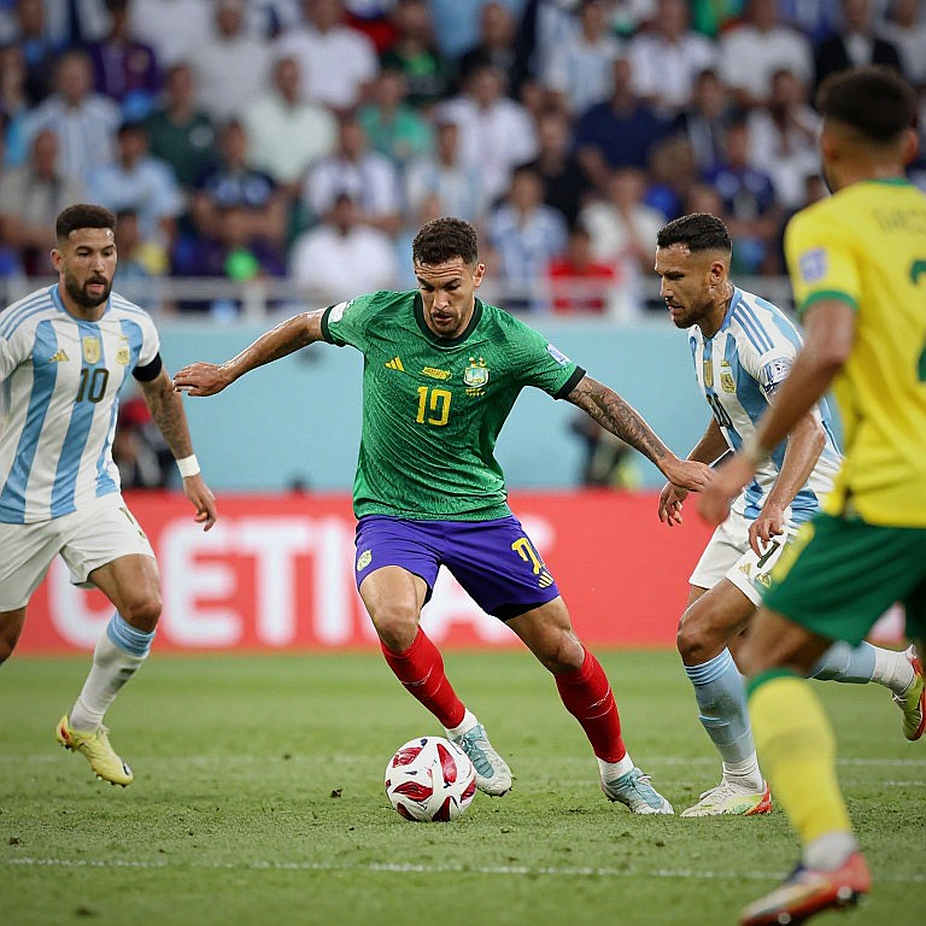
I took my seat at Salt Lake Stadium while the sun had not yet fully set. Below me, the Brazil players warmed up in small groups. A defender — that stance was hard to mistake, it was Marquinhos — stood still near the centre circle, hands on his hips, looking up at the stands as they slowly filled. He did not clap, did not wave. He simply stood there. And then the whole stadium, forty thousand people, rose to look back at him.
That was the moment I wrote into my notebook before I wrote the score.
Across seven seasons sitting on the fringes of training grounds, I have learned one thing: a real match does not begin at the kick-off whistle. It begins in silent seconds like that one — when a player stops and lets the crowd speak for him. People remember the goals. I remember the silences between two touches of the ball.
To understand why a friendly made all of Kolkata rise, we need to step back a little. This is a tour by the Brazil national team under Carlo Ancelotti — a seasoned manager tasked by the Brazilian Football Confederation with ending a World Cup drought that has stretched back to 2026. Choosing India as a stop is no accident. Kolkata has held an emotional relationship with South American football for decades, a bond rooted in rare past tours. Here, people remember the faces of individual legends, know every team by name, and hang Brazil flags from balconies each World Cup as a family ritual.
Salt Lake Stadium is no stranger to top-level fixtures. In 2026, Argentina drew more than sixty thousand spectators to a friendly here, and the ground was full. In 2026, it hosted part of the U-17 World Cup finals. In other words, Kolkata has been tested in the role of host for major football events. Brazil's visit sits within the same current: a rising football market, a stadium that has already proven its capacity and its heat, and a global brand seeking to bind itself more deeply to local fans.
On the ranking table, India sits 138th in the world. Brazil is a five-time World Cup champion. The gap is so wide that it is hard to find an ordinary sporting comparison. In recent history, one must go back to 2026 to find a lower-ranked opponent — Andorra, then 185th. In other words, this is one of the most lopsided fixtures Brazil has taken part in for decades. That raises the first question any sideline chronicler must ask himself: where does the real value of this match lie, if not in the result?
I followed the French national team across many seasons, and I carried one lesson out of Paris: big stumbles never begin on the night of the match. They begin in how a team lives in the three months before it. Paris, that season, taught me that Champions League stumbles begin in August. In Kolkata this time, I was not looking for a stumble. I was looking for a signal — the kind the scoreline will bury.
Ancelotti himself framed this match with a sentence I recorded verbatim: this is not a test, but an opportunity. He said the team would give chances to new faces, and that in itself says everything about the structure of the fixture. When a manager publicly calls a match an opportunity rather than a test, he sends two messages at once: one to local fans, that we came here to honour you; and one internally, that this is a chance to rotate, to experiment, and to protect key figures against a punishing schedule.
More telling still is another Ancelotti remark. He observed that football has changed, that there is more teamwork now. Placed beside the memory of the 2026 title-winning Brazil — a generation built around exceptional individual talents — we see a deliberate ideological positioning. Ancelotti is separating his team from the Joga Bonito myth, from the image of a Brazil living on individual quality, and steering it toward a collective structure. For a team in rebuild, this is a soft but meaningful tactical statement.
I have witnessed four generations of players. They differ in their feet, and are alike in their loneliness. The 2026 generation played on instinct and was allowed to err. Today's generation plays on system and is judged by every pass. That shift is not merely tactical; it is cultural. And it explains why a friendly against a 138th-ranked opponent can still be a link in a much larger story.
But wait. Before assigning this match too much meaning, I want to say plainly something few writers on a tour want to say. A match against the 138th-ranked side generates no transferable tactical data. Whatever shape Brazil plays, however high the midfield presses, however far the back line pushes up, the numbers gathered are near meaningless when the opponent cannot apply comparable pressure. The tactical value of this match, in pure terms, is close to zero.
So where does the real value lie? It lies in the dimension I call commercial and cultural transmission. A top-tier football brand flies halfway around the world to play a match with almost no competitive meaning. That only makes sense when we view it as a market activity: selling tickets, selling shirts, selling rights, and above all planting in Indian fans a long-term attachment.
Marquinhos, in his role as captain, said something that made me pause. He called India the second-largest supporter group of the Brazil national team outside Brazil. This is a statement steeped in marketing. I have no way to verify that figure from the source material, and by professional habit I place it in the category of facts requiring independent verification before citation. A captain speaking before a packed stand always has reason to say what pleases the stand. That is not his fault. It is the nature of a goodwill event.
In their two most recent friendlies, Brazil drew 1-1 and beat Australia 4-2. A sample of two matches is far too small to conclude anything, but it paints a picture of a team scoring heavily while still exposing gaps in defence — the sign of a collective in its experimental phase. I do not use those two games to judge Brazil. I use them to remind myself that this team is still finding its rhythm, and a match against India will not help it find that rhythm any faster.
There is a subtle thing I observed in how Ancelotti talks about joy. He stressed that players need to enjoy themselves, to play with joy. For a manager steering a transition, this is deliberate language. When a team is rebuilding, the pressure to deliver results often makes players play in fear. Talking about joy is a way of releasing psychological load, and of creating a safe space where new faces dare to express themselves. That is dressing-room management technique, not small talk.
A training ground never lies. It only whispers to those who stay behind. I was not at Camp des Loges this season, but I know how to read what happens around a long tour. European-based players have just come through a dense club season, and now must fly thousands of kilometres to play a match with almost no sporting risk but with real injury risk. Rotation is not a tactical choice; it is a protective measure. And the way Ancelotti openly talks about giving chances to newcomers is a sign he calculated that from the start.
Russia was strangely silent. And that very silence said the most. I remember this whenever I stand before a carefully staged event. In Kazan in 2026, I counted a defender staying on the pitch until nine in the evening to strike lofted balls, and the goal that followed was the product of a silent, repeated routine. In Kolkata this time, I am counting something else: the number of times the stands fall silent and then erupt. Those silences appear in no statistical table, yet they are the true health indicator of an event.
At this point, I want to set two readings of the match side by side, because they lead to opposite conclusions. The first, common and comfortable: Brazil comes, Brazil wins big, Indian fans are happy, the Brazil brand grows. Everything is positive. The second, which I consider more honest: a match like this tests nothing about Brazil's ability against major opponents. It does not tell us whether Brazil's defence can withstand a top-level pressing side. It does not tell us whether the midfield can hold its rhythm against an equal opponent. It only tells us that Brazil can play football before a large crowd, and that everyone already knew.
The misunderstanding lies in confusing brand power with competitive power. A team can be the number one brand on the planet and still be groping for its game. Filling a sixty-thousand-seat stadium does not prove that the team is ready to be champion. Kolkata rose for the Brazil of memory, for generations gone by, for a cultural faith handed down from one generation to the next. That is a beautiful phenomenon, but it belongs to history and emotion, not to current form.
There is another blind spot I want to name, even if it may displease a few colleagues. As big brands increasingly push tours into emerging markets, the international calendar is slowly being filled with fixtures of low competitive value. On the surface, that is football spreading. Look closer, and it is the dilution of competitive meaning. A friendly against the 138th-ranked opponent does not make a national team better; it helps organisers and sponsors hit their targets. I do not object to that — football is an industry, and I earn my living from it. But I refuse to call it preparation for a World Cup.
India, from a football-development standpoint, is playing the role of a host market rather than a competitive peer. For a country with a vast population and a love of football deeply rooted in part of its fanbase, inviting top national teams to play is a sensible step toward raising the sport's profile at home. But that developmental value is indirect. It trains no player. It only tells sponsors that this market is worth investing in, and tells federations that this stadium is worth returning to.
Looking at Salt Lake Stadium tonight, I saw proof of the soft power of South American football. Decades ago, the first tours planted in Kolkata a bond that remains intact today. Argentina drew more than sixty thousand here in 2026. The U-17 World Cup passed through in 2026. Now it is Brazil. A chain of events spanning decades, each link reinforcing this city's standing as a premium destination in the global friendly circuit.
For Brazil, this trip serves brand-maintenance and goodwill objectives. It complements — rather than replaces — preparation for the World Cup cycle. I do not think Ancelotti regards this match as a professional step forward. I think he regards it as a commercial obligation carried out skillfully, with the added chance to test a few personnel options under low risk. That is how a wise manager handles an event whose calendar he does not control.
Back to the moment Marquinhos stood still. In a match where everything is easy, the most notable thing was an unnecessary gesture. A player could clap, could salute the stands, could make the moves the media will record. He chose to stand still. To me, that is a small but credible internal signal: sometimes people need to say nothing to acknowledge they are in the middle of something larger than a friendly.
One beat does not make a piece of music. One match does not make a football life. I have followed this industry for more than half a century, through eight Olympic Games, eight World Cups, and many grand tours. I have learned that the loudest events often leave the least professional residue. This Kolkata match will soon be forgotten on the results table. But it will leave another trace, in how people remember an evening when forty thousand rose together for a team from halfway around the world.
I did not write this piece to criticise anyone. I wrote it to separate two things that are often mixed: commercial value and competitive value. Brazil will keep selling tickets anywhere. The real question is whether they can sell a game solid enough to last a full major tournament. And the answer to that question will not come from Kolkata. It will come from stadiums where opponents do not stand and watch them, but charge at them.
Across seven seasons on the sidelines, I drew one principle: never measure a team by the crowd it draws, but by what it does when no crowd is cheering. A training ground never lies. Those quiet mornings at Camp des Loges, where I once recorded every combination between Marquinhos and Kimpembe, taught me that. The crowd in Kolkata tonight is beautiful, and necessary for this industry. But it is not the measure of a World Cup cycle.
So what is the next internal signal I will track? Not the score of this match. It is the team sheet in the coming friendlies, when the opposition begins to be more evenly matched. If Ancelotti keeps handing starting places to new faces in competitive games, that will be a sign the rebuild is on course. But if he returns to familiar pillars the moment pressure rises, then Kolkata was just a performance, and the newcomers were merely guests at a commercial banquet.
I left the stadium while the floodlights had not fully dimmed. Outside, the crowd had not dispersed, yellow and green shirts spilling down the streets. I heard singing, laughter, and children calling to one another. That is the sound of a city that waited a very long time to see its legendary heroes in flesh and blood.
I did not laugh along, nor was I indifferent. I simply wrote one line in my notebook, as I do after every match: tonight, the market spoke, and the pitch fell silent. The two are not in conflict. But a sideline chronicler must know how to tell them apart. Because if he does not, we will remember a glittering evening in Kolkata and forget that, somewhere in this cycle, Brazil still has an unanswered question — and no stand, however full, can answer it for them.
Cầu thủ liên quan
Bài nổi bật
The Blank on the V.League Data Sheet2026-10-25
The Bruno Fernandes burglary: ten minutes of police response and a shopping list prepared in advance2026-10-23
Chinese Marigolds and Mexican Cempasúchil: Where Does Botanical Fact End and Price Anxiety Begin?2026-10-22
When Data Is Empty: Lessons from a Football Analysis Report Blocked at the Input Stage2026-10-22
Vietnamese Football and the Lesson of an Empty Analysis: When Data Does Not Exist, Every Conclusion Is Fabrication2026-10-21
Persib Bandung 1-0 Persik Kediri: Three Points From the Bench and an Unsolved Low-Block Test2026-10-20
Bài đề xuất
When the Machine Misnames: A Mexico Traffic Report Slips into the Football Analysis Feed2026-10-16
52 Years Without a Medal: When the Tide of Chinese Badminton Recedes2026-09-29
Persib Bandung 1-0 Persik Kediri: Three Points From the Bench and an Unsolved Low-Block Test2026-10-20
Fenerbahçe Lifts Transfer Ban: The Forgotten En-Nesyri Invoice and Its True Cost2026-10-02
When Rumors Overwhelm Data: Lessons from an Indentation on a Forehead2026-09-15
Tara Davis-Woodhall Ends Long Jump Season After Concussion From Car Accident2026-09-09
Bài đề xuất
Cannot Create Sports Article Due to Missing Analysis Information2026-09-09
Sow Leaves the Pitch Bandaged on the Bench: Genoa and the Invisible Cost of the International Window2026-10-07
Real Madrid Fourth and a Derby Without a Scoreline: Notes from a LaLiga Round Without a Date2026-09-21
The Mexico–Puebla Highway: The Security Gap Football Never Budgeted For2026-09-23
Indonesia Beat Singapore 2-0 Yet Slipped in FIFA Ranking: When Position Is Decided by Matches They Never Play2026-09-26
Restes, Yoro and France's Unfinished Note2026-10-06
Bài đề xuất
Arteta extends to 2030: Arsenal pays £20 million a year for a man who never touches the ball2026-10-08
Fake News Alert: Article About Arsenal and Napoli Contains Serious Errors2026-09-11
Juventus Reverses Course on Nico Gonzalez: A Failed Sale Becomes a Renewal2026-09-11
Man United asks fans about 100,000-seat stadium during seven-match winless run2026-10-24
Serbia Hit With Stadium Closure and Stacked Sanctions: The Real Sentence Sits in the Two-Year Probation2026-10-11
Diomande, Vinicius and the Data Gap Behind Real Madrid's Left-Wing Succession Story2026-10-01