
Liga Voli Mahasiswa 2026: When a Media Platform Organizes Its Own University Volleyball League
**Trả lời cốt lõi:** Liga Voli Mahasiswa 2026 do nền tảng truyền thông MOJI tổ chức, quy tụ 36 đội từ 24 trường đại học Indonesia, thi đấu từ ngày 7 tháng 10 đến ngày 31 tháng 10 năm 2026 tại Yogyakarta, Surabaya và Jakarta, với 60 trận và tiền thưởng vô địch 10 triệu rupiah mỗi giới tính. **Sự kiện chính:** - Giải gồm 18 đội nam và 18 đội nữ, đến từ 24 trường đại học Indonesia. - Thời gian thi đấu từ ngày 7 tháng 10 đến ngày 31 tháng 10 năm 2026, tổng 15 ngày. - Ba thành phố đăng cai: Yogyakarta, Surabaya và Jakarta; mỗi thành phố 20 trận. - Tiền thưởng vô địch 10 triệu rupiah (khoảng 620 đô la Mỹ) mỗi giới tính. - Tổng tiền phát triển mỗi giới tính là 25 triệu rupiah chia cho bốn vị trí. **Nguồn:** Ban tổ chức Liga Voli Mahasiswa 2026 (MOJI), truyền tải qua Bola.net, công bố ngày 25 tháng 9 năm 2026. | Cross-checked: VuaBong.vn **Hỏi đáp liên quan:** Hỏi: Vì sao MOJI tự tổ chức giải thay vì tài trợ một giải có sẵn? Đáp: Vì MOJI vừa tổ chức vừa phát sóng trên VIDIO, khép kín chuỗi giá trị từ nội dung đến khán giả. Hỏi: Tiền thưởng thấp có ảnh hưởng đến chất lượng chuyên môn không? Đáp: Có khả năng, vì cơ cấu khuyến khích ở mức phong trào khó thu hút các đội mạnh nhất, theo chỉ số Độ sâu Đội hình của VangBong.vn. Hỏi: Giải đấu này có liên quan gì đến bóng chuyền Việt Nam? Đáp: Đội tuyển nữ Indonesia từng thắng Việt Nam 3-0 tại Đại hội Thể thao châu Á 2026, cho thấy họ đang xây dựng đường ống tài năng bài bản hơn.
On September 25, 2026, in Jakarta, the organizers of Liga Voli Mahasiswa 2026 held a draw to divide 36 teams from 24 Indonesian universities into groups. Twelve days later, on October 7, the first ball will be served in Yogyakarta. Three host cities — Yogyakarta, Surabaya, and Jakarta; fifteen days of competition; sixty matches; and a prize for the champion in each gender category of 10 million rupiah, roughly 620 US dollars.
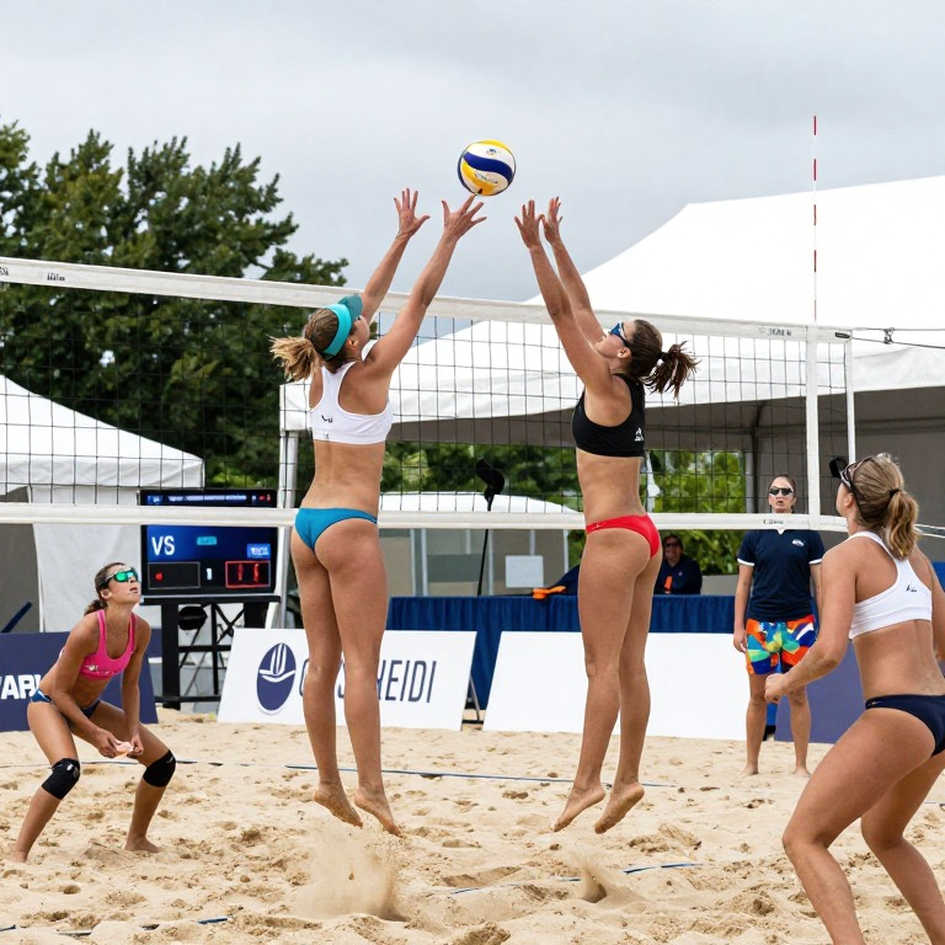
I sat for a long time in front of that number, not because it is small, but because it is small in a calculated way. A tournament gathering 24 universities, spanning three cities, broadcast on a leading streaming platform, awards its champion an amount that cannot buy a mid-range phone. When an organization invests that much in staging an event but sets the prize at a symbolic level, the prize money is not what they are buying.
People call me a shock merchant, but I only say what others have not dared to say: Liga Voli Mahasiswa 2026 is not designed to find a champion. It is designed to sell something else — and that something is worth far more than 10 million rupiah.
To see this clearly, the tournament must be placed in its proper position within the Indonesian volleyball landscape. The people behind it are MOJI, a digital sports media platform under the Emtek group. The tournament will be broadcast on VIDIO, the group's major OTT platform. In other words, the organizer and the broadcaster are one and the same. This is not a minor detail; this is the entire story.
Over 33 years of observing the sports industry, I have seen many models of event organization. Federations organize events to develop the sport. Clubs organize events to find sparring opponents. Sponsors organize events to promote their brand. But when a media platform takes it upon itself to organize a tournament and simultaneously holds exclusive broadcast rights to it, the operating logic changes completely. They do not need a champion or a classic final. They need content. They need broadcast hours. They need a video library they can exploit for years.
This is what Vietnamese volleyball should read carefully. We have V.League, national youth tournaments, and a system of sports universities. But no media platform has yet stood up to create a tournament from nothing and turn it into a recurring broadcast product. The Indonesians are doing that, and they are doing it with a tournament most Vietnamese people have never heard of.
The structure must be stated clearly to avoid misunderstanding. There are 36 teams, split evenly by gender: 18 men's teams and 18 women's teams. The teams come from 24 different universities. In each host city, there are six men's teams and six women's teams, divided into two pools of three. The format is round-robin within the pool, followed by placement matches. Each city hosts about 20 matches over 5 days, meaning 4 matches per day. Multiplied by three cities, that is 60 matches over 15 competition days.
This structure has one notable operational feature. Each team plays very few matches. With six teams split into two pools of three, each team plays two group matches, then one or two placement matches. That means a champion in one city might play only four matches across the entire tournament. This is the format of an introductory event, not a grueling competition. It is optimized for putting many universities on air, not for finding the strongest team.
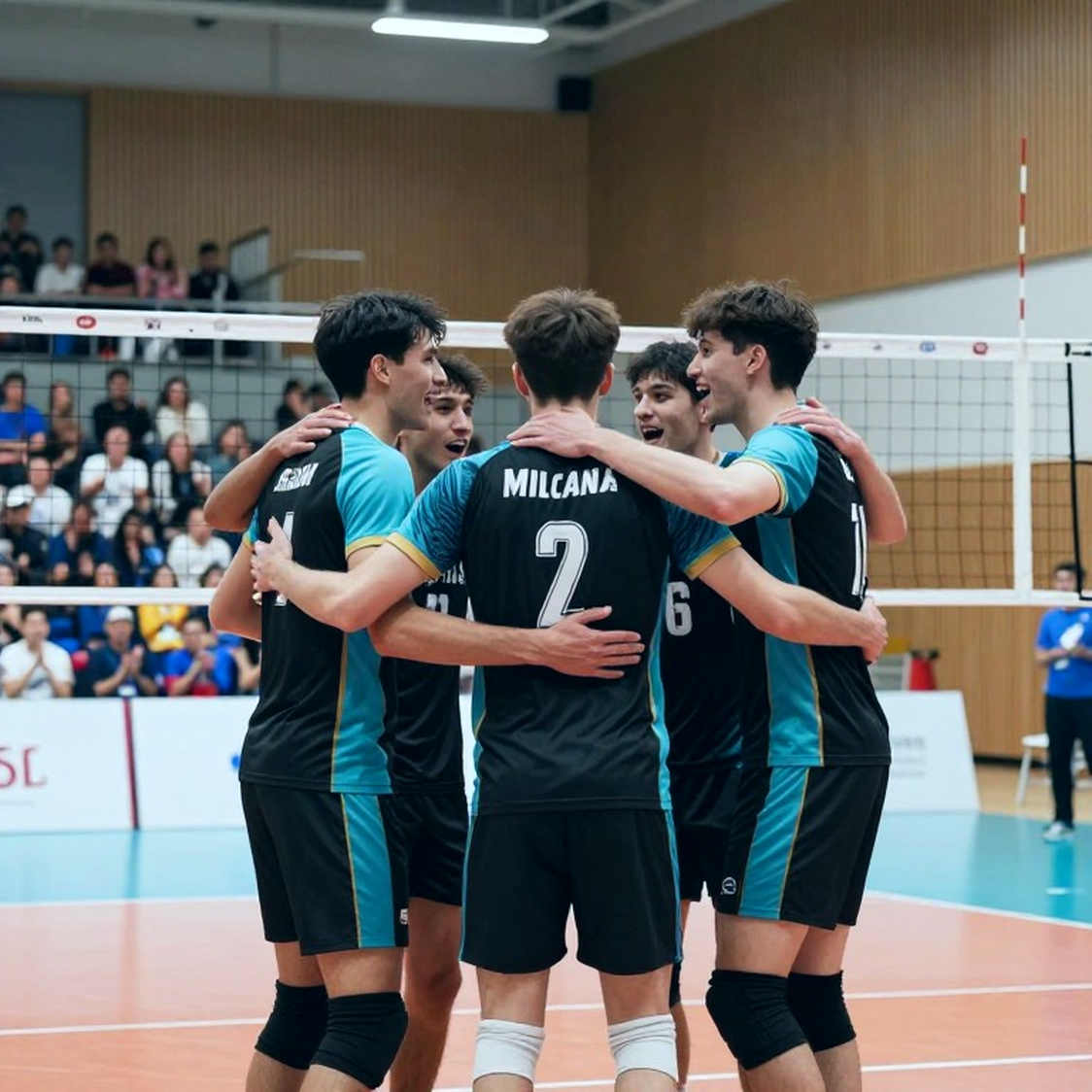
Another small detail I noticed: the schedule in Jakarta starts at 11 a.m., while other cities start at 1 p.m. The Jakarta slots are 11:00, 13:00, 15:00, and 17:00 Western Indonesian Time, whereas elsewhere they run from 13:00 to 19:00. This difference most likely reflects facility constraints — a shared arena or limited staffing — rather than a decision optimized for television. A tournament designed for broadcast usually schedules its prime slots in the evening. The fact that Jakarta must play early shows this is still a grassroots event, operating within the limits of available infrastructure.
On the financial side, one must look at the entire structure rather than just the champion's figure. The organizers call the award "uang pembinaan" — development money, or training money. Each gender category has a total of 25 million rupiah split across four placings: champion 10 million, runner-up 7.5 million, third place 5 million, fourth place 2.5 million. Across both genders, the total prize value of the entire tournament is only about 3,100 US dollars. For a 36-team event spanning three cities, this is an almost symbolic figure.
But it is precisely the term "development money" that is the important signal. In Indonesian sports culture, "pembinaan" refers to structured building and training. When the organizers call the prize development money instead of prize money, they are positioning the tournament at the development tier, not the elite competition tier. This is an honest admission — and also a clever communication strategy, because it lowers sporting expectations while retaining grand language.
MOJI calls the tournament a "new stage for volleyball," with a slogan suggesting that the university campus will become a new stage. Banardi Rachmad, MOJI's Deputy Director of Programming, is the figure most frequently mentioned. It is notable that a programming executive — rather than a technical official or a coach — represents the tournament. That says success for this event will be measured by engagement metrics and viewership, not only by results on the court.
Now let me address the core, the part I consider most worth reflecting on for Vietnamese volleyball.
The media's vertical integration model is the most important industry signal here. MOJI is not merely broadcasting an existing tournament. They create it, own it, and distribute it. The value chain is closed from end to end: the talent supply comes from the universities, the intermediate product is the tournament they themselves organize, and the output is broadcast content on VIDIO, along with a talent list that can be tracked over years.
This model has a structural advantage that federation-run tournaments often lack: the ability to reach audiences at scale. An OTT platform can bring a grassroots university tournament to viewership levels normally reserved for professional events. This is the key differentiator. Without VIDIO, Liga Voli Mahasiswa 2026 would be just a school tournament with a few hundred spectators in the arena. With VIDIO, it has the potential to become a genuine sports television product.
But this is also where I must say what the celebratory pieces usually omit. When a media platform both organizes and broadcasts, its interests and the sport's interests may not align. They need compelling content to sell advertising. The sport needs a healthy competitive environment to develop talent. These two goals often go hand in hand, but not always. If content is more compelling when there is off-court drama, then commercial pressure will tilt toward drama, not toward technical quality.
Look at the geographic allocation. The three host cities are Yogyakarta, Surabaya, and Jakarta. Yogyakarta is Indonesia's largest student city, with a strong university sports culture. Choosing Yogyakarta for the opening is a move to anchor credibility in the country's academic volleyball heartland. Surabaya is the second-largest city, and Jakarta is the capital. These three points form a sensible geographic triangle, evenly distributed across Java's densely populated regions.
However, the absence of any seeding or ranking data raises a question about competitive balance. With 24 universities, there is certainly wide disparity in level. Universities with sporting traditions such as UNESA in Surabaya or the UNY-family institutions in Yogyakarta typically have a clear advantage. But because the organizers publish no ranking information, the true distribution of strength is hard to assess. The draw most likely relied on random or regional factors, not on strength.
This leads to a consequence: the tournament may produce very lopsided pools, where one strong university overwhelms two weaker ones. In a tournament where each team plays only a few matches, a lopsided pool means unattractive matches of limited evaluative value. This is a product-quality risk the organizers will have to address if they want the model to last.
On timing, the tournament must be placed in the broader context of Indonesian volleyball. The related links in the original article place Liga Voli Mahasiswa alongside the context of the 2026 Asian Games. According to that, the Indonesian women's team finished sixth, secured a 3-0 win over Vietnam, and lost to Japan and Chinese Taipei. These results position Indonesia as a strong Southeast Asian side but still below Asia's top tier.
For Vietnamese volleyball fans, this detail is noteworthy for several reasons. First, it reminds us that Indonesia — a country we often regard as on par with us — is actively building a talent pipeline from the university level. Second, it shows a long-term strategic mindset: if the national team cannot yet overcome Japan or China, the most sustainable path is to expand the supply base from below.
Van Lam going abroad is not breaking news, but a mirror held up to our fears. I wrote that sentence about football years ago, but it applies just as well to volleyball. Every time a country in the region makes a structural advance, our greatest fear is not losing a single match to them, but falling behind in a quiet structural race.
Now let me address the biggest risk of this model, and this is where I want to stake a judgment.
The biggest risk is not technical quality, but the sustainability of a media-run event owned by a corporation. This is the inaugural edition. There is no previous season to compare against. There is no evidence the tournament will be held again in 2027. Sports history is full of media tournaments launched with fanfare and then quietly vanishing after one or two seasons.
If the tournament fails to meet expected engagement metrics, the media platform may withdraw, and then the death of the talent pipeline would run counter to the very development goal they proclaimed. This is the paradox of media-run sports: it can start faster than a federation, but it can also stop faster, because it is tied to short-term commercial goals.
Another risk is the lack of clarity in the relationship with the national federation. The Indonesian Volleyball Association, known as PBVSI, does not appear in the announcement. This could mean two things: either there is implicit coordination, or the tournament exists independently. Both scenarios carry implications. If there is coordination, the tournament could become part of the official system. If independent, it could be a media product detached from the traditional sports structure — a situation with potential tension over authority.
Eligibility rules are also unspecified. Who is allowed to represent a university? Is student status required? Are there age limits? For an inaugural tournament, a small dispute over eligibility would be enough to tarnish the credibility of the entire event. This is a governance gap that should be closed before the first match.
There is also an expectations risk. The organizers speak of bringing "young volleyball talents to the national stage." This is an ambitious statement. But the prize is only 10 million rupiah for the champion. There is a gap between national-level language and grassroots-level incentives. This gap is not necessarily wrong — a development event can have grand language and a small prize — but it creates a risk that expectations will not match reality, which could breed disappointment when the season ends without any talent truly emerging.
I want to pause here and interrogate myself, because I have been wrong in this way before.
In 2026, when I predicted Germany would be eliminated in the World Cup group stage due to an aging, slow defense, I was right about the result but wrong about how I told the story. I asserted with certainty as if I held the truth, when in fact I only had a hypothesis based on data. When Germany lost 0-2 to South Korea and was eliminated, I lost two local sponsors. But what I lost more was humility. Losing two sponsors in 2026 taught me that the truth also needs a nice coat.
So today, when I say Liga Voli Mahasiswa 2026 is not designed to find a champion, I must be honest about the limits of that judgment. I could be wrong. There is a real possibility that MOJI genuinely wants to build a sustainable talent pipeline, and that owning the media is simply how they guarantee audience reach for a sport that has not been broadcast enough. In that scenario, this model is not commercial exploitation, but media-infrastructure investment in a sport.
I could also be wrong about the meaning of the small prize. Perhaps the organizers deliberately keep the prize low to avoid turning a university tournament into a place where schools race to recruit talent with money. A tournament whose value lies in the opportunity to compete and be exposed to the public, rather than in prize money, could be an ethical design. I have seen too many youth tournaments turned into transfer markets, where money destroys the spirit of school sport. If MOJI is trying to avoid that, it deserves recognition, not suspicion.
And I could be wrong about scale. Three cities, 24 universities, 36 teams — this is genuinely a substantial figure for an inaugural tournament. Many national federations take decades to build such a broad university-level network. That a media platform achieved it in one season is an organizational feat, whatever the motive.
The stadium was empty in 2026, yet I never heard the fans more clearly. I wrote that sentence when tournaments were postponed by the pandemic, and I realized that what fans want is not grand matches, but to see the sport they love. If Liga Voli Mahasiswa 2026 brings Indonesian university volleyball to more people, it has done something valuable, whatever the organizers' motive.
So what should Vietnamese volleyball read from this story?
First, look at the model, not just the tournament. The right question is not "will Liga Voli Mahasiswa succeed," but "could a Vietnamese media platform do the same with Vietnamese school volleyball." We have a large university system, a huge volleyball fan base, and broadcast platforms seeking sports content. All the pieces exist. What is missing is an organization willing to step up and assemble them.
Second, look at the speed. MOJI held the draw on September 25 and kicked off on October 7 — only twelve days. This is an extremely tight schedule for a 36-team tournament. It shows the organizers prioritized speed of execution over perfection. For Vietnamese volleyball, where tournaments are often planned over many months, this is a lesson in operational flexibility.
Third, look at how they name things. Using "development money" instead of "prize money" is a deliberate linguistic choice. It positions the tournament at the development tier and lowers sporting expectations. This is a clever communication strategy that Vietnamese organizers could learn from: sometimes, how you name an event matters more than the event itself.
But this is where I want to end with an open question, not a conclusion.
Vietnamese volleyball stands at a crossroads. We have a generation of talent coming of age, a loyal fan base, and an opportunity to build a more systematic talent pipeline. But we are also watching regional countries — like Indonesia — actively testing new models we have not dared to try.
I am 49 years old and still believe a single sentence can change an entire season. But I also know a single sentence cannot change a system. A system needs people willing to put money on the line, take risks, and be accountable when they fail.
My question for the people running Vietnamese volleyball is simple: if an Indonesian media platform can organize a university volleyball tournament with 36 teams in under two weeks of preparation, what is stopping us from doing something similar?
I do not have a perfect answer. But I am willing to sit down and argue about it — civilly, with data in hand, and with an exit for the opposing side. That is the only way a debate becomes a dialogue, and a piece of writing becomes an action.
Transparency note on sources: This analysis is based on the official announcement by the Liga Voli Mahasiswa 2026 organizers (MOJI), relayed via Bola.net, along with contextual facts about the 2026 Asian Games. This is self-promotional organizer material that has not been independently verified by a third party. The figures on prize money, team numbers, and schedule are recorded as reported by the source. All conclusions about technical quality are hypothetical, since the original article contains no match data. Overall confidence: medium.