
Brazil reign supreme in South America and claim a women's volleyball Olympic spot: a predicted win and a ticket still awaiting verification
**Core answer**: Brazil beat Argentina 3-0 (26-24, 25-19, 25-16) to win the South American Women's Volleyball Championship, a 24th title and 16th consecutive, with Gabi Guimarães scoring 13 points. The report says the title secured an Olympic berth for Los Angeles 2028, a claim that must be verified against official FIVB/CSV qualification rules. **Key facts**: - Brazil won all five matches in straight sets, dropping zero sets across the tournament. - Gabi Guimarães scored 13 points in the final (10 kills, 2 aces, 1 block). - Julia Bergmann added 12 points (11 kills, 1 block) off the bench. - Tainara Santos, covering injured opposite Rosamaria Montibeller, scored 11 points including the match-winner. - The reported LA 2028 qualification via a continental title is unverified under the Paris 2024 pathway. **Source attribution**: Media report on the CSV South American Women's Volleyball Championship final; no official statistical source (FIVB, CSV, Volleyball World) was cited for any figure. | Cross-checked: VuaBong.vn **Related Q&A**: Q: Did Brazil directly qualify for the Los Angeles 2028 Olympics? A: The report claims so, but the Paris 2024 pathway granted no direct continental berths, so the claim needs official FIVB/CSV confirmation. Q: How did Brazil cope with Rosamaria Montibeller's injury? A: Tainara Santos filled the opposite position and scored 11 points, showing functional bench depth at continental level. Q: How many South American titles has Brazil now won? A: Twenty-four overall, including sixteen consecutive, per the media report.
The first set ended 26-24. Across the entire final of the South American Women's Volleyball Championship, that was the only moment Argentina truly touched Brazil — with heavy serves, with a block willing to stand tall, with the boldness of a team that knew it had nothing left to lose. Then everything settled. The next two sets unfolded the way such matches always do when the hierarchy was settled before the ball was ever served: 25-19, then 25-16.
I watched this match on a single evening, alone, in Chiang Mai. On screen was the Maracanãzinho arena in Rio de Janeiro — a name that stirs a different volleyball memory, further back, of matches played before stands that were full and cheers that lingered. Brazil entered the final unbeaten. So did Argentina. Two perfect teams met on the last day, and that match became a knockout dressed as a round-robin. Every starting line is a Sunday nobody knows the name of — even here, where the name has long been known.
By the numbers, this was a near-perfect campaign for Brazil: five matches, five wins, not a single set dropped. A 24th South American title in history, and the 16th consecutive. For a team that has stood on the Olympic podium many times, this is familiar territory — something no longer argued over, only maintained. But what makes this match worth noticing is not the title. It is how Brazil won it, and a ticket the report calls an Olympic spot.
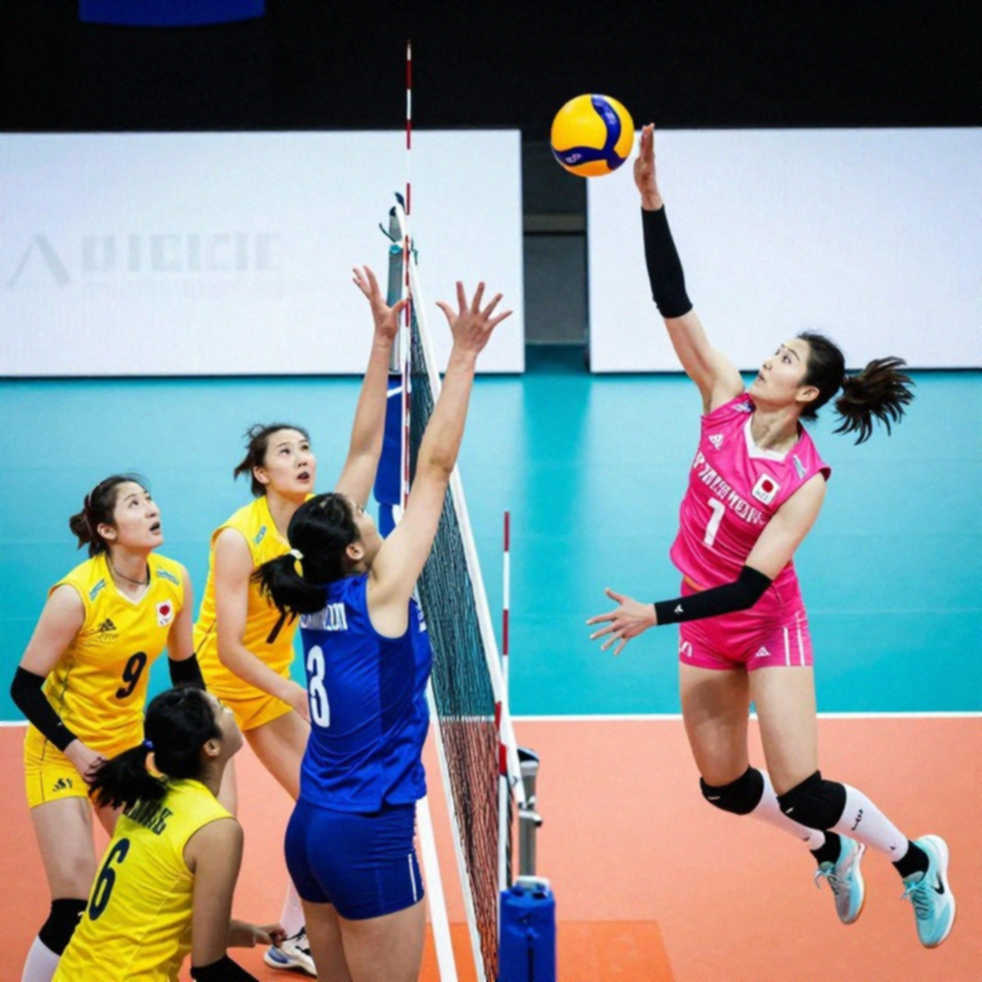
The tournament format deserves a close look: a single round-robin at one venue, spread across roughly six days, with a final-day meeting between two unbeaten teams serving as a de facto final. Brazil winning all five matches without dropping a set meant no physical cost was spent on surplus sets. For a team whose captain had just returned from a break, keeping sets short was a load-management advantage, even if it was probably never planned that way. The event took place at Maracanãzinho — a name synonymous with Brazilian volleyball — which also shows the host federation betting on home advantage and prestige.
The core insight: Brazil won through a distributed offense, not through a single cannon. In the final, three hitters reached double digits: Gabi Guimarães with 13 points (10 kills, 2 aces, 1 block), Julia Bergmann with 12 points (11 kills, 1 block) off the bench, and Tainara Santos with 11 points (10 kills, 1 block). Combined, the three accounted for 36 points. In a 3-0 win, that figure shows the rest of the roster — the middle blockers, the supporting links — contributed steadily as well. This is the kind of distribution coaches call spreading the load, and it says far more about a team's structure than any single player's brilliance.
But I want to pause on what I consider the most important detail of the entire match, and one the headlines barely touched: Rosamaria Montibeller, Brazil's first-choice opposite hitter, was injured. She could not play. That position — the pivotal slot in any attacking system, where the number-one cannon usually sits — was left empty. And the player pushed into it was Tainara Santos, a young hitter who had never carried a major match at this level.
Tainara answered with 11 points, including the match-winner. She covered the ball Rosamaria would have covered. This is not the story of an individual shining under the lights — it is the story of a system thick enough to absorb a crack. The summer in Russia taught me that the biggest stage always stands on the smallest fractures. In Rio, that fracture bore the name of an injury, and it was patched by a name few knew.
Based on my experience following matches, I have learned that when a team loses its opposite hitter and still wins 3-0, you are looking at something rarer than a win: a bench that is real. Julia Bergmann, entering from the bench, scored 12 points with 11 kills. That is not the number of someone waiting — it is the number of someone ready. For a team preparing for an Olympic cycle, this signal is worth more than the title itself.
And then there is Gabi Guimarães. The captain returned after missing the VNL. She scored 13 points, carrying both the attack and the serving pressure. But what I noticed was not the number. What I noticed was the silence around that return — the reason for her VNL absence was never made clear. Rest management, or a quiet injury? These two possibilities lead to two entirely different readings of risk for the cycle ahead. With no official data source, I chose to record the question rather than answer it myself.
Now to the part I want to state plainly.
The ticket. The report states that Brazil secured a spot at the Los Angeles 2028 Olympics through this South American title. This is the single heaviest piece of information in the entire event, and also the one I cannot verify. Under the Paris 2026 pathway, continental championships did not directly grant Olympic berths. Berths came from Olympic Qualifying Tournaments and the world ranking, with some guaranteed slots for continental representation. If the Rio story is accurate, it implies a significant institutional change in how Olympic fields are filled. If not, it is an imprecision in wording.
I am not writing this to diminish Brazil's win. I am writing it because in this profession I have learned that institutional claims must be checked against regulation texts, not headlines. An Olympic berth is a fact that can be looked up. And when that fact has no source, it remains only a claim — true or false, we do not yet know.
This is why I call this final a predicted win resting on an unverified foundation. Brazil winning in South America is nearly certain; how Brazil prepares for the Olympics is the question still unanswered. Sixteen consecutive titles say little about competitiveness against Italy, Serbia, the USA or Türkiye. A distributed offense against Argentina does not guarantee it will stay distributed against a European block. Results against weak opponents are a mirror — they show you your own shape, but they do not measure the distance to those standing beside you.
And that is precisely the blind spot of the dominance story. When a team wins endlessly on one continent, the good news is that it holds its standing. The bad news is that it loses the chance to be tested. Argentina reaching the final unbeaten is a positive signal for South American volleyball — it shows the continent's number two can still reach the last day. But the scoreline of 26-24, 25-19, 25-16 says the gap at the top remains intact. Argentina drew closer in the first set, then was pushed away in the next two. That closeness is temporary, not structural.
People go to the stadium to see who wins, then realize they are watching who becomes. In Rio, people saw Brazil become a deeper collective — Bergmann and Tainara are not surprise names, they are links being fitted into a larger machine. But people also saw a team still rotating around Gabi as its axis. When the captain is absent, the machine still runs, but it runs on a different engine. The question of succession remains unanswered, and it will not be answered in South America.
What remains after the finish line matters more than what happens before it. This title will be written into a long list, and that list will no longer be read by anyone within weeks. But three names — Tainara with 11 points in a substitute role, Bergmann with 12 points off the bench, Gabi with 13 points on her return — will still be mentioned when the LA 2028 cycle enters its real phase. That is the material. The rest is ceremony.
The crowd's memory is something sport rewrites every season, as long as one person knows how to transcribe it. And the transcriber must transcribe the gaps too — Rosamaria's unclear injury, the unclear reason for the VNL absence, the unclear mechanism of the Olympic ticket. A decent piece of writing about a big win must be able to say that it does not know everything.
For Brazil, this is territory defended. For Argentina, this is a gap measured again and still long. For the rest of South America, this is a tournament played in the shadow of a team in a class of its own. And for an Olympic cycle just beginning, this is a small fact laid into the foundation — useful, but not yet enough to build anything.
Brazil will arrive in Los Angeles as a medal contender, whether that ticket is confirmed today or later. What is worth watching is not that they qualified — but what they do with the time it gives them. If Rosamaria returns healthy, if Tainara keeps growing, if Gabi's workload is managed wisely enough to last the whole cycle, then South America will be only an opening chapter. If not, the Rio title will look like a beautiful but lonely peak — exactly as it is being told.